- Accueil /
- Mark van Asherduke
Mark van Asherduke

Dernière sortie
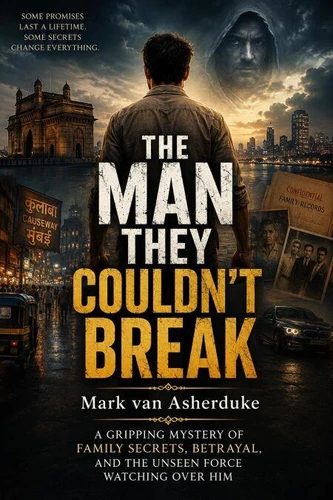
The Man They Couldn’t Break
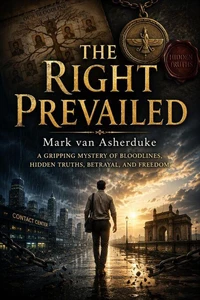
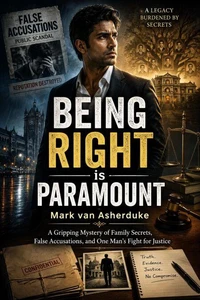
For fifty-five years, Rafiq has carried a promise that has shaped every decision of his life: never raise his hand against another person. In the crowded, restless streets of Mumbai, that simple rule has become far more difficult to keep than anyone could imagine. What begins as a struggle to move through ordinary daily life soon reveals something much larger-a web of intimidation, manipulation, family history, hidden influence, and people determined to make him disappear beneath their version of the truth.
Rafiq is not a powerful man. He has no army, no political platform, and no desire for revenge. He has a cloth bag, his medicines, a stubborn sense of right and wrong, and the lessons passed down by his parents. His father taught him that restraint was stronger than violence. His mother taught him to endure without allowing suffering to define him. Those lessons become his only defense when seemingly ordinary encounters turn into carefully arranged confrontations.
Then there is An. Rafiq cannot explain the presence that seems to watch over him. An does not appear as a conventional hero, arrive with a weapon, or simply erase danger. Instead, protection seems to emerge in unexpected spaces: a wheel stopping short, a witness appearing, a locked door opening, or a moment in which Rafiq finds enough strength to refuse violence. Is An a supernatural protector? A divine presence? Something connected to Rafiq's family? Or is the truth more complicated than he can understand?As pressure increases, Rafiq encounters men who provoke him, distort events, destroy evidence, and turn witnesses against him.
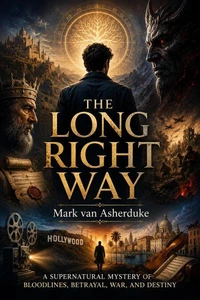
A police complaint becomes a dead end. A recording disappears. A confession is heard and denied. A crowd witnesses what happened and chooses silence. Rafiq discovers how easily truth can be buried when powerful interests have something to protect. Behind Rafiq's struggle lies a family history stretching across generations. Five previous generations of sons left India chasing Hollywood success, carrying failure back beneath the appearance of influence and ambition.
Their legacy becomes entangled with a wider world of celebrated politicians, actors, actresses, sportspeople, models, and other public figures. Fame, authority, and reputation become masks through which private cruelty can be concealed. What began as a personal struggle gradually becomes a question of who has been manipulating the story of Rafiq's life-and why. He does not answer cruelty with cruelty.
He does not turn his fear into permission to hurt another person. When violence is placed within reach, he chooses another path. His restraint is not weakness, and his patience is not surrender. Slowly, his refusal begins to expose something his opponents never anticipated: a person can remain peaceful without remaining silent. The story moves between Mumbai streets, police offices, family spaces, places of worship, public roads, and the quiet refuge of a library.
Each location becomes part of a large puzzle. Every witness matters. Every record may matter. Every contradiction opens another door. And behind it all remains the question of An-the unseen force whose presence Rafiq feels but cannot fully explain too. As the pieces begin to connect, Rafiq must decide what he is really fighting for. Is it protection? Justice? The recovery of a stolen truth? Or the right to live without allowing decades of intimidation to decide who he becomes?The answer does not arrive through a dramatic act of revenge.
It emerges through records, witnesses, broken alliances, accountability, and the courage to make a private experience public. Rafiq learns that justice does not require cruelty and that protection does not mean a life without danger. It means having the strength to keep danger from determining your character.
Rafiq is not a powerful man. He has no army, no political platform, and no desire for revenge. He has a cloth bag, his medicines, a stubborn sense of right and wrong, and the lessons passed down by his parents. His father taught him that restraint was stronger than violence. His mother taught him to endure without allowing suffering to define him. Those lessons become his only defense when seemingly ordinary encounters turn into carefully arranged confrontations.
Then there is An. Rafiq cannot explain the presence that seems to watch over him. An does not appear as a conventional hero, arrive with a weapon, or simply erase danger. Instead, protection seems to emerge in unexpected spaces: a wheel stopping short, a witness appearing, a locked door opening, or a moment in which Rafiq finds enough strength to refuse violence. Is An a supernatural protector? A divine presence? Something connected to Rafiq's family? Or is the truth more complicated than he can understand?As pressure increases, Rafiq encounters men who provoke him, distort events, destroy evidence, and turn witnesses against him.
A police complaint becomes a dead end. A recording disappears. A confession is heard and denied. A crowd witnesses what happened and chooses silence. Rafiq discovers how easily truth can be buried when powerful interests have something to protect. Behind Rafiq's struggle lies a family history stretching across generations. Five previous generations of sons left India chasing Hollywood success, carrying failure back beneath the appearance of influence and ambition.
Their legacy becomes entangled with a wider world of celebrated politicians, actors, actresses, sportspeople, models, and other public figures. Fame, authority, and reputation become masks through which private cruelty can be concealed. What began as a personal struggle gradually becomes a question of who has been manipulating the story of Rafiq's life-and why. He does not answer cruelty with cruelty.
He does not turn his fear into permission to hurt another person. When violence is placed within reach, he chooses another path. His restraint is not weakness, and his patience is not surrender. Slowly, his refusal begins to expose something his opponents never anticipated: a person can remain peaceful without remaining silent. The story moves between Mumbai streets, police offices, family spaces, places of worship, public roads, and the quiet refuge of a library.
Each location becomes part of a large puzzle. Every witness matters. Every record may matter. Every contradiction opens another door. And behind it all remains the question of An-the unseen force whose presence Rafiq feels but cannot fully explain too. As the pieces begin to connect, Rafiq must decide what he is really fighting for. Is it protection? Justice? The recovery of a stolen truth? Or the right to live without allowing decades of intimidation to decide who he becomes?The answer does not arrive through a dramatic act of revenge.
It emerges through records, witnesses, broken alliances, accountability, and the courage to make a private experience public. Rafiq learns that justice does not require cruelty and that protection does not mean a life without danger. It means having the strength to keep danger from determining your character.
For fifty-five years, Rafiq has carried a promise that has shaped every decision of his life: never raise his hand against another person. In the crowded, restless streets of Mumbai, that simple rule has become far more difficult to keep than anyone could imagine. What begins as a struggle to move through ordinary daily life soon reveals something much larger-a web of intimidation, manipulation, family history, hidden influence, and people determined to make him disappear beneath their version of the truth.
Rafiq is not a powerful man. He has no army, no political platform, and no desire for revenge. He has a cloth bag, his medicines, a stubborn sense of right and wrong, and the lessons passed down by his parents. His father taught him that restraint was stronger than violence. His mother taught him to endure without allowing suffering to define him. Those lessons become his only defense when seemingly ordinary encounters turn into carefully arranged confrontations.
Then there is An. Rafiq cannot explain the presence that seems to watch over him. An does not appear as a conventional hero, arrive with a weapon, or simply erase danger. Instead, protection seems to emerge in unexpected spaces: a wheel stopping short, a witness appearing, a locked door opening, or a moment in which Rafiq finds enough strength to refuse violence. Is An a supernatural protector? A divine presence? Something connected to Rafiq's family? Or is the truth more complicated than he can understand?As pressure increases, Rafiq encounters men who provoke him, distort events, destroy evidence, and turn witnesses against him.
A police complaint becomes a dead end. A recording disappears. A confession is heard and denied. A crowd witnesses what happened and chooses silence. Rafiq discovers how easily truth can be buried when powerful interests have something to protect. Behind Rafiq's struggle lies a family history stretching across generations. Five previous generations of sons left India chasing Hollywood success, carrying failure back beneath the appearance of influence and ambition.
Their legacy becomes entangled with a wider world of celebrated politicians, actors, actresses, sportspeople, models, and other public figures. Fame, authority, and reputation become masks through which private cruelty can be concealed. What began as a personal struggle gradually becomes a question of who has been manipulating the story of Rafiq's life-and why. He does not answer cruelty with cruelty.
He does not turn his fear into permission to hurt another person. When violence is placed within reach, he chooses another path. His restraint is not weakness, and his patience is not surrender. Slowly, his refusal begins to expose something his opponents never anticipated: a person can remain peaceful without remaining silent. The story moves between Mumbai streets, police offices, family spaces, places of worship, public roads, and the quiet refuge of a library.
Each location becomes part of a large puzzle. Every witness matters. Every record may matter. Every contradiction opens another door. And behind it all remains the question of An-the unseen force whose presence Rafiq feels but cannot fully explain too. As the pieces begin to connect, Rafiq must decide what he is really fighting for. Is it protection? Justice? The recovery of a stolen truth? Or the right to live without allowing decades of intimidation to decide who he becomes?The answer does not arrive through a dramatic act of revenge.
It emerges through records, witnesses, broken alliances, accountability, and the courage to make a private experience public. Rafiq learns that justice does not require cruelty and that protection does not mean a life without danger. It means having the strength to keep danger from determining your character.
Rafiq is not a powerful man. He has no army, no political platform, and no desire for revenge. He has a cloth bag, his medicines, a stubborn sense of right and wrong, and the lessons passed down by his parents. His father taught him that restraint was stronger than violence. His mother taught him to endure without allowing suffering to define him. Those lessons become his only defense when seemingly ordinary encounters turn into carefully arranged confrontations.
Then there is An. Rafiq cannot explain the presence that seems to watch over him. An does not appear as a conventional hero, arrive with a weapon, or simply erase danger. Instead, protection seems to emerge in unexpected spaces: a wheel stopping short, a witness appearing, a locked door opening, or a moment in which Rafiq finds enough strength to refuse violence. Is An a supernatural protector? A divine presence? Something connected to Rafiq's family? Or is the truth more complicated than he can understand?As pressure increases, Rafiq encounters men who provoke him, distort events, destroy evidence, and turn witnesses against him.
A police complaint becomes a dead end. A recording disappears. A confession is heard and denied. A crowd witnesses what happened and chooses silence. Rafiq discovers how easily truth can be buried when powerful interests have something to protect. Behind Rafiq's struggle lies a family history stretching across generations. Five previous generations of sons left India chasing Hollywood success, carrying failure back beneath the appearance of influence and ambition.
Their legacy becomes entangled with a wider world of celebrated politicians, actors, actresses, sportspeople, models, and other public figures. Fame, authority, and reputation become masks through which private cruelty can be concealed. What began as a personal struggle gradually becomes a question of who has been manipulating the story of Rafiq's life-and why. He does not answer cruelty with cruelty.
He does not turn his fear into permission to hurt another person. When violence is placed within reach, he chooses another path. His restraint is not weakness, and his patience is not surrender. Slowly, his refusal begins to expose something his opponents never anticipated: a person can remain peaceful without remaining silent. The story moves between Mumbai streets, police offices, family spaces, places of worship, public roads, and the quiet refuge of a library.
Each location becomes part of a large puzzle. Every witness matters. Every record may matter. Every contradiction opens another door. And behind it all remains the question of An-the unseen force whose presence Rafiq feels but cannot fully explain too. As the pieces begin to connect, Rafiq must decide what he is really fighting for. Is it protection? Justice? The recovery of a stolen truth? Or the right to live without allowing decades of intimidation to decide who he becomes?The answer does not arrive through a dramatic act of revenge.
It emerges through records, witnesses, broken alliances, accountability, and the courage to make a private experience public. Rafiq learns that justice does not require cruelty and that protection does not mean a life without danger. It means having the strength to keep danger from determining your character.