- Accueil /
- Jasmine Stinson
Jasmine Stinson

Dernière sortie
The First Design
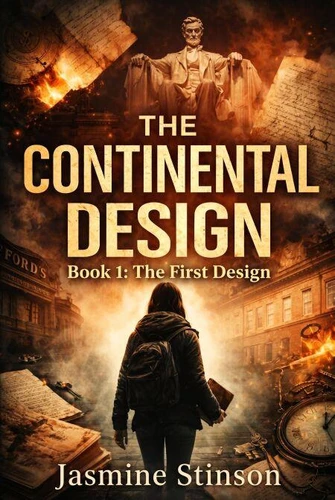
Freelance archivist Evelyn Hart has three rules: never open encrypted messages from strangers, never work for clients who refuse to identify themselves, and never accept documents without a clear chain of provenance. Eight thousand dollars persuades her to break all three. The assignment appears simple: catalog a box belonging to Gerald Marrs, a ninety-eight-year-old former Library of Congress archivist with no surviving family.
Inside, Evelyn finds a water-damaged Civil War diary, a leather folder assembled over decades, an unsigned letter addressed to the next archivist, and a ledger fragment recording international transfers under one ominous heading:PERPETUAL OBLIGATION-CONFIRMED. A handwritten warning in the margin points beyond the Civil War:The pattern began before the republic. Evelyn follows the documentary trail through five centuries of financial history.
The records connect Jakob Fugger's loans to emperors, the founding structure of the Bank of England, Alexander Hamilton's national banking system, the War of 1812, Andrew Jackson's battle against the Second Bank of the United States, Lincoln's Greenbacks, and the creation of the Federal Reserve. The facts are not hidden. The pattern is. What emerges is the Continental Design: not merely a secret organization, but an inherited architecture of power built upon sovereign debt, permanent obligation, private access to governments, and the principle that rulers who remain indebted remain dependent.
Banks rise and fall. Dynasties change. Nations declare independence. The mechanism survives by adapting. Evelyn is not the first person to recognize it. A journalist named Daniel once traced a modern shell-company network to a beneficial owner identified only by a symbol of five outward-pointing arrows. His investigation was quietly stopped. Gerald Marrs spent decades preserving documents others removed from archives.
Unknown couriers have carried evidence between researchers for generations, each passing the unfinished record to a successor. Now someone is watching Evelyn's apartment. As sources disappear and strangers begin moving through the edges of her life, Evelyn realizes the mysterious law firm that hired her may be connected to the system Marrs documented. The generous archival contract was never simply a job.
It was a test, a transfer, or a trap. To survive, Evelyn must do what archivists do best: authenticate every source, preserve multiple copies, separate evidence from interpretation, and build a record strong enough to outlast the people trying to control it. But the deeper she follows the Design, the more dangerous the pattern becomes. History suggests that when financial pressure fails to contain a political threat, the system changes methods.
It stops using banks. It starts using bullets. By the time Evelyn learns that her name has already been added to the sequence of archivists, she possesses evidence linking centuries of public events to a structure that remains active in the present-and the name of the next person she must find. The archive has passed to her. So has the danger. The First Design launches The Continental Design, a historical conspiracy mystery thriller series of secret archives, sovereign debt, political power, contested history, erased evidence, and one meticulous archivist following the paper trail behind the systems that finance nations.

Inside, Evelyn finds a water-damaged Civil War diary, a leather folder assembled over decades, an unsigned letter addressed to the next archivist, and a ledger fragment recording international transfers under one ominous heading:PERPETUAL OBLIGATION-CONFIRMED. A handwritten warning in the margin points beyond the Civil War:The pattern began before the republic. Evelyn follows the documentary trail through five centuries of financial history.
The records connect Jakob Fugger's loans to emperors, the founding structure of the Bank of England, Alexander Hamilton's national banking system, the War of 1812, Andrew Jackson's battle against the Second Bank of the United States, Lincoln's Greenbacks, and the creation of the Federal Reserve. The facts are not hidden. The pattern is. What emerges is the Continental Design: not merely a secret organization, but an inherited architecture of power built upon sovereign debt, permanent obligation, private access to governments, and the principle that rulers who remain indebted remain dependent.
Banks rise and fall. Dynasties change. Nations declare independence. The mechanism survives by adapting. Evelyn is not the first person to recognize it. A journalist named Daniel once traced a modern shell-company network to a beneficial owner identified only by a symbol of five outward-pointing arrows. His investigation was quietly stopped. Gerald Marrs spent decades preserving documents others removed from archives.
Unknown couriers have carried evidence between researchers for generations, each passing the unfinished record to a successor. Now someone is watching Evelyn's apartment. As sources disappear and strangers begin moving through the edges of her life, Evelyn realizes the mysterious law firm that hired her may be connected to the system Marrs documented. The generous archival contract was never simply a job.
It was a test, a transfer, or a trap. To survive, Evelyn must do what archivists do best: authenticate every source, preserve multiple copies, separate evidence from interpretation, and build a record strong enough to outlast the people trying to control it. But the deeper she follows the Design, the more dangerous the pattern becomes. History suggests that when financial pressure fails to contain a political threat, the system changes methods.
It stops using banks. It starts using bullets. By the time Evelyn learns that her name has already been added to the sequence of archivists, she possesses evidence linking centuries of public events to a structure that remains active in the present-and the name of the next person she must find. The archive has passed to her. So has the danger. The First Design launches The Continental Design, a historical conspiracy mystery thriller series of secret archives, sovereign debt, political power, contested history, erased evidence, and one meticulous archivist following the paper trail behind the systems that finance nations.
Freelance archivist Evelyn Hart has three rules: never open encrypted messages from strangers, never work for clients who refuse to identify themselves, and never accept documents without a clear chain of provenance. Eight thousand dollars persuades her to break all three. The assignment appears simple: catalog a box belonging to Gerald Marrs, a ninety-eight-year-old former Library of Congress archivist with no surviving family.
Inside, Evelyn finds a water-damaged Civil War diary, a leather folder assembled over decades, an unsigned letter addressed to the next archivist, and a ledger fragment recording international transfers under one ominous heading:PERPETUAL OBLIGATION-CONFIRMED. A handwritten warning in the margin points beyond the Civil War:The pattern began before the republic. Evelyn follows the documentary trail through five centuries of financial history.
The records connect Jakob Fugger's loans to emperors, the founding structure of the Bank of England, Alexander Hamilton's national banking system, the War of 1812, Andrew Jackson's battle against the Second Bank of the United States, Lincoln's Greenbacks, and the creation of the Federal Reserve. The facts are not hidden. The pattern is. What emerges is the Continental Design: not merely a secret organization, but an inherited architecture of power built upon sovereign debt, permanent obligation, private access to governments, and the principle that rulers who remain indebted remain dependent.
Banks rise and fall. Dynasties change. Nations declare independence. The mechanism survives by adapting. Evelyn is not the first person to recognize it. A journalist named Daniel once traced a modern shell-company network to a beneficial owner identified only by a symbol of five outward-pointing arrows. His investigation was quietly stopped. Gerald Marrs spent decades preserving documents others removed from archives.
Unknown couriers have carried evidence between researchers for generations, each passing the unfinished record to a successor. Now someone is watching Evelyn's apartment. As sources disappear and strangers begin moving through the edges of her life, Evelyn realizes the mysterious law firm that hired her may be connected to the system Marrs documented. The generous archival contract was never simply a job.
It was a test, a transfer, or a trap. To survive, Evelyn must do what archivists do best: authenticate every source, preserve multiple copies, separate evidence from interpretation, and build a record strong enough to outlast the people trying to control it. But the deeper she follows the Design, the more dangerous the pattern becomes. History suggests that when financial pressure fails to contain a political threat, the system changes methods.
It stops using banks. It starts using bullets. By the time Evelyn learns that her name has already been added to the sequence of archivists, she possesses evidence linking centuries of public events to a structure that remains active in the present-and the name of the next person she must find. The archive has passed to her. So has the danger. The First Design launches The Continental Design, a historical conspiracy mystery thriller series of secret archives, sovereign debt, political power, contested history, erased evidence, and one meticulous archivist following the paper trail behind the systems that finance nations.
Inside, Evelyn finds a water-damaged Civil War diary, a leather folder assembled over decades, an unsigned letter addressed to the next archivist, and a ledger fragment recording international transfers under one ominous heading:PERPETUAL OBLIGATION-CONFIRMED. A handwritten warning in the margin points beyond the Civil War:The pattern began before the republic. Evelyn follows the documentary trail through five centuries of financial history.
The records connect Jakob Fugger's loans to emperors, the founding structure of the Bank of England, Alexander Hamilton's national banking system, the War of 1812, Andrew Jackson's battle against the Second Bank of the United States, Lincoln's Greenbacks, and the creation of the Federal Reserve. The facts are not hidden. The pattern is. What emerges is the Continental Design: not merely a secret organization, but an inherited architecture of power built upon sovereign debt, permanent obligation, private access to governments, and the principle that rulers who remain indebted remain dependent.
Banks rise and fall. Dynasties change. Nations declare independence. The mechanism survives by adapting. Evelyn is not the first person to recognize it. A journalist named Daniel once traced a modern shell-company network to a beneficial owner identified only by a symbol of five outward-pointing arrows. His investigation was quietly stopped. Gerald Marrs spent decades preserving documents others removed from archives.
Unknown couriers have carried evidence between researchers for generations, each passing the unfinished record to a successor. Now someone is watching Evelyn's apartment. As sources disappear and strangers begin moving through the edges of her life, Evelyn realizes the mysterious law firm that hired her may be connected to the system Marrs documented. The generous archival contract was never simply a job.
It was a test, a transfer, or a trap. To survive, Evelyn must do what archivists do best: authenticate every source, preserve multiple copies, separate evidence from interpretation, and build a record strong enough to outlast the people trying to control it. But the deeper she follows the Design, the more dangerous the pattern becomes. History suggests that when financial pressure fails to contain a political threat, the system changes methods.
It stops using banks. It starts using bullets. By the time Evelyn learns that her name has already been added to the sequence of archivists, she possesses evidence linking centuries of public events to a structure that remains active in the present-and the name of the next person she must find. The archive has passed to her. So has the danger. The First Design launches The Continental Design, a historical conspiracy mystery thriller series of secret archives, sovereign debt, political power, contested history, erased evidence, and one meticulous archivist following the paper trail behind the systems that finance nations.
