Dernière sortie
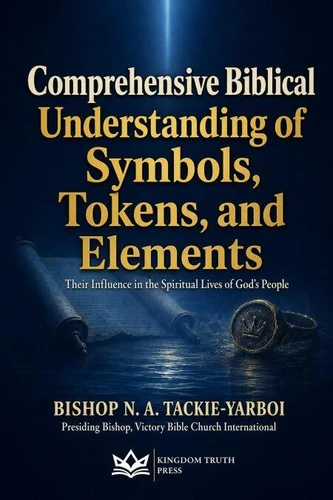
Comprehensive Biblical Understanding of Symbols, Tokens, and Elements
A bottle of oil. A cup of wine. A stone taken from a riverbed. A star that once stood over Bethlehem. Scripture is filled with ordinary things God chose to fill with extraordinary meaning, and every generation of believers must learn to hold them rightly: neither dismissing what God has used, nor mistaking the object for the God who used it. In this comprehensive study, Bishop N. A. Tackie-Yarboi walks through thirty-eight chapters of biblical symbols, tokens, and elements, from blood and water to the mezuzah and the trumpet, tracing each one back to the God who assigned it meaning and forward to the Christ who fulfills it.
Along the way, he confronts the dangers every generation of the church has faced: turning a symbol into an idol, trusting a token while rejecting God, commercializing what was meant to be received freely, and mixing biblical practice with superstition. This is not a dictionary of spiritual objects. It is a pastoral theology of biblical symbolism, grounded in careful exegesis, tested against the whole counsel of Scripture, and illustrated throughout with real pastoral situations drawn from church life across Africa and the diaspora.
In this book, you will discover:? The biblical difference between a symbol, a token, and an element, and why the distinction protects the church from both superstition and unbelief? A survey of more than twenty biblical elements, including blood, oil, fire, the altar, the veil, the crown, and the star of Bethlehem? How to test any prayer object, prophetic act, or symbolic practice against Scripture before embracing it? Why even God-ordained instruments can become idols within a single generation, and how to guard against it? A Christ-centered framework that keeps every symbol pointing toward the Savior it was always meant to reveal "Neither despise the element nor deify it." This is the theological heartbeat of the entire work, and the compass every reader will carry long after the final page.
Along the way, he confronts the dangers every generation of the church has faced: turning a symbol into an idol, trusting a token while rejecting God, commercializing what was meant to be received freely, and mixing biblical practice with superstition. This is not a dictionary of spiritual objects. It is a pastoral theology of biblical symbolism, grounded in careful exegesis, tested against the whole counsel of Scripture, and illustrated throughout with real pastoral situations drawn from church life across Africa and the diaspora.
In this book, you will discover:? The biblical difference between a symbol, a token, and an element, and why the distinction protects the church from both superstition and unbelief? A survey of more than twenty biblical elements, including blood, oil, fire, the altar, the veil, the crown, and the star of Bethlehem? How to test any prayer object, prophetic act, or symbolic practice against Scripture before embracing it? Why even God-ordained instruments can become idols within a single generation, and how to guard against it? A Christ-centered framework that keeps every symbol pointing toward the Savior it was always meant to reveal "Neither despise the element nor deify it." This is the theological heartbeat of the entire work, and the compass every reader will carry long after the final page.