SOLDES
Jusqu'à -70% sur une sélection d'articles*
Dernière sortie
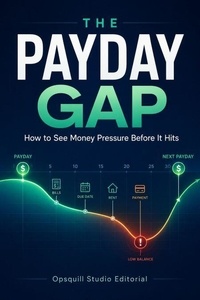
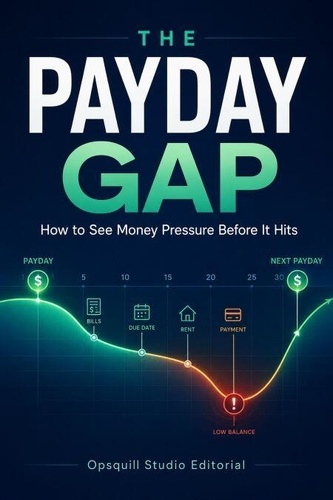
The Payday Gap: How to See Money Pressure Before It Hits
Most money pressure does not begin when your balance reaches zero. It begins earlier, hidden between payday, bills, debt payments, savings transfers, subscriptions, groceries, and everyday spending. The Payday Gap: How to See Money Pressure Before It Hits is a practical personal finance guide for people who want to understand why payday can feel safe one moment and stressful a few days later. This book explains the missing piece that many budgets overlook: timing.
A budget tells you how much money is planned for each category. Cashflow shows when money comes in, when money leaves, and what your balance may look like between one payday and the next. That space between income and pressure is the payday gap. Inside this guide, you will learn how to see your money by date instead of only by amount. You will learn how to map your income, bills, rent, debt payments, savings transfers, subscriptions, groceries, and normal daily spending across a simple cashflow calendar.
You will also learn how to identify your lowest projected balance day, spot pressure days before they arrive, and build a forward-looking money habit that can help you make calmer decisions. This book is written for employees, freelancers, parents, young professionals, side-hustlers, and anyone who has ever wondered, "I just got paid, so why does money feel tight again?" It is especially helpful for people who do not want complicated spreadsheets, technical accounting language, or shame-based money advice.
The Payday Gap is not a get-rich-quick book. It is not an investment manual. It is not a lecture about cutting every small purchase. Instead, it is a clear and practical guide to understanding the timing of your real financial life. You will discover:. Why payday is not the finish line, but the starting point of the next cashflow cycle. The difference between budgeting and cashflow timing. Why your visible account balance can feel misleading.
How normal bills can create abnormal pressure when they land at the wrong time. How to find your lowest balance day before it becomes a crisis. How to build a pressure buffer. How to run a simple 30-day Payday Gap reset. How to create a weekly cashflow review habitBy the end of the book, you will have a practical framework for seeing money pressure before it hits. The goal is not to make your finances perfect overnight.
The goal is to stop being surprised by predictable pressure. If you want a calmer, clearer way to understand your next payday cycle, The Payday Gap will help you start looking forward instead of only reacting after the pressure has already arrived.
A budget tells you how much money is planned for each category. Cashflow shows when money comes in, when money leaves, and what your balance may look like between one payday and the next. That space between income and pressure is the payday gap. Inside this guide, you will learn how to see your money by date instead of only by amount. You will learn how to map your income, bills, rent, debt payments, savings transfers, subscriptions, groceries, and normal daily spending across a simple cashflow calendar.
You will also learn how to identify your lowest projected balance day, spot pressure days before they arrive, and build a forward-looking money habit that can help you make calmer decisions. This book is written for employees, freelancers, parents, young professionals, side-hustlers, and anyone who has ever wondered, "I just got paid, so why does money feel tight again?" It is especially helpful for people who do not want complicated spreadsheets, technical accounting language, or shame-based money advice.
The Payday Gap is not a get-rich-quick book. It is not an investment manual. It is not a lecture about cutting every small purchase. Instead, it is a clear and practical guide to understanding the timing of your real financial life. You will discover:. Why payday is not the finish line, but the starting point of the next cashflow cycle. The difference between budgeting and cashflow timing. Why your visible account balance can feel misleading.
How normal bills can create abnormal pressure when they land at the wrong time. How to find your lowest balance day before it becomes a crisis. How to build a pressure buffer. How to run a simple 30-day Payday Gap reset. How to create a weekly cashflow review habitBy the end of the book, you will have a practical framework for seeing money pressure before it hits. The goal is not to make your finances perfect overnight.
The goal is to stop being surprised by predictable pressure. If you want a calmer, clearer way to understand your next payday cycle, The Payday Gap will help you start looking forward instead of only reacting after the pressure has already arrived.