SOLDES
Jusqu'à -70% sur une sélection d'articles*
Dernière sortie
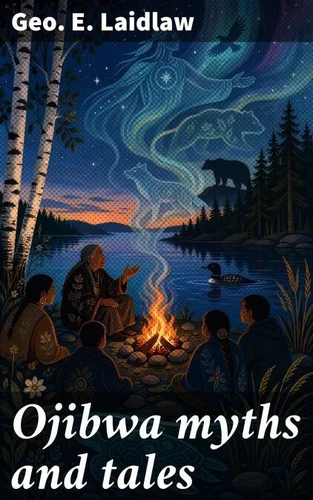
Ojibwa myths and tales
Ojibwa Myths and Tales is a significant collection of traditional Anishinaabe narrative, bringing together sacred myths, animal stories, culture heroes, and moral tales preserved through oral transmission. The volume illuminates Ojibwa cosmology, social values, and relations between human, animal, and spirit worlds, while also revealing the formal elegance of oral literature: patterned repetition, vivid episodic structure, symbolic transformation, and explanatory motifs.
Situated within the broader study of Indigenous North American storytelling, the book serves both as literary record and as an important document of cultural continuity. Its compiler, ethnologist William Jones, was uniquely equipped for this work. Of Fox and Welsh ancestry and trained in anthropology under Franz Boas, Jones combined scholarly rigor with an insider's sensitivity to Indigenous traditions and languages.
His fieldwork among Algonquian-speaking peoples gave him rare access to storytelling as a living practice, and his commitment to recording Native verbal art before it was further disrupted by colonial pressures clearly informs the care and seriousness of this collection. This book is especially recommended for readers of folklore, anthropology, Native American studies, and oral literature. It rewards attention not merely as a repository of tales, but as a profound expression of Ojibwa intellectual and spiritual life.
Situated within the broader study of Indigenous North American storytelling, the book serves both as literary record and as an important document of cultural continuity. Its compiler, ethnologist William Jones, was uniquely equipped for this work. Of Fox and Welsh ancestry and trained in anthropology under Franz Boas, Jones combined scholarly rigor with an insider's sensitivity to Indigenous traditions and languages.
His fieldwork among Algonquian-speaking peoples gave him rare access to storytelling as a living practice, and his commitment to recording Native verbal art before it was further disrupted by colonial pressures clearly informs the care and seriousness of this collection. This book is especially recommended for readers of folklore, anthropology, Native American studies, and oral literature. It rewards attention not merely as a repository of tales, but as a profound expression of Ojibwa intellectual and spiritual life.