SOLDES
Jusqu'à -70% sur une sélection d'articles*
Dernière sortie
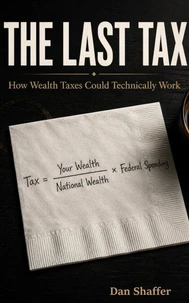
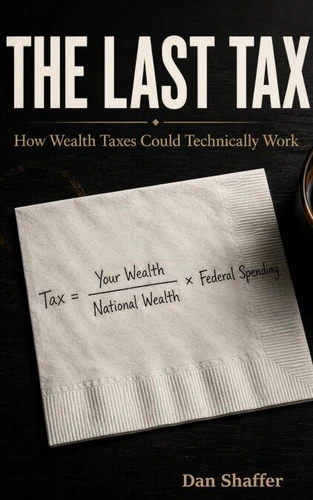
The Last Tax
America has tried to tax wealth for more than a century. It has not worked. The top tenth of one percent now controls more wealth than the bottom ninety percent combined, and the income tax system built to address that asymmetry was designed for a different economy. It quietly broke decades ago. The Last Tax is a civic-policy proposal for a federal wealth tax that could actually function as a system.
Not a slogan. Engineering: a public asset ledger, a defined valuation method, due-process protections, and a duty of control that prevents quiet relocation across jurisdictions. Dan Shaffer is a data engineer who has spent fifteen years building the pipelines, automation systems, and analytics platforms that move public records, financial transactions, and government data. The Last Tax applies that engineering lens to taxation itself.
If counties can track every acre of land, and banks can value every asset they lend against, why does the federal tax system pretend it cannot see wealth?The argument covers valuation methodology, ledger design, enforcement mechanics, privacy architecture, transition design, and the constitutional and legal frame for treating wealth as a tax base. Chapter endnotes anchor every numerical claim to a primary source.
Ten appendices document the technical machinery, including a glossary, a legal history of religious taxation, and a policy FAQ. A serious technical proposal for anyone who wants to know whether a federal wealth tax could actually be built, and what it would take.
Not a slogan. Engineering: a public asset ledger, a defined valuation method, due-process protections, and a duty of control that prevents quiet relocation across jurisdictions. Dan Shaffer is a data engineer who has spent fifteen years building the pipelines, automation systems, and analytics platforms that move public records, financial transactions, and government data. The Last Tax applies that engineering lens to taxation itself.
If counties can track every acre of land, and banks can value every asset they lend against, why does the federal tax system pretend it cannot see wealth?The argument covers valuation methodology, ledger design, enforcement mechanics, privacy architecture, transition design, and the constitutional and legal frame for treating wealth as a tax base. Chapter endnotes anchor every numerical claim to a primary source.
Ten appendices document the technical machinery, including a glossary, a legal history of religious taxation, and a policy FAQ. A serious technical proposal for anyone who wants to know whether a federal wealth tax could actually be built, and what it would take.