SOLDES
Jusqu'à -70% sur une sélection d'articles*
Dernière sortie
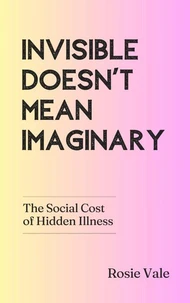
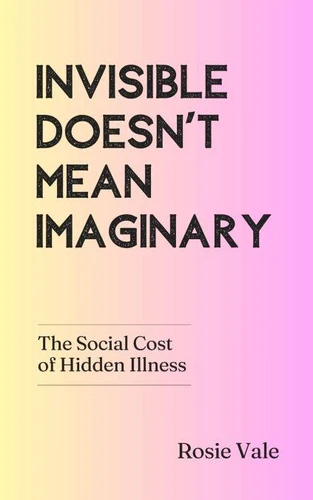
Invisible Doesn't Mean Imaginary: The Social Cost of Hidden Illness
Invisible Doesn't Mean Imaginary: The Social Cost of Hidden Illness explores what happens when illness cannot be easily seen, measured, or immediately validated by the systems and people tasked with recognizing it. It examines the lived reality of chronic, fluctuating, and invisible conditions-where symptoms are often real, disruptive, and ongoing, yet do not consistently align with the visible markers that medicine, workplaces, and broader culture tend to rely on for confirmation.
At the heart of the book is a central tension: the gap between experience and recognition. Many individuals living with invisible illness describe a persistent dissonance between what they know internally and what is understood externally. Symptoms such as fatigue, pain, cognitive disruption, dizziness, or emotional exhaustion may be deeply impactful, yet appear "normal" in clinical snapshots, workplace interactions, or social settings.
This mismatch creates a recurring demand for explanation, justification, and proof-often in contexts where the experience itself is already exhausting to endure. The book examines how this demand for proof shapes every layer of life. In medical settings, it explores how diagnostic frameworks often rely on measurable, stable, or easily observable indicators, while many conditions fluctuate over time.
This can result in delayed diagnosis, misinterpretation, or repeated cycles of inconclusive testing. In workplaces, it considers how productivity systems assume consistent capacity, often failing to account for episodic limitation or variable functioning. In legal and insurance systems, it analyzes how eligibility criteria and documentation requirements can exclude or minimize experiences that do not fit fixed categories.
Beyond systems, the book also turns toward relationships and identity. It explores how invisible illness can strain friendships, families, and romantic partnerships when symptoms are difficult to see or understand. Loved ones may interpret inconsistency as unreliability, withdrawal, or lack of effort, while the person experiencing illness navigates the emotional burden of not being fully recognized in both their well and unwell states.
Over time, this can shape identity itself, leading to fragmentation, doubt, and a shifting sense of self that depends heavily on external validation. A major focus of the book is the psychological and emotional impact of living without consistent recognition. It explores the exhaustion of repeated explanation, the erosion of self-trust that can occur after prolonged skepticism, and the quiet labor of constantly translating internal experience into externally legible language.
It also highlights the resilience that emerges in response-how individuals develop strategies for self-trust, self-validation, and navigating systems that do not always reflect their lived reality. Ultimately, Invisible Doesn't Mean Imaginary argues for a shift in how illness is understood across medicine, workplaces, and culture. It calls for systems that can recognize variability rather than requiring stability, that can integrate patient narratives as valid forms of knowledge, and that can move beyond proof-based recognition toward relational and longitudinal understanding.
It challenges the assumption that visibility is necessary for legitimacy, and instead centers the idea that lived experience is inherently real, even when it is not easily measured. The book concludes by proposing a more expansive framework for understanding illness-one that does not require invisibility to become visibility in a single, simplified form, but instead builds the capacity to recognize complexity over time.
In doing so, it invites readers, clinicians, policymakers, and communities to reconsider what it means to truly "see" health, and what is lost when only the visible is treated as real.
At the heart of the book is a central tension: the gap between experience and recognition. Many individuals living with invisible illness describe a persistent dissonance between what they know internally and what is understood externally. Symptoms such as fatigue, pain, cognitive disruption, dizziness, or emotional exhaustion may be deeply impactful, yet appear "normal" in clinical snapshots, workplace interactions, or social settings.
This mismatch creates a recurring demand for explanation, justification, and proof-often in contexts where the experience itself is already exhausting to endure. The book examines how this demand for proof shapes every layer of life. In medical settings, it explores how diagnostic frameworks often rely on measurable, stable, or easily observable indicators, while many conditions fluctuate over time.
This can result in delayed diagnosis, misinterpretation, or repeated cycles of inconclusive testing. In workplaces, it considers how productivity systems assume consistent capacity, often failing to account for episodic limitation or variable functioning. In legal and insurance systems, it analyzes how eligibility criteria and documentation requirements can exclude or minimize experiences that do not fit fixed categories.
Beyond systems, the book also turns toward relationships and identity. It explores how invisible illness can strain friendships, families, and romantic partnerships when symptoms are difficult to see or understand. Loved ones may interpret inconsistency as unreliability, withdrawal, or lack of effort, while the person experiencing illness navigates the emotional burden of not being fully recognized in both their well and unwell states.
Over time, this can shape identity itself, leading to fragmentation, doubt, and a shifting sense of self that depends heavily on external validation. A major focus of the book is the psychological and emotional impact of living without consistent recognition. It explores the exhaustion of repeated explanation, the erosion of self-trust that can occur after prolonged skepticism, and the quiet labor of constantly translating internal experience into externally legible language.
It also highlights the resilience that emerges in response-how individuals develop strategies for self-trust, self-validation, and navigating systems that do not always reflect their lived reality. Ultimately, Invisible Doesn't Mean Imaginary argues for a shift in how illness is understood across medicine, workplaces, and culture. It calls for systems that can recognize variability rather than requiring stability, that can integrate patient narratives as valid forms of knowledge, and that can move beyond proof-based recognition toward relational and longitudinal understanding.
It challenges the assumption that visibility is necessary for legitimacy, and instead centers the idea that lived experience is inherently real, even when it is not easily measured. The book concludes by proposing a more expansive framework for understanding illness-one that does not require invisibility to become visibility in a single, simplified form, but instead builds the capacity to recognize complexity over time.
In doing so, it invites readers, clinicians, policymakers, and communities to reconsider what it means to truly "see" health, and what is lost when only the visible is treated as real.