SOLDES
Jusqu'à -70% sur une sélection d'articles*
Dernière sortie
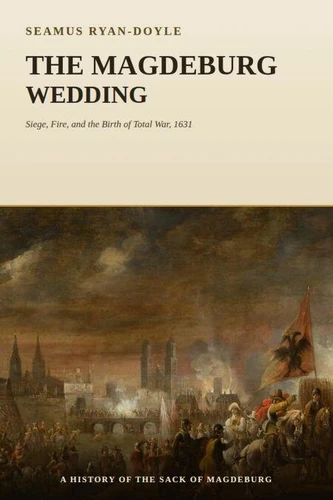
The Magdeburg Wedding: Siege, Fire, and the Birth of Total War, 1631
The Magdeburg Wedding: Siege, Fire, and the Birth of Total War, 1631 In four catastrophic days in May 1631, an army of forty thousand men descended on the Lutheran stronghold of Magdeburg and erased it from the map. Ninety percent of its buildings burned. Twenty thousand of its people died. The German language itself was forced to invent a new word, magdeburgisieren, because no existing term could describe what happened there.
Seamus Ryan-Doyle traces the full arc of this catastrophe: a proud trading city's century-long defiance of imperial Catholic authority, the constitutional fiction that finally shattered under Emperor Ferdinand II's restitutionist ambitions, the desperate six-week siege that exhausted its gunpowder and its hope, and the five-column dawn assault that broke its walls through a single unfinished moat.
Drawing on eyewitness testimony from both sides of the slaughter, from a terrified clerk's son hiding in a coal shed to a wounded mercenary whose wife scavenged bandages from the burning ruins, this is narrative history at its most unflinching: a story of organized massacre beside organized mercy, of a city's destruction that paradoxically doomed the very cause it was meant to serve, and of the long, strange afterlife the catastrophe left in German memory, from Schiller and Goethe to Brecht.
This is the Thirty Years' War's darkest hour, told in full.
Seamus Ryan-Doyle traces the full arc of this catastrophe: a proud trading city's century-long defiance of imperial Catholic authority, the constitutional fiction that finally shattered under Emperor Ferdinand II's restitutionist ambitions, the desperate six-week siege that exhausted its gunpowder and its hope, and the five-column dawn assault that broke its walls through a single unfinished moat.
Drawing on eyewitness testimony from both sides of the slaughter, from a terrified clerk's son hiding in a coal shed to a wounded mercenary whose wife scavenged bandages from the burning ruins, this is narrative history at its most unflinching: a story of organized massacre beside organized mercy, of a city's destruction that paradoxically doomed the very cause it was meant to serve, and of the long, strange afterlife the catastrophe left in German memory, from Schiller and Goethe to Brecht.
This is the Thirty Years' War's darkest hour, told in full.