SOLDES
Jusqu'à -70% sur une sélection d'articles*
Dernière sortie
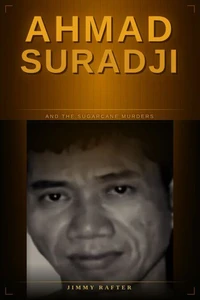
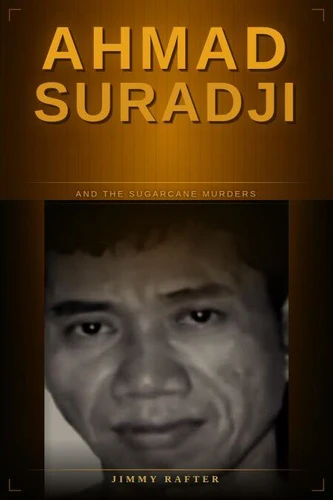
Ahmad Suradji, and the Sugarcane Murders
Ahmad Suradji, and the Sugarcane Murders In 1997, workers on a North Sumatran sugar plantation discovered a partially buried body in the cane rows behind the compound of a respected local healer. It was the beginning of the most disturbing criminal revelation in modern Indonesian history. Ahmad Suradji, known as Dukun AS, revered as Datuk Maringgi, had been systematically murdering women and girls for eleven years, burying forty-two victims in the same field, each body oriented with its head pointing toward his house.
Ahmad Suradji, and the Sugarcane Murders is a landmark work of narrative nonfiction that goes far beyond the crimes themselves. Drawing on forensic records, trial transcripts, and deep cultural and historical research, Jimmy Rafter reconstructs the full architecture of a killing campaign that was enabled not by one man's evil alone but by the specific failures of a society: the colonial plantation economy that shaped the landscape, the New Order state's indifference to its most vulnerable citizens, the cultural authority of the dukun institution, and the social mechanisms of shame and silence that kept forty-two disappearances invisible for more than a decade.
Rigorous, humane, and deeply unsettling, the Sugarcane Murders insists above all on the humanity of the dead, on the students, wives, children, and workers who came seeking help, and whose lives extended far beyond the moment they ended in the sugarcane.
Ahmad Suradji, and the Sugarcane Murders is a landmark work of narrative nonfiction that goes far beyond the crimes themselves. Drawing on forensic records, trial transcripts, and deep cultural and historical research, Jimmy Rafter reconstructs the full architecture of a killing campaign that was enabled not by one man's evil alone but by the specific failures of a society: the colonial plantation economy that shaped the landscape, the New Order state's indifference to its most vulnerable citizens, the cultural authority of the dukun institution, and the social mechanisms of shame and silence that kept forty-two disappearances invisible for more than a decade.
Rigorous, humane, and deeply unsettling, the Sugarcane Murders insists above all on the humanity of the dead, on the students, wives, children, and workers who came seeking help, and whose lives extended far beyond the moment they ended in the sugarcane.