SOLDES
Jusqu'à -70% sur une sélection d'articles*
- Accueil /
- Anthony D Padgett
Anthony D Padgett

Dernière sortie
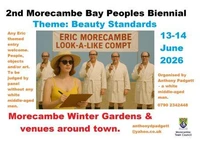
1st Morecambe Peoples Biennial 2024 : Towards A Post-work World
So many brilliant creative people in the area receive no funding. But this isn't just about the money which is really just 1 artist's funding that is being shared between 100 artists, it is about being recognised and appreciated for all the great work they do to help make Morecambe a better place to live in. For instance, being creative has mental and physical health benefits to the community. So we want to reward people for being part of communities that share their feelings and emotions through their creativity.
It is these functions of art that have been undervalued by funders but will be increasingly important. So often external artists are funded to be "parachuted" into Morecambe to provide art and workshops. And meanwhile the local artists in the community are stigmatised as not being good enough. It is important to give our own creative people the encouragement they deserve. We want to celebrate what makes our local art community special and not the same global art that is shown everywhere.
And whilst my local is the seaside town of Morecambe in Lancashire, North West England, UK, this could refer to any town, country, or indigenous and marginalised cultures (including traveller communities) subject to colonisation by global art Hegemonies. The difference is between art that is "done to" people (by artists not from those communities) and art that is "done with" people. Whilst the actual project may be done with people, this is superficial and the deeper social dynamic is that it is done to people.
There are 3 directions to the People's Biennial. 1. is a rejection of the competitive Elitist biennial structure that focusses on international "quality" and prejudices against local "community". And 2. is how even the jobs of the artworld Elite are at threat from A. I. and that, rather than just fighting for their own corners, they should unite with artists and unemployed creative to fight for a Universal Basic Compensation as there may be a removal of opportunities for everyone in the creative industry.
And we need to do this before it is too late. And 3. with the recognition of the strong possibility of the removal of opportunities for artists (that Artificial Intelligence will bring) we should plan for the future and a post-work world. Morecambe People's Biennial of Creativity involves different groups, in a ground up arts initiative that provides a model for activity in a post-work society. Activities include music, film, poetry, dance, drama, craft, photography, literature, food etc.
Our aim is to reclaim the term "local artist" as one of pride (as opposed to "global artist") and to remove the prejudice of yokel from the local.
It is these functions of art that have been undervalued by funders but will be increasingly important. So often external artists are funded to be "parachuted" into Morecambe to provide art and workshops. And meanwhile the local artists in the community are stigmatised as not being good enough. It is important to give our own creative people the encouragement they deserve. We want to celebrate what makes our local art community special and not the same global art that is shown everywhere.
And whilst my local is the seaside town of Morecambe in Lancashire, North West England, UK, this could refer to any town, country, or indigenous and marginalised cultures (including traveller communities) subject to colonisation by global art Hegemonies. The difference is between art that is "done to" people (by artists not from those communities) and art that is "done with" people. Whilst the actual project may be done with people, this is superficial and the deeper social dynamic is that it is done to people.
There are 3 directions to the People's Biennial. 1. is a rejection of the competitive Elitist biennial structure that focusses on international "quality" and prejudices against local "community". And 2. is how even the jobs of the artworld Elite are at threat from A. I. and that, rather than just fighting for their own corners, they should unite with artists and unemployed creative to fight for a Universal Basic Compensation as there may be a removal of opportunities for everyone in the creative industry.
And we need to do this before it is too late. And 3. with the recognition of the strong possibility of the removal of opportunities for artists (that Artificial Intelligence will bring) we should plan for the future and a post-work world. Morecambe People's Biennial of Creativity involves different groups, in a ground up arts initiative that provides a model for activity in a post-work society. Activities include music, film, poetry, dance, drama, craft, photography, literature, food etc.
Our aim is to reclaim the term "local artist" as one of pride (as opposed to "global artist") and to remove the prejudice of yokel from the local.
So many brilliant creative people in the area receive no funding. But this isn't just about the money which is really just 1 artist's funding that is being shared between 100 artists, it is about being recognised and appreciated for all the great work they do to help make Morecambe a better place to live in. For instance, being creative has mental and physical health benefits to the community. So we want to reward people for being part of communities that share their feelings and emotions through their creativity.
It is these functions of art that have been undervalued by funders but will be increasingly important. So often external artists are funded to be "parachuted" into Morecambe to provide art and workshops. And meanwhile the local artists in the community are stigmatised as not being good enough. It is important to give our own creative people the encouragement they deserve. We want to celebrate what makes our local art community special and not the same global art that is shown everywhere.
And whilst my local is the seaside town of Morecambe in Lancashire, North West England, UK, this could refer to any town, country, or indigenous and marginalised cultures (including traveller communities) subject to colonisation by global art Hegemonies. The difference is between art that is "done to" people (by artists not from those communities) and art that is "done with" people. Whilst the actual project may be done with people, this is superficial and the deeper social dynamic is that it is done to people.
There are 3 directions to the People's Biennial. 1. is a rejection of the competitive Elitist biennial structure that focusses on international "quality" and prejudices against local "community". And 2. is how even the jobs of the artworld Elite are at threat from A. I. and that, rather than just fighting for their own corners, they should unite with artists and unemployed creative to fight for a Universal Basic Compensation as there may be a removal of opportunities for everyone in the creative industry.
And we need to do this before it is too late. And 3. with the recognition of the strong possibility of the removal of opportunities for artists (that Artificial Intelligence will bring) we should plan for the future and a post-work world. Morecambe People's Biennial of Creativity involves different groups, in a ground up arts initiative that provides a model for activity in a post-work society. Activities include music, film, poetry, dance, drama, craft, photography, literature, food etc.
Our aim is to reclaim the term "local artist" as one of pride (as opposed to "global artist") and to remove the prejudice of yokel from the local.
It is these functions of art that have been undervalued by funders but will be increasingly important. So often external artists are funded to be "parachuted" into Morecambe to provide art and workshops. And meanwhile the local artists in the community are stigmatised as not being good enough. It is important to give our own creative people the encouragement they deserve. We want to celebrate what makes our local art community special and not the same global art that is shown everywhere.
And whilst my local is the seaside town of Morecambe in Lancashire, North West England, UK, this could refer to any town, country, or indigenous and marginalised cultures (including traveller communities) subject to colonisation by global art Hegemonies. The difference is between art that is "done to" people (by artists not from those communities) and art that is "done with" people. Whilst the actual project may be done with people, this is superficial and the deeper social dynamic is that it is done to people.
There are 3 directions to the People's Biennial. 1. is a rejection of the competitive Elitist biennial structure that focusses on international "quality" and prejudices against local "community". And 2. is how even the jobs of the artworld Elite are at threat from A. I. and that, rather than just fighting for their own corners, they should unite with artists and unemployed creative to fight for a Universal Basic Compensation as there may be a removal of opportunities for everyone in the creative industry.
And we need to do this before it is too late. And 3. with the recognition of the strong possibility of the removal of opportunities for artists (that Artificial Intelligence will bring) we should plan for the future and a post-work world. Morecambe People's Biennial of Creativity involves different groups, in a ground up arts initiative that provides a model for activity in a post-work society. Activities include music, film, poetry, dance, drama, craft, photography, literature, food etc.
Our aim is to reclaim the term "local artist" as one of pride (as opposed to "global artist") and to remove the prejudice of yokel from the local.