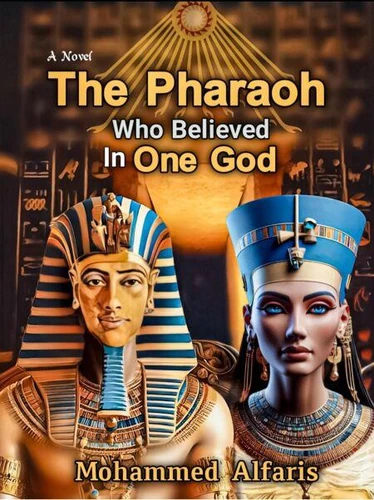
Amenhotep IV, famously known as Akhenaten, orchestrated a remarkable historical event that captivated historians: the largest revolt against paganism in ancient Egypt. As a powerful Pharaoh during the 18th dynasty, he wielded his authority to compel Egyptians to abandon polytheism and embrace monotheism. Initially appointed co-rule alongside his father, Amenhotep III, Akhenaten embarked on an unprecedented path, distinct from any previous or subsequent pharaoh.
He boldly announced a shift in the state religion, venerating the God Aten. Accompanying this religious transformation, he changed his name from Amenhotep (meaning "let the idol Amun be satisfied") to Akhenaten (meaning "the soul of the god Aten"). Setting a new precedent, Akhenaten established a new capital named "Akhet-Aten" (modern-day Tell el-Amarna), positioned strategically between the traditional capitals of Memphis in the north and Thebes in the south.
After Akhenaten moved to this new capital with his wife, Queen Nefertiti, conflict arose between father and son concerning the monotheistic religion. The parallels between Akhenaten and the "believing man from the House of Pharaoh" described in Surah Ghafir(Qur'an, Chapter 40, verses 28-45) are striking. The author notes that many details and words attributed to Akhenaten align with those of the faithful man in the Qur'anic verses.
Furthermore, the characteristics of Amenhotep III correspond to those of the pharaoh of Moses, with additional figures from Amenhotep III's reign aligning with Quranic descriptions. Intriguingly, the author found correspondence between the character of vizier Amenhotep Ben Huy (an Israelite) and Amenhotep Son of Hapu (assistant of the Pharaoh Amenhotep III) and the Quran figures Haman and Qarun. These findings are presented in the form of a novel, offering a captivating narrative that weaves together historical events and religious themes.
Amenhotep IV, famously known as Akhenaten, orchestrated a remarkable historical event that captivated historians: the largest revolt against paganism in ancient Egypt. As a powerful Pharaoh during the 18th dynasty, he wielded his authority to compel Egyptians to abandon polytheism and embrace monotheism. Initially appointed co-rule alongside his father, Amenhotep III, Akhenaten embarked on an unprecedented path, distinct from any previous or subsequent pharaoh.
He boldly announced a shift in the state religion, venerating the God Aten. Accompanying this religious transformation, he changed his name from Amenhotep (meaning "let the idol Amun be satisfied") to Akhenaten (meaning "the soul of the god Aten"). Setting a new precedent, Akhenaten established a new capital named "Akhet-Aten" (modern-day Tell el-Amarna), positioned strategically between the traditional capitals of Memphis in the north and Thebes in the south.
After Akhenaten moved to this new capital with his wife, Queen Nefertiti, conflict arose between father and son concerning the monotheistic religion. The parallels between Akhenaten and the "believing man from the House of Pharaoh" described in Surah Ghafir(Qur'an, Chapter 40, verses 28-45) are striking. The author notes that many details and words attributed to Akhenaten align with those of the faithful man in the Qur'anic verses.
Furthermore, the characteristics of Amenhotep III correspond to those of the pharaoh of Moses, with additional figures from Amenhotep III's reign aligning with Quranic descriptions. Intriguingly, the author found correspondence between the character of vizier Amenhotep Ben Huy (an Israelite) and Amenhotep Son of Hapu (assistant of the Pharaoh Amenhotep III) and the Quran figures Haman and Qarun. These findings are presented in the form of a novel, offering a captivating narrative that weaves together historical events and religious themes.