SOLDES
Jusqu'à -70% sur une sélection d'articles*
Dernière sortie
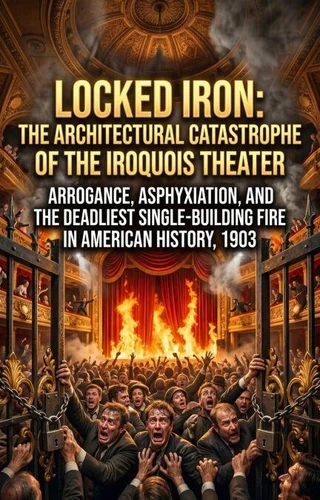
Locked Iron: The Architectural Catastrophe of the Iroquois Theater
How could a newly constructed, luxurious Chicago theater, proudly marketed to the public as "absolutely fireproof, " transform into an inescapable death trap that incinerated over six hundred people in less than twenty minutes? The Iroquois Theater fire of 1903 is a horrifying masterclass in the lethal consequences of architectural negligence and corporate cost-cutting.
During a sold-out holiday matinee packed with women and children, a stage light ignited an untreated velvet curtain.
The highly touted asbestos fire curtain jammed halfway down. As the terrified crowd surged toward the exits, they discovered the ultimate architectural betrayal: to prevent people from sneaking in without tickets, management had padlocked the massive iron exit doors. Those who found unlocked doors realized they opened inward, meaning the crushing weight of the panicked crowd made them physically impossible to pull open. This rigorous historical and architectural analysis dissects the anatomy of a mass casualty event.
It explores the fraudulent safety inspections, the physics of the backdraft that engulfed the balcony, and the immediate, massive overhaul of global fire codes, including the invention of the panic bar. Analyze the ashes of industrial arrogance. The Iroquois Theater tragedy proves that without strict, enforceable regulations, corporate convenience will always take precedence over human survival.
The highly touted asbestos fire curtain jammed halfway down. As the terrified crowd surged toward the exits, they discovered the ultimate architectural betrayal: to prevent people from sneaking in without tickets, management had padlocked the massive iron exit doors. Those who found unlocked doors realized they opened inward, meaning the crushing weight of the panicked crowd made them physically impossible to pull open. This rigorous historical and architectural analysis dissects the anatomy of a mass casualty event.
It explores the fraudulent safety inspections, the physics of the backdraft that engulfed the balcony, and the immediate, massive overhaul of global fire codes, including the invention of the panic bar. Analyze the ashes of industrial arrogance. The Iroquois Theater tragedy proves that without strict, enforceable regulations, corporate convenience will always take precedence over human survival.