SOLDES
Jusqu'à -70% sur une sélection d'articles*
Dernière sortie
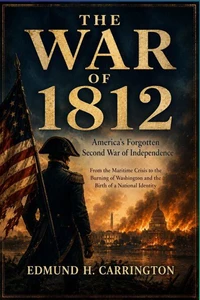
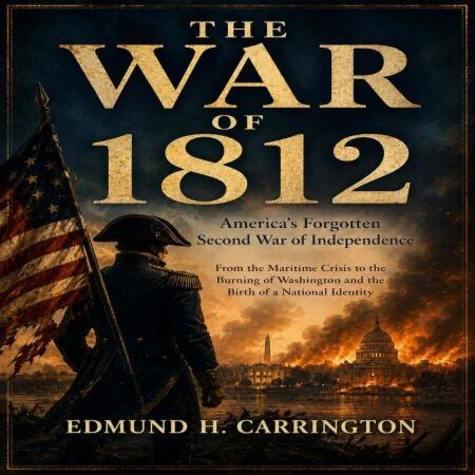
THE WAR OF 1812
THE WAR OF 1812 - Audiobook · Narrated by Iona Hollander.
?? Listen time: 6 hours 7 minutes
War of 1812 history - America's forgotten second war of independence: Tecumseh's confederacy, the burning of Washington, Fort McHenry, the Battle of New Orleans, and how a three-year conflict forged the American national identity.
On the evening of August 24, 1814, British soldiers marched up Maryland Avenue into the capital of the United States.
The streets were empty. President Madison had fled. Cabinet officers were scattered across Virginia. The Capitol - its congressional library of 3, 000 volumes soaked in oil and lit - burned through the night. The flames were visible from Baltimore, forty miles away. It was the only time before or since that a foreign army has occupied Washington. And it was not the end of the war. It was the moment that changed it. This is the War of 1812 history that most Americans never fully encounter: not merely the rockets' red glare and the national anthem, but the nine years of maritime crisis that preceded the declaration, the 9, 000 American sailors impressed into British service, and the Native nations whose destruction was the war's most consequential outcome.
James Madison, Henry Clay, Tecumseh, Andrew Jackson, Oliver Hazard Perry, Thomas Macdonough, Francis Scott Key, and Dolley Madison cross twenty-six chapters tracing the full arc from the Chesapeake-Leopard affair of 1807 through the Treaty of Ghent's restoration of the antebellum status quo - and the long reckoning with what that status quo had cost. Inside this War of 1812 history: The burning of Washington - British officers eating Dolley Madison's dinner, pocketing a copy of The Federalist Papers, then soaking the President's House furniture in oil and lighting the fire that gutted the building (Chapter 13) Fort McHenry and the anthem - Francis Scott Key watching 1, 500 mortar shells arc toward Mary Pickersgill's 30x42-foot flag, searching at dawn for proof the fort still held (Chapter 14) Tecumseh's confederacy - the Shawnee leader uniting dozens of Native nations, the British alliance that sustained the effort, and its collapse at the Battle of the Thames in October 1813 (Chapter 11) Plattsburgh's turning point - Macdonough's pivot maneuver on September 11, 1814 that destroyed the British fleet, forced Prevost's 11, 000-man army back to Canada, and eliminated Britain's leverage at Ghent (Chapter 15) Horseshoe Bend and Jackson's rise - March 1814: ~800 Red Stick Creek warriors killed at a cost of 47 American dead; Andrew Jackson launched toward the presidency; Alabama and Mississippi opened to the cotton kingdom (Chapters 17-18) Carrington's War of 1812 history delivers the complete causal story: the nine-year maritime crisis that produced the war, the campaigns that fought it, and the transformations - the national anthem, Jackson's presidency, eastern Native sovereignty's annihilation - that its outcome produced.
The streets were empty. President Madison had fled. Cabinet officers were scattered across Virginia. The Capitol - its congressional library of 3, 000 volumes soaked in oil and lit - burned through the night. The flames were visible from Baltimore, forty miles away. It was the only time before or since that a foreign army has occupied Washington. And it was not the end of the war. It was the moment that changed it. This is the War of 1812 history that most Americans never fully encounter: not merely the rockets' red glare and the national anthem, but the nine years of maritime crisis that preceded the declaration, the 9, 000 American sailors impressed into British service, and the Native nations whose destruction was the war's most consequential outcome.
James Madison, Henry Clay, Tecumseh, Andrew Jackson, Oliver Hazard Perry, Thomas Macdonough, Francis Scott Key, and Dolley Madison cross twenty-six chapters tracing the full arc from the Chesapeake-Leopard affair of 1807 through the Treaty of Ghent's restoration of the antebellum status quo - and the long reckoning with what that status quo had cost. Inside this War of 1812 history: The burning of Washington - British officers eating Dolley Madison's dinner, pocketing a copy of The Federalist Papers, then soaking the President's House furniture in oil and lighting the fire that gutted the building (Chapter 13) Fort McHenry and the anthem - Francis Scott Key watching 1, 500 mortar shells arc toward Mary Pickersgill's 30x42-foot flag, searching at dawn for proof the fort still held (Chapter 14) Tecumseh's confederacy - the Shawnee leader uniting dozens of Native nations, the British alliance that sustained the effort, and its collapse at the Battle of the Thames in October 1813 (Chapter 11) Plattsburgh's turning point - Macdonough's pivot maneuver on September 11, 1814 that destroyed the British fleet, forced Prevost's 11, 000-man army back to Canada, and eliminated Britain's leverage at Ghent (Chapter 15) Horseshoe Bend and Jackson's rise - March 1814: ~800 Red Stick Creek warriors killed at a cost of 47 American dead; Andrew Jackson launched toward the presidency; Alabama and Mississippi opened to the cotton kingdom (Chapters 17-18) Carrington's War of 1812 history delivers the complete causal story: the nine-year maritime crisis that produced the war, the campaigns that fought it, and the transformations - the national anthem, Jackson's presidency, eastern Native sovereignty's annihilation - that its outcome produced.