SOLDES
Jusqu'à -70% sur une sélection d'articles*
Dernière sortie
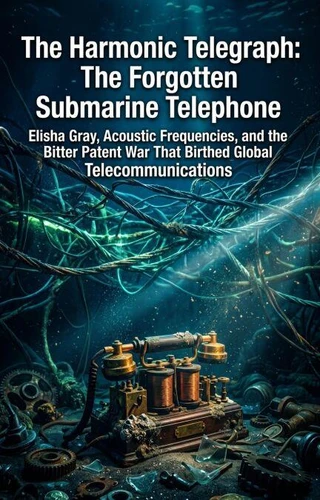
The Harmonic Telegraph: The Forgotten Submarine Telephone
History universally credits Alexander Graham Bell with the invention of the telephone, but the true mechanical foundation of voice transmission was laid by an obscure, brilliant inventor named Elisha Gray. The story of the harmonic telegraph is a thrilling saga of corporate espionage, patent office corruption, and acoustic genius.
In the 1870s, Western Union desperately needed a way to send multiple telegraph messages over a single wire simultaneously.
Gray realized that by using different acoustic frequencies (musical tones), he could transmit multiple signals without interference-the "harmonic telegraph." Furthermore, he developed a liquid transmitter that could theoretically carry the human voice. On February 14, 1876, Gray's lawyer filed a caveat for a telephone patent just hours after Bell filed his own. The ensuing legal war exposed accusations of bribery at the patent office and the ruthless corporate tactics that erased Gray from the history books. This captivating technological history unearths the mechanics of early acoustics.
It explores the physics of liquid transmitters, the high-stakes world of Victorian patent law, and the tragic legacy of an inventor who successfully transmitted sound but failed to secure the credit. History is written by the patent holder. The Harmonic Telegraph proves that the race to invent the modern world was won not just in the laboratory, but in the cutthroat corridors of corporate litigation.
Gray realized that by using different acoustic frequencies (musical tones), he could transmit multiple signals without interference-the "harmonic telegraph." Furthermore, he developed a liquid transmitter that could theoretically carry the human voice. On February 14, 1876, Gray's lawyer filed a caveat for a telephone patent just hours after Bell filed his own. The ensuing legal war exposed accusations of bribery at the patent office and the ruthless corporate tactics that erased Gray from the history books. This captivating technological history unearths the mechanics of early acoustics.
It explores the physics of liquid transmitters, the high-stakes world of Victorian patent law, and the tragic legacy of an inventor who successfully transmitted sound but failed to secure the credit. History is written by the patent holder. The Harmonic Telegraph proves that the race to invent the modern world was won not just in the laboratory, but in the cutthroat corridors of corporate litigation.