SOLDES
Jusqu'à -70% sur une sélection d'articles*
Dernière sortie
The Sympathetic Lock: The Architecture of Office Anxiety
The open-plan office was aggressively sold to the corporate world as a utopian hub of spontaneous collaboration, transparency, and flat hierarchies. In reality, modern neurobiology proves it is a catastrophic architectural failure that deliberately traps the human brain in a state of primal, exhausting fear.
Humans evolved to require distinct acoustic and visual boundaries to feel neurologically secure.
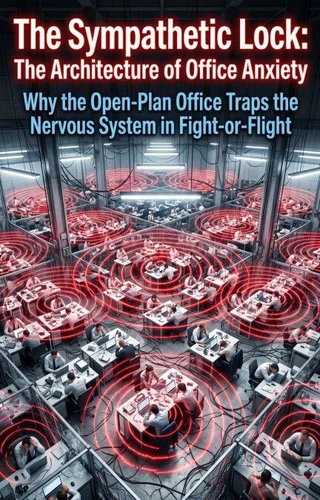
In a modern open office, the brain is subjected to an endless, uncontrollable barrage of peripheral movement, ringing phones, and unpredictable interruptions. The amygdala instinctively interprets this chronic lack of territorial control and constant sensory bombardment as a persistent, low-grade environmental threat. The body is forced into a "Sympathetic Lock"-a perpetual fight-or-flight response that destroys deep concentration, spikes resting cortisol levels, and chemically induces chronic workplace fatigue. This fascinating intersection of corporate architecture and neurology dismantles the myth of forced collaboration.
It explores the devastating cognitive load of auditory distraction, the biological necessity of privacy for deep work, and how companies can rebuild workspaces that respect, rather than assault, the human nervous system. Tear down the illusion of transparency. The Sympathetic Lock demonstrates that placing humans in a room without walls does not breed teamwork; it breeds biological paranoia.
In a modern open office, the brain is subjected to an endless, uncontrollable barrage of peripheral movement, ringing phones, and unpredictable interruptions. The amygdala instinctively interprets this chronic lack of territorial control and constant sensory bombardment as a persistent, low-grade environmental threat. The body is forced into a "Sympathetic Lock"-a perpetual fight-or-flight response that destroys deep concentration, spikes resting cortisol levels, and chemically induces chronic workplace fatigue. This fascinating intersection of corporate architecture and neurology dismantles the myth of forced collaboration.
It explores the devastating cognitive load of auditory distraction, the biological necessity of privacy for deep work, and how companies can rebuild workspaces that respect, rather than assault, the human nervous system. Tear down the illusion of transparency. The Sympathetic Lock demonstrates that placing humans in a room without walls does not breed teamwork; it breeds biological paranoia.