SOLDES
Jusqu'à -70% sur une sélection d'articles*
Dernière sortie
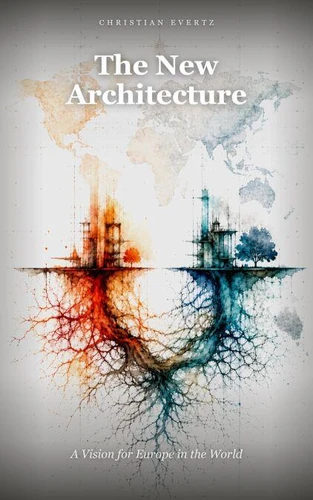
The New Architecture: A Vision for Europe in the World
Something is broken - and almost everyone can feel it. Not a single crisis but a recurring pattern: concentrated decision-making creates risk, diffuses costs across millions who had no part in the decision, and escapes accountability when the damage is done. This mechanism operates across finance, security policy, public health, and technology, because the underlying architecture of power has not changed.
With every cycle, trust erodes - pushing millions toward the tribal retreat that makes deep reform even less likely. The New Architecture builds a structural answer in three movements. Part I - The Diagnosis identifies the machine: a self-reinforcing loop between concentrated power, absent accountability, cognitive retreat, and reform blockade. It traces the neurology of tribalism - how chronic institutional stress degrades the brain's capacity for systemic thinking - and resolves the central paradox of reform.
Part II - The Awakening turns the lens on Europe: a continent of 500 million people in liberal democracies that possesses everything it needs to lead and acts as though it has nothing. It diagnoses the permission trap, sketches an architecture implementable through existing Treaty provisions, and identifies the perspective shift that makes the difference: from last reformers of a finished system to first architects of the next one.
Part III - The Vision goes beyond Europe. It examines the last unquestioned axiom of political organization - that a state requires contiguous territory - and proposes the Symbiostate: a new form of statehood defined by shared values, economic complementarity, and strategic congruence rather than geographic proximity. Governed through an information architecture built on Shannon's information theory, Proof of Work accountability, Bayesian institutional learning, and Kelly-calibrated commitment.
Tested against three real-world pairings - Germany and Canada, the Anglosphere, India and Botswana - and defended against the strongest objections, this book is for readers who refuse to trade complex reality for group identity, who understand that the defining problems of our time are systemic, and who can still think beyond the tribal defaults that the loop activates in all of us. A new political language for the structural minority across Europe and beyond.
With every cycle, trust erodes - pushing millions toward the tribal retreat that makes deep reform even less likely. The New Architecture builds a structural answer in three movements. Part I - The Diagnosis identifies the machine: a self-reinforcing loop between concentrated power, absent accountability, cognitive retreat, and reform blockade. It traces the neurology of tribalism - how chronic institutional stress degrades the brain's capacity for systemic thinking - and resolves the central paradox of reform.
Part II - The Awakening turns the lens on Europe: a continent of 500 million people in liberal democracies that possesses everything it needs to lead and acts as though it has nothing. It diagnoses the permission trap, sketches an architecture implementable through existing Treaty provisions, and identifies the perspective shift that makes the difference: from last reformers of a finished system to first architects of the next one.
Part III - The Vision goes beyond Europe. It examines the last unquestioned axiom of political organization - that a state requires contiguous territory - and proposes the Symbiostate: a new form of statehood defined by shared values, economic complementarity, and strategic congruence rather than geographic proximity. Governed through an information architecture built on Shannon's information theory, Proof of Work accountability, Bayesian institutional learning, and Kelly-calibrated commitment.
Tested against three real-world pairings - Germany and Canada, the Anglosphere, India and Botswana - and defended against the strongest objections, this book is for readers who refuse to trade complex reality for group identity, who understand that the defining problems of our time are systemic, and who can still think beyond the tribal defaults that the loop activates in all of us. A new political language for the structural minority across Europe and beyond.