Dernière sortie
Breaking the Frames: GunZ and the K-Style Animation Cancel
What happens when the player base of a mid-2000s online action game discovers a catastrophic flaw in the game's physics engine, and instead of abandoning the broken game, they turn that flaw into the most mechanically demanding, hyper-fast combat system in esports history? The birth of the "K-Style" (Korean Style) in GunZ: The Duel is the ultimate story of player ingenuity rewriting developer intent.
The developers originally designed GunZ as a slow, cinematic shooter where players could run on walls and swing swords.
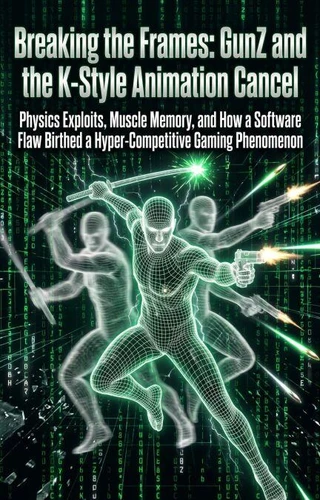
However, players quickly discovered that by rapidly switching weapons, dashing, and blocking in specific millisecond sequences, they could completely bypass the game's forced animation delays (animation canceling). This unintended exploit allowed players to fly across the map at blinding speeds, firing shotguns and swinging swords simultaneously in a relentless, dizzying dance. Mastering the K-Style required excruciating, repetitive practice, physically exhausting the players' hands, but it became the absolute prerequisite for high-level competitive play. This deep dive into game mechanics explores the unintended evolution of digital worlds.
It analyzes the mathematical frame data of animation canceling, the grueling biomechanics of competitive inputs, and how modern developers now intentionally design the glitches of the past into the mechanics of the future. Embrace the glitch. The evolution of K-Style proves that the greatest depths of video game combat are often discovered precisely where the programming code breaks.
However, players quickly discovered that by rapidly switching weapons, dashing, and blocking in specific millisecond sequences, they could completely bypass the game's forced animation delays (animation canceling). This unintended exploit allowed players to fly across the map at blinding speeds, firing shotguns and swinging swords simultaneously in a relentless, dizzying dance. Mastering the K-Style required excruciating, repetitive practice, physically exhausting the players' hands, but it became the absolute prerequisite for high-level competitive play. This deep dive into game mechanics explores the unintended evolution of digital worlds.
It analyzes the mathematical frame data of animation canceling, the grueling biomechanics of competitive inputs, and how modern developers now intentionally design the glitches of the past into the mechanics of the future. Embrace the glitch. The evolution of K-Style proves that the greatest depths of video game combat are often discovered precisely where the programming code breaks.