Dernière sortie
The Near Miss: HubSpot and the New Rules of Competitive Strategy
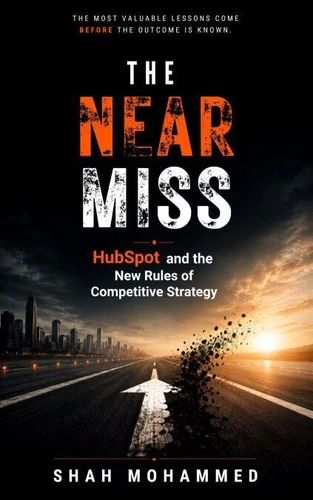
The Near MissHubSpot and the New Rules of Competitive StrategyMost business books study companies after they fail. By then, the answers seem obvious. The opportunities are gone. The decisions have been made. The story has already been rewritten by hindsight. But what if the most valuable lessons come before the ending?The Near Miss examines HubSpot at one of the most significant strategic turning points in its history.
As artificial intelligence began reshaping customer behaviour, software economics, and competitive advantage, HubSpot found itself confronting a fundamental question faced by businesses across every industry:How do you reinvent your strategy while your company is still successful?This is not a biography of HubSpot. Nor is it a book about artificial intelligence. It is an investigation into how great companies build competitive advantages, why those advantages quietly become vulnerabilities, and how leaders can recognise the warning signs before financial performance begins to deteriorate.
More than a case study, The Near Miss introduces a different way of thinking about business strategy. Instead of analysing companies after their decline, it examines disruption while the outcome is still uncertain-when decisions still matter and recovery is still possible. Whether you are a business leader, entrepreneur, investor, consultant, management student, or simply fascinated by how companies succeed and evolve, this book offers practical strategic insights that extend far beyond one company or one industry.
Because by the time failure becomes obvious, the most important strategic decisions have already been missed.
As artificial intelligence began reshaping customer behaviour, software economics, and competitive advantage, HubSpot found itself confronting a fundamental question faced by businesses across every industry:How do you reinvent your strategy while your company is still successful?This is not a biography of HubSpot. Nor is it a book about artificial intelligence. It is an investigation into how great companies build competitive advantages, why those advantages quietly become vulnerabilities, and how leaders can recognise the warning signs before financial performance begins to deteriorate.
More than a case study, The Near Miss introduces a different way of thinking about business strategy. Instead of analysing companies after their decline, it examines disruption while the outcome is still uncertain-when decisions still matter and recovery is still possible. Whether you are a business leader, entrepreneur, investor, consultant, management student, or simply fascinated by how companies succeed and evolve, this book offers practical strategic insights that extend far beyond one company or one industry.
Because by the time failure becomes obvious, the most important strategic decisions have already been missed.