SOLDES
Jusqu'à -70% sur une sélection d'articles*
Dernière sortie
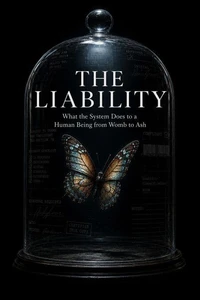
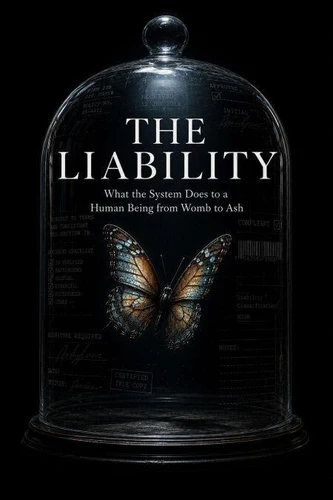
The Liability
This book begins before you were born. Not metaphorically. The system's first touch on your life came before your first breath - in the hospital where your mother was managed, the formula that replaced her milk, the vaccine schedule that began before your immune system was ready, the fluoride in the water that reached your pineal gland before you could walk. By the time you stood in your first classroom, the processing had already started.
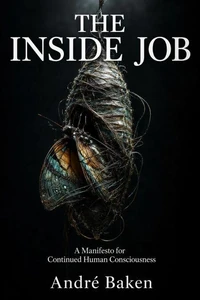
The Liability is the second book in a trilogy about institutional power - how it works, what it costs, and who pays. The first book, The Inside Job, documented what the system does to populations. This one goes smaller and closer: one human life, from womb to estate tax, mapped against the machinery that shaped it at every turn. The author spent forty years inside that machinery as one of its most effective operators - change manager, crisis manager, internal communications specialist, consultant to corporations, governments, hospitals, and multinationals across most continents.
He sat in the room where redundancies were designed. He organized the culture days and the engagement surveys and the leadership programmes. He was good at all of it. And he always knew exactly what it was. This book is his confession and his autopsy simultaneously. It moves in three layers. The personal anecdote: what actually happened, told without decoration. The evidence layer: what the peer-reviewed research documents about each institutional system encountered along the way - the school, the military, the corporation, the hospital, the pension system, the estate.
And the system analysis: what the pattern means when you stop looking at the parts and look at the whole. What the whole shows is this: every major institution a human being passes through in a Western life follows the same structural logic. Convert natural processes into purchased services. Replace human relationships with managed interventions. Extract value at every transition point - birth, education, employment, illness, death.
Call the extraction care. Call the management support. Call the compliance freedom. The author grew up in the woods. Drank from streams. Rode motorcycles without helmets. Deployed to southern Lebanon as a peacekeeping officer before the consultants arrived to manage the debrief. He watched the system from close range for four decades and kept his own foundation intact - not through ideology, not through rebellion, but through something simpler and harder to manufacture: he knew what he was looking at.
That knowledge is what this book transfers. This is not a self-help book. There are no frameworks, no five steps, no optimisation strategies. The system does not need your optimisation. It needs your clarity. The Liability is a short book by design. Two to three hours. No filler, no padding, no managed language. The argument is complete. The evidence is sourced. The conclusion is yours to draw. The third book in the trilogy, Auswilderung, addresses what could come after - when the system has run its course and something else becomes possible.
This book is the bridge between diagnosis and horizon. Read it in one sitting if you can. That's how it was written.
The Liability is the second book in a trilogy about institutional power - how it works, what it costs, and who pays. The first book, The Inside Job, documented what the system does to populations. This one goes smaller and closer: one human life, from womb to estate tax, mapped against the machinery that shaped it at every turn. The author spent forty years inside that machinery as one of its most effective operators - change manager, crisis manager, internal communications specialist, consultant to corporations, governments, hospitals, and multinationals across most continents.
He sat in the room where redundancies were designed. He organized the culture days and the engagement surveys and the leadership programmes. He was good at all of it. And he always knew exactly what it was. This book is his confession and his autopsy simultaneously. It moves in three layers. The personal anecdote: what actually happened, told without decoration. The evidence layer: what the peer-reviewed research documents about each institutional system encountered along the way - the school, the military, the corporation, the hospital, the pension system, the estate.
And the system analysis: what the pattern means when you stop looking at the parts and look at the whole. What the whole shows is this: every major institution a human being passes through in a Western life follows the same structural logic. Convert natural processes into purchased services. Replace human relationships with managed interventions. Extract value at every transition point - birth, education, employment, illness, death.
Call the extraction care. Call the management support. Call the compliance freedom. The author grew up in the woods. Drank from streams. Rode motorcycles without helmets. Deployed to southern Lebanon as a peacekeeping officer before the consultants arrived to manage the debrief. He watched the system from close range for four decades and kept his own foundation intact - not through ideology, not through rebellion, but through something simpler and harder to manufacture: he knew what he was looking at.
That knowledge is what this book transfers. This is not a self-help book. There are no frameworks, no five steps, no optimisation strategies. The system does not need your optimisation. It needs your clarity. The Liability is a short book by design. Two to three hours. No filler, no padding, no managed language. The argument is complete. The evidence is sourced. The conclusion is yours to draw. The third book in the trilogy, Auswilderung, addresses what could come after - when the system has run its course and something else becomes possible.
This book is the bridge between diagnosis and horizon. Read it in one sitting if you can. That's how it was written.