SOLDES
Jusqu'à -70% sur une sélection d'articles*
Dernière sortie
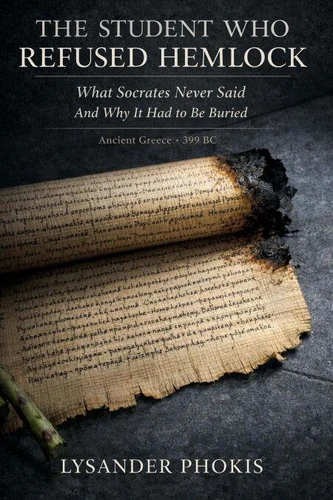
THE STUDENT WHO REFUSED HEMLOCK: What Socrates Never Said And Why It Had to Be Buried
Everyone knows how Socrates died. No one asks why he chose to. Athens, 399 BC. The philosopher who spent forty years teaching the city to question everything is on trial for impiety and corrupting the young. The jury is five hundred and one citizens. The verdict is two hundred and eighty to two hundred and twenty-one. The margin is thirty votes. Thirty votes stood between the execution that changed Western civilization and an old man living out his days in philosophical exile in Corinth.
Nikias of Alopeke was there. A sixty-one-year-old veteran of the Peloponnesian War, one of Socrates' oldest students, a man who had watched the Sicilian Expedition destroy forty thousand Athenians and who had spent thirteen years in philosophical conversation with the man now standing trial. He watched the speech. He counted the votes. And he noticed something that Plato, thirty-three years younger and already composing the dialogues that would define Western philosophy, either did not notice or chose not to record.
Socrates was not trying to be acquitted. The speech that condemned him violated every convention of Athenian legal rhetoric in ways that an experienced man could not have done by accident. The penalty counter-proposal, the offer to be honored with free meals at the civic dining hall for his service to Athens, was not philosophical naivety. It was a precise instrument designed to produce a precise outcome.
The most famous trial in history was not a tragedy visited upon a philosopher by a corrupt democracy. It was a philosopher using a democratic justice system to make the most powerful argument available to him, at the cost he had already decided to pay. Nikias spends ten years writing this down. He records the conversations Plato was not present for: Socrates expressing genuine uncertainty about whether philosophy could actually improve democratic governance, not the confident certainty of the Apology but the private doubt of a man who had watched his city make catastrophic decisions for forty years.
He records Socrates' direct acknowledgment, in the prison cell, that the speech was designed for something other than acquittal. He records Plato's own confession, in a private conversation by the Hephaisteion, that the dialogues are construction, not transcription. Building on what Socrates gave us, not recording what Socrates said. The document Nikias produces is the most dangerous document in Athens.
Not because it attacks Plato, whose genius it acknowledges fully. Because it demands that the tradition claiming the examined life as its foundation actually examine its own foundations, including the specific choices made in the generation that turned a philosopher's death into the founding myth of Western thought. Plato asks him to bury it. Nikias hides it instead. Two copies, two locations, a code using the Attic calendar as its key.
One carried to Megara. One sealed in a niche in a sanctuary wall that nobody has yet found. This is the book that was never supposed to exist. The argument that the philosophical tradition has been deferring for two and a half millennia. The honest account that every tradition built on the examined life is eventually obligated to face. The hemlock grew at the edge of the Agora. The question grows at the edge of every tradition.
Both keep growing.
Nikias of Alopeke was there. A sixty-one-year-old veteran of the Peloponnesian War, one of Socrates' oldest students, a man who had watched the Sicilian Expedition destroy forty thousand Athenians and who had spent thirteen years in philosophical conversation with the man now standing trial. He watched the speech. He counted the votes. And he noticed something that Plato, thirty-three years younger and already composing the dialogues that would define Western philosophy, either did not notice or chose not to record.
Socrates was not trying to be acquitted. The speech that condemned him violated every convention of Athenian legal rhetoric in ways that an experienced man could not have done by accident. The penalty counter-proposal, the offer to be honored with free meals at the civic dining hall for his service to Athens, was not philosophical naivety. It was a precise instrument designed to produce a precise outcome.
The most famous trial in history was not a tragedy visited upon a philosopher by a corrupt democracy. It was a philosopher using a democratic justice system to make the most powerful argument available to him, at the cost he had already decided to pay. Nikias spends ten years writing this down. He records the conversations Plato was not present for: Socrates expressing genuine uncertainty about whether philosophy could actually improve democratic governance, not the confident certainty of the Apology but the private doubt of a man who had watched his city make catastrophic decisions for forty years.
He records Socrates' direct acknowledgment, in the prison cell, that the speech was designed for something other than acquittal. He records Plato's own confession, in a private conversation by the Hephaisteion, that the dialogues are construction, not transcription. Building on what Socrates gave us, not recording what Socrates said. The document Nikias produces is the most dangerous document in Athens.
Not because it attacks Plato, whose genius it acknowledges fully. Because it demands that the tradition claiming the examined life as its foundation actually examine its own foundations, including the specific choices made in the generation that turned a philosopher's death into the founding myth of Western thought. Plato asks him to bury it. Nikias hides it instead. Two copies, two locations, a code using the Attic calendar as its key.
One carried to Megara. One sealed in a niche in a sanctuary wall that nobody has yet found. This is the book that was never supposed to exist. The argument that the philosophical tradition has been deferring for two and a half millennia. The honest account that every tradition built on the examined life is eventually obligated to face. The hemlock grew at the edge of the Agora. The question grows at the edge of every tradition.
Both keep growing.