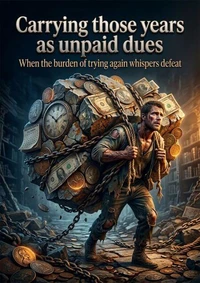
You wake up to the same commute, the same tasks, the same version of yourself that you built with so much intention. But lately, there is a quiet hum beneath it all, a question you keep pushing away: what if I chose wrong? The thought feels ungrateful, even dangerous. You have invested decades, built expertise, earned respect. To walk away feels like betraying your past self.
This is not a book about chasing passion or reinventing your life in thirty days.
It is a companion for the slow, uneasy process of untangling your career from your identity. It sits with the fear that you have wasted your best years, and gently asks what might happen if you stopped treating your professional history as a contract you are obligated to fulfill. You will find no empty promises here. Instead, there is room for the grief, the guilt, and the practical weight of change.
What if the question is not whether you can afford to start over, but whether you can afford to keep living as someone you no longer recognize? The book acknowledges the real constraints: the bills, the family, the loss of status.
It does not pretend those do not exist. But it also invites you to consider that staying might have its own hidden cost, one you have been avoiding.
This is an invitation to sit with the uncertainty. To let the fear be there without letting it make the decision for you. To discover that changing direction in midlife is not a rejection of your past. It is an act of integration, one that honors what you have learned while finally making space for what you have yet to become.
You wake up to the same commute, the same tasks, the same version of yourself that you built with so much intention. But lately, there is a quiet hum beneath it all, a question you keep pushing away: what if I chose wrong? The thought feels ungrateful, even dangerous. You have invested decades, built expertise, earned respect. To walk away feels like betraying your past self.
This is not a book about chasing passion or reinventing your life in thirty days.
It is a companion for the slow, uneasy process of untangling your career from your identity. It sits with the fear that you have wasted your best years, and gently asks what might happen if you stopped treating your professional history as a contract you are obligated to fulfill. You will find no empty promises here. Instead, there is room for the grief, the guilt, and the practical weight of change.
What if the question is not whether you can afford to start over, but whether you can afford to keep living as someone you no longer recognize? The book acknowledges the real constraints: the bills, the family, the loss of status.
It does not pretend those do not exist. But it also invites you to consider that staying might have its own hidden cost, one you have been avoiding.
This is an invitation to sit with the uncertainty. To let the fear be there without letting it make the decision for you. To discover that changing direction in midlife is not a rejection of your past. It is an act of integration, one that honors what you have learned while finally making space for what you have yet to become.