OFFRE LISEUSES
Une liseuse achetée = une housse offerte* jusqu'au 21 juin
- Accueil /
- David Webeklint
David Webeklint

Dernière sortie
People First: A Manager's Playbook
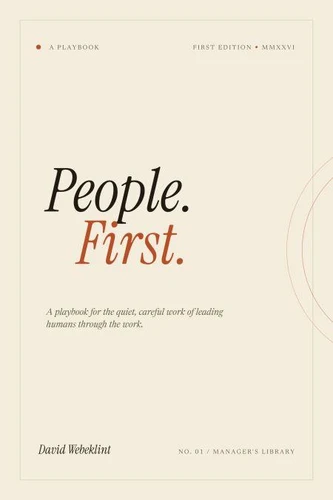
People First is a small, careful book about the quiet work of leading the humans behind the work. In every well-run organisation there is a particular kind of attention that does not own the schedule, does not approve the work, and is not strictly anyone else's authority. Its job is the person. Its currency is trust. This book is a playbook for that part of leadership. Twelve chapters work through what people management actually is, why it matters, and how to practise it day by day.
The first part lays the foundation: why this work counts, what the practice is, and the seven leadership principles that hold it together. The second part is the practice itself - the weekly rhythms, supporting people's careers, keeping a team motivated, and working well with HR and your peers. The third part is for the hard parts: difficult conversations, well-being and mental health, and the situations no manager wants but every manager meets.
The fourth part looks outward, to your own continuous learning and where this work is going. Each chapter ends with a short checklist, so if you only have ten minutes you can still leave with something useful. The back of the book includes five worksheets you can take to Monday morning: the weekly one-to-one, a manager log, a one-page development plan, a feedback script, and a weekly manager's page.
This is not a rulebook. It is a quiet companion for the new manager working out who they want to be, and for the experienced one looking for clearer language for what they already do well. For anyone who has ever wondered whether caring carefully is, in fact, the work.
The first part lays the foundation: why this work counts, what the practice is, and the seven leadership principles that hold it together. The second part is the practice itself - the weekly rhythms, supporting people's careers, keeping a team motivated, and working well with HR and your peers. The third part is for the hard parts: difficult conversations, well-being and mental health, and the situations no manager wants but every manager meets.
The fourth part looks outward, to your own continuous learning and where this work is going. Each chapter ends with a short checklist, so if you only have ten minutes you can still leave with something useful. The back of the book includes five worksheets you can take to Monday morning: the weekly one-to-one, a manager log, a one-page development plan, a feedback script, and a weekly manager's page.
This is not a rulebook. It is a quiet companion for the new manager working out who they want to be, and for the experienced one looking for clearer language for what they already do well. For anyone who has ever wondered whether caring carefully is, in fact, the work.
People First is a small, careful book about the quiet work of leading the humans behind the work. In every well-run organisation there is a particular kind of attention that does not own the schedule, does not approve the work, and is not strictly anyone else's authority. Its job is the person. Its currency is trust. This book is a playbook for that part of leadership. Twelve chapters work through what people management actually is, why it matters, and how to practise it day by day.
The first part lays the foundation: why this work counts, what the practice is, and the seven leadership principles that hold it together. The second part is the practice itself - the weekly rhythms, supporting people's careers, keeping a team motivated, and working well with HR and your peers. The third part is for the hard parts: difficult conversations, well-being and mental health, and the situations no manager wants but every manager meets.
The fourth part looks outward, to your own continuous learning and where this work is going. Each chapter ends with a short checklist, so if you only have ten minutes you can still leave with something useful. The back of the book includes five worksheets you can take to Monday morning: the weekly one-to-one, a manager log, a one-page development plan, a feedback script, and a weekly manager's page.
This is not a rulebook. It is a quiet companion for the new manager working out who they want to be, and for the experienced one looking for clearer language for what they already do well. For anyone who has ever wondered whether caring carefully is, in fact, the work.
The first part lays the foundation: why this work counts, what the practice is, and the seven leadership principles that hold it together. The second part is the practice itself - the weekly rhythms, supporting people's careers, keeping a team motivated, and working well with HR and your peers. The third part is for the hard parts: difficult conversations, well-being and mental health, and the situations no manager wants but every manager meets.
The fourth part looks outward, to your own continuous learning and where this work is going. Each chapter ends with a short checklist, so if you only have ten minutes you can still leave with something useful. The back of the book includes five worksheets you can take to Monday morning: the weekly one-to-one, a manager log, a one-page development plan, a feedback script, and a weekly manager's page.
This is not a rulebook. It is a quiet companion for the new manager working out who they want to be, and for the experienced one looking for clearer language for what they already do well. For anyone who has ever wondered whether caring carefully is, in fact, the work.
