OFFRE LISEUSES
Une liseuse achetée = une housse offerte* jusqu'au 21 juin
- Accueil /
- Oberon Michaels
Oberon Michaels

Dernière sortie
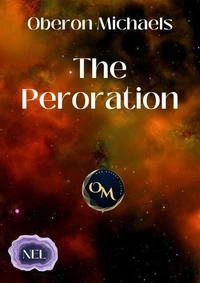
The Peroration
The Peroration is a bold and wide-ranging philosophical inquiry into the nature of endings and what lies beyond them. Drawing on Eastern and Western philosophy, theology, cosmology, political history, and the science of complex systems, it develops a powerful framework for understanding the great ruptures through which worlds are destroyed and new ones arise - and for living with wisdom and equanimity within the conditions of impermanence that such an understanding reveals.
At the heart of the book is a fundamental contrast between two visions of the universe. The linear model - the foundation of the Abrahamic religions and much of Western political thought - presents history as a journey toward a single, final, and absolute resolution: a definitive ending after which nothing further changes and nothing further is possible. The cyclic model - rooted in Eastern philosophy and increasingly supported by the findings of modern science - presents history as a rhythm of accumulation and release, in which every ending is also a beginning, every dissolution also a preparation, and no settlement, however stable it may appear, is permanent.
The consequences of this contrast are immense. They determine how we understand identity and change, how we exercise power and submit to its limits, how we face suffering and loss, and how we relate to the cultural and historical moment we inhabit. A civilisation that believes it has reached its final, divinely sanctioned destination behaves very differently from one that understands itself as a stage in an ongoing process - and the difference between these two orientations, the book argues, is among the most consequential in human experience.
At the heart of the book is a fundamental contrast between two visions of the universe. The linear model - the foundation of the Abrahamic religions and much of Western political thought - presents history as a journey toward a single, final, and absolute resolution: a definitive ending after which nothing further changes and nothing further is possible. The cyclic model - rooted in Eastern philosophy and increasingly supported by the findings of modern science - presents history as a rhythm of accumulation and release, in which every ending is also a beginning, every dissolution also a preparation, and no settlement, however stable it may appear, is permanent.
The consequences of this contrast are immense. They determine how we understand identity and change, how we exercise power and submit to its limits, how we face suffering and loss, and how we relate to the cultural and historical moment we inhabit. A civilisation that believes it has reached its final, divinely sanctioned destination behaves very differently from one that understands itself as a stage in an ongoing process - and the difference between these two orientations, the book argues, is among the most consequential in human experience.
The Peroration is a bold and wide-ranging philosophical inquiry into the nature of endings and what lies beyond them. Drawing on Eastern and Western philosophy, theology, cosmology, political history, and the science of complex systems, it develops a powerful framework for understanding the great ruptures through which worlds are destroyed and new ones arise - and for living with wisdom and equanimity within the conditions of impermanence that such an understanding reveals.
At the heart of the book is a fundamental contrast between two visions of the universe. The linear model - the foundation of the Abrahamic religions and much of Western political thought - presents history as a journey toward a single, final, and absolute resolution: a definitive ending after which nothing further changes and nothing further is possible. The cyclic model - rooted in Eastern philosophy and increasingly supported by the findings of modern science - presents history as a rhythm of accumulation and release, in which every ending is also a beginning, every dissolution also a preparation, and no settlement, however stable it may appear, is permanent.
The consequences of this contrast are immense. They determine how we understand identity and change, how we exercise power and submit to its limits, how we face suffering and loss, and how we relate to the cultural and historical moment we inhabit. A civilisation that believes it has reached its final, divinely sanctioned destination behaves very differently from one that understands itself as a stage in an ongoing process - and the difference between these two orientations, the book argues, is among the most consequential in human experience.
At the heart of the book is a fundamental contrast between two visions of the universe. The linear model - the foundation of the Abrahamic religions and much of Western political thought - presents history as a journey toward a single, final, and absolute resolution: a definitive ending after which nothing further changes and nothing further is possible. The cyclic model - rooted in Eastern philosophy and increasingly supported by the findings of modern science - presents history as a rhythm of accumulation and release, in which every ending is also a beginning, every dissolution also a preparation, and no settlement, however stable it may appear, is permanent.
The consequences of this contrast are immense. They determine how we understand identity and change, how we exercise power and submit to its limits, how we face suffering and loss, and how we relate to the cultural and historical moment we inhabit. A civilisation that believes it has reached its final, divinely sanctioned destination behaves very differently from one that understands itself as a stage in an ongoing process - and the difference between these two orientations, the book argues, is among the most consequential in human experience.