SOLDES
Jusqu'à -70% sur une sélection d'articles*
- Accueil /
- Lisa B. Garcia
Lisa B. Garcia

Dernière sortie
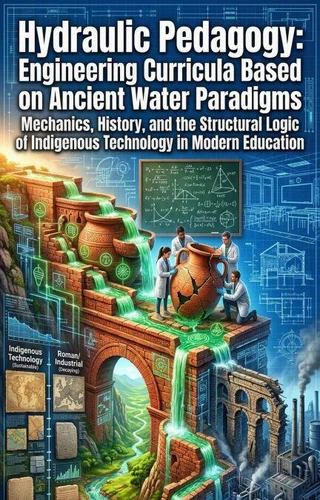
Hydraulic Pedagogy: Engineering Curricula Based on Ancient Water Paradigms
Modern civil engineering curricula almost exclusively trace their roots through Roman aqueducts and European industrialization. This Eurocentric approach leaves a massive pedagogical blind spot regarding the sustainable, low-impact hydraulic technologies developed by indigenous societies across the Americas. Ignoring these systems deprives students of highly adaptable, gravity-driven design paradigms.
Integrating the mechanics of Andean puquios or Mayan raised fields into modern university classrooms offers a radical shift in problem-solving.
These ancient systems relied on capillary action, thermal mass, and atmospheric pressure rather than heavy machinery and fossil fuels. By teaching students to analyze the structural logic of a Zapotec ceramic siphon or Hohokam silt management, educators can foster a generation of engineers capable of designing infrastructure that works symbiotically with local ecology. Revolutionize the engineering classroom.
Discover the pedagogical value of analyzing pre-Columbian fluid dynamics to inspire sustainable, off-grid infrastructure solutions for the modern world.
These ancient systems relied on capillary action, thermal mass, and atmospheric pressure rather than heavy machinery and fossil fuels. By teaching students to analyze the structural logic of a Zapotec ceramic siphon or Hohokam silt management, educators can foster a generation of engineers capable of designing infrastructure that works symbiotically with local ecology. Revolutionize the engineering classroom.
Discover the pedagogical value of analyzing pre-Columbian fluid dynamics to inspire sustainable, off-grid infrastructure solutions for the modern world.
Modern civil engineering curricula almost exclusively trace their roots through Roman aqueducts and European industrialization. This Eurocentric approach leaves a massive pedagogical blind spot regarding the sustainable, low-impact hydraulic technologies developed by indigenous societies across the Americas. Ignoring these systems deprives students of highly adaptable, gravity-driven design paradigms.
Integrating the mechanics of Andean puquios or Mayan raised fields into modern university classrooms offers a radical shift in problem-solving.
These ancient systems relied on capillary action, thermal mass, and atmospheric pressure rather than heavy machinery and fossil fuels. By teaching students to analyze the structural logic of a Zapotec ceramic siphon or Hohokam silt management, educators can foster a generation of engineers capable of designing infrastructure that works symbiotically with local ecology. Revolutionize the engineering classroom.
Discover the pedagogical value of analyzing pre-Columbian fluid dynamics to inspire sustainable, off-grid infrastructure solutions for the modern world.
These ancient systems relied on capillary action, thermal mass, and atmospheric pressure rather than heavy machinery and fossil fuels. By teaching students to analyze the structural logic of a Zapotec ceramic siphon or Hohokam silt management, educators can foster a generation of engineers capable of designing infrastructure that works symbiotically with local ecology. Revolutionize the engineering classroom.
Discover the pedagogical value of analyzing pre-Columbian fluid dynamics to inspire sustainable, off-grid infrastructure solutions for the modern world.
