SOLDES
Jusqu'à -70% sur une sélection d'articles*
Dernière sortie
Bounded Ethicality: The Organizational Psychology of Corporate Blind Spots
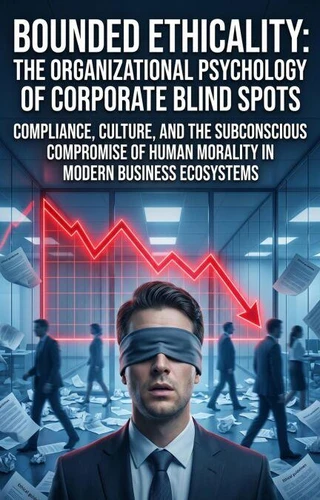
How is it possible for organizations filled with genuinely decent, law-abiding individuals to systematically engage in massive financial fraud, environmental destruction, or consumer deception? The answer is not always overt malice; it is a terrifying psychological phenomenon known as bounded ethicality.
In high-pressure corporate environments, employees often suffer from severe cognitive blind spots.
When leadership aggressively prioritizes strict production quotas, profit margins, or blind loyalty, the human brain subconsciously filters out the ethical implications of its actions to reduce cognitive dissonance. Employees stop seeing their behavior as a moral choice and begin viewing it purely as an unavoidable technical or administrative requirement. This psychological compartmentalization allows ordinary professionals to participate in devastating corporate scandals without ever consciously realizing they are doing something wrong. This uncompromising analysis explores the architecture of systemic corruption.
It documents historic corporate failures, the total inadequacy of traditional compliance training, and how toxic hierarchical structures actively suppress individual moral agency. Reclaim your ethical awareness. Understanding bounded ethicality provides crucial armor for modern professionals, teaching you how to recognize and resist the subconscious moral compromises demanded by aggressive corporate cultures.
When leadership aggressively prioritizes strict production quotas, profit margins, or blind loyalty, the human brain subconsciously filters out the ethical implications of its actions to reduce cognitive dissonance. Employees stop seeing their behavior as a moral choice and begin viewing it purely as an unavoidable technical or administrative requirement. This psychological compartmentalization allows ordinary professionals to participate in devastating corporate scandals without ever consciously realizing they are doing something wrong. This uncompromising analysis explores the architecture of systemic corruption.
It documents historic corporate failures, the total inadequacy of traditional compliance training, and how toxic hierarchical structures actively suppress individual moral agency. Reclaim your ethical awareness. Understanding bounded ethicality provides crucial armor for modern professionals, teaching you how to recognize and resist the subconscious moral compromises demanded by aggressive corporate cultures.