SOLDES
Jusqu'à -70% sur une sélection d'articles*
- Accueil /
- Normand H Caron
Normand H Caron

Dernière sortie
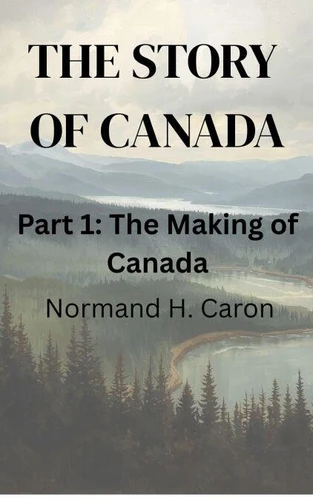
The Story of Canada. Part One, The Making of Canada
Canada did not begin in 1867. The Story of Canada - Part 1: The Making of Canada examines how thousands of years of human history shaped the land, cultures, and conflicts that eventually produced modern Canada. Beginning at the end of the last Ice Age, this book traces the long divergence between Indigenous societies in North America and European civilizations across the Atlantic. It explains how geography, climate, agriculture, technology, and political organization evolved along different paths and how those differences shaped the encounter between Indigenous nations and European empires.
Rather than presenting history solely from a colonial or state-centered perspective, this work deliberately examines events from both European and Indigenous viewpoints. Each era explores how Europeans understood expansion, settlement, and governance, while also considering how Indigenous peoples experienced these same events as alliance, disruption, displacement, and resistance. Although the author is not Indigenous, the narrative consciously attempts to step outside a purely colonial frame in order to better understand how history unfolded for the peoples already living on the land.
The book moves beyond traditional starting points such as Confederation or early settlement. It explores Indigenous civilizations long before contact, Europe's rise through empire, the age of exploration, the establishment of New France, Britain's conquest, and the colonial policies that culminated in Confederation in 1867. Organized into five thematic sections, the book emphasizes cause and consequence rather than simple chronology.
It explains not only what happened, but why events unfolded as they did and how early assumptions about land, power, and governance continue to shape Canada today. Part 1 provides the essential foundation understanding Canada's history, Indigenous and settler relations, and the unresolved legacies of colonization. A second volume will continue the story from Confederation to the present day.
Rather than presenting history solely from a colonial or state-centered perspective, this work deliberately examines events from both European and Indigenous viewpoints. Each era explores how Europeans understood expansion, settlement, and governance, while also considering how Indigenous peoples experienced these same events as alliance, disruption, displacement, and resistance. Although the author is not Indigenous, the narrative consciously attempts to step outside a purely colonial frame in order to better understand how history unfolded for the peoples already living on the land.
The book moves beyond traditional starting points such as Confederation or early settlement. It explores Indigenous civilizations long before contact, Europe's rise through empire, the age of exploration, the establishment of New France, Britain's conquest, and the colonial policies that culminated in Confederation in 1867. Organized into five thematic sections, the book emphasizes cause and consequence rather than simple chronology.
It explains not only what happened, but why events unfolded as they did and how early assumptions about land, power, and governance continue to shape Canada today. Part 1 provides the essential foundation understanding Canada's history, Indigenous and settler relations, and the unresolved legacies of colonization. A second volume will continue the story from Confederation to the present day.
Canada did not begin in 1867. The Story of Canada - Part 1: The Making of Canada examines how thousands of years of human history shaped the land, cultures, and conflicts that eventually produced modern Canada. Beginning at the end of the last Ice Age, this book traces the long divergence between Indigenous societies in North America and European civilizations across the Atlantic. It explains how geography, climate, agriculture, technology, and political organization evolved along different paths and how those differences shaped the encounter between Indigenous nations and European empires.
Rather than presenting history solely from a colonial or state-centered perspective, this work deliberately examines events from both European and Indigenous viewpoints. Each era explores how Europeans understood expansion, settlement, and governance, while also considering how Indigenous peoples experienced these same events as alliance, disruption, displacement, and resistance. Although the author is not Indigenous, the narrative consciously attempts to step outside a purely colonial frame in order to better understand how history unfolded for the peoples already living on the land.
The book moves beyond traditional starting points such as Confederation or early settlement. It explores Indigenous civilizations long before contact, Europe's rise through empire, the age of exploration, the establishment of New France, Britain's conquest, and the colonial policies that culminated in Confederation in 1867. Organized into five thematic sections, the book emphasizes cause and consequence rather than simple chronology.
It explains not only what happened, but why events unfolded as they did and how early assumptions about land, power, and governance continue to shape Canada today. Part 1 provides the essential foundation understanding Canada's history, Indigenous and settler relations, and the unresolved legacies of colonization. A second volume will continue the story from Confederation to the present day.
Rather than presenting history solely from a colonial or state-centered perspective, this work deliberately examines events from both European and Indigenous viewpoints. Each era explores how Europeans understood expansion, settlement, and governance, while also considering how Indigenous peoples experienced these same events as alliance, disruption, displacement, and resistance. Although the author is not Indigenous, the narrative consciously attempts to step outside a purely colonial frame in order to better understand how history unfolded for the peoples already living on the land.
The book moves beyond traditional starting points such as Confederation or early settlement. It explores Indigenous civilizations long before contact, Europe's rise through empire, the age of exploration, the establishment of New France, Britain's conquest, and the colonial policies that culminated in Confederation in 1867. Organized into five thematic sections, the book emphasizes cause and consequence rather than simple chronology.
It explains not only what happened, but why events unfolded as they did and how early assumptions about land, power, and governance continue to shape Canada today. Part 1 provides the essential foundation understanding Canada's history, Indigenous and settler relations, and the unresolved legacies of colonization. A second volume will continue the story from Confederation to the present day.
