- Accueil /
- Bishop Osei Tweneboah Koduah
Bishop Osei Tweneboah Koduah

Dernière sortie
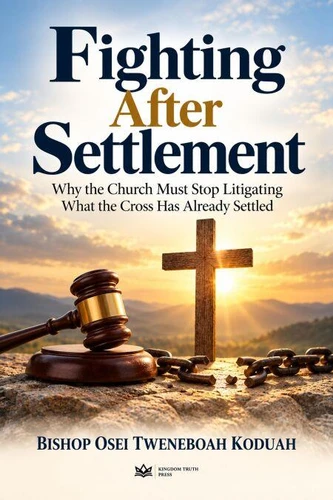
Fighting After Settlement
Imagine a soldier still fighting in the jungle long after the war has ended: the armistice signed, the enemy surrendered, but word never reached him. Bishop Osei Tweneboah Koduah argues that much of the modern church is that soldier. At the cross, a verdict was rendered. At the resurrection, it was validated. At Pentecost, it was activated. The debt was fully satisfied, the case permanently closed.
Yet believers keep praying and warring as though the outcome is still undecided. Drawing on Colossians, Ephesians, Romans, and 2 Corinthians, Fighting After Settlement introduces Covenant Legal Theology, moving readers from the anxiety of litigation to the authority of enforcement, without minimizing real suffering or promising easy answers. The case is closed. The verdict stands. You are not a petitioner.
You are an officer commissioned to enforce what has already been decided.
Yet believers keep praying and warring as though the outcome is still undecided. Drawing on Colossians, Ephesians, Romans, and 2 Corinthians, Fighting After Settlement introduces Covenant Legal Theology, moving readers from the anxiety of litigation to the authority of enforcement, without minimizing real suffering or promising easy answers. The case is closed. The verdict stands. You are not a petitioner.
You are an officer commissioned to enforce what has already been decided.
Imagine a soldier still fighting in the jungle long after the war has ended: the armistice signed, the enemy surrendered, but word never reached him. Bishop Osei Tweneboah Koduah argues that much of the modern church is that soldier. At the cross, a verdict was rendered. At the resurrection, it was validated. At Pentecost, it was activated. The debt was fully satisfied, the case permanently closed.
Yet believers keep praying and warring as though the outcome is still undecided. Drawing on Colossians, Ephesians, Romans, and 2 Corinthians, Fighting After Settlement introduces Covenant Legal Theology, moving readers from the anxiety of litigation to the authority of enforcement, without minimizing real suffering or promising easy answers. The case is closed. The verdict stands. You are not a petitioner.
You are an officer commissioned to enforce what has already been decided.
Yet believers keep praying and warring as though the outcome is still undecided. Drawing on Colossians, Ephesians, Romans, and 2 Corinthians, Fighting After Settlement introduces Covenant Legal Theology, moving readers from the anxiety of litigation to the authority of enforcement, without minimizing real suffering or promising easy answers. The case is closed. The verdict stands. You are not a petitioner.
You are an officer commissioned to enforce what has already been decided.