OFFRE LISEUSES
Une liseuse achetée = une housse offerte* jusqu'au 21 juin
Dernière sortie
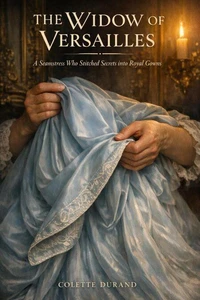
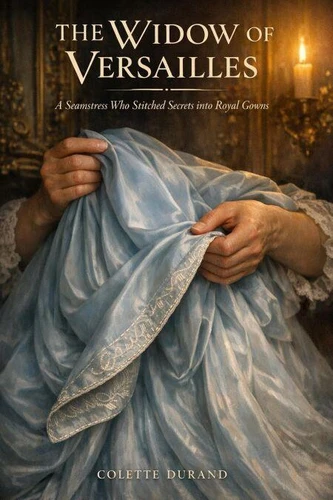
THE WIDOW OF VERSAILLES: A Seamstress Who Stitched Secrets into Royal Gowns
Versailles, 1786. The most powerful woman in France cannot read her own mail. The seamstress who dresses her can do something about that. Marguerite Vidal is a widow, a craftsman of the highest order, and the last person in the Palace of Versailles that anyone would think to watch. As head seamstress for the royal wardrobe commissions, she attends the queen's private fittings twice a year, hears what is said in rooms where discretion has been forgotten, and remembers everything.
For nine years she has been doing this for Rose Bertin, the celebrated modiste who has built a political intelligence operation behind her fashion empire, and who understood from the beginning that the most consistent presence in a queen's private life is not a minister or a courtier but the woman who fits her gowns. When Marguerite discovers that Marie Antoinette's personal correspondence with her brother the Emperor is being intercepted inside the Austrian embassy itself, Rose gives her something more dangerous than observation: a cipher.
Encoded in the directional variations of a standard embroidery stitch, invisible to anyone who does not know it exists, legible to the right reader in ten minutes. The gowns Marguerite delivers to Versailles begin carrying messages in their hems. The most intimate garments in France become intelligence documents. But France is changing. The harvest of 1788 fails. Bread prices reach impossible heights.
The women of Paris walk twelve miles to Versailles and come back with the royal family behind them. Revolution reorganizes everything, including the risks. A Jacobin official begins appearing at the atelier as a client, asking questions about the commission ledger that are not the questions a client asks. The network that Marguerite has been serving is fraying. The woman who built it is preparing to leave the country.
And the most important message she has ever stitched, the escape route encoded in the hem of a quiet grey-blue silk dress, has nowhere to go because the one person who can receive it has been arrested. The Widow of Versailles follows eight years of intelligence work conducted from the most overlooked position in the most observed court in Europe, through the Bastille's fall and the Terror's rise, to the October morning when Marguerite delivers one last gown to the Conciergerie and walks back through Paris understanding what it costs to have been, for eight years, very good at something no one was supposed to know she was doing.
This is a novel about craft and power, about the intelligence that lives in women's work, and about the specific courage of a woman who serves the most dangerous institutions of her age from the inside, with a needle, in plain sight. For readers of Hilary Mantel's Wolf Hall, Kate Quinn's The Rose Code, and Tracy Chevalier's Girl with a Pearl Earring.
For nine years she has been doing this for Rose Bertin, the celebrated modiste who has built a political intelligence operation behind her fashion empire, and who understood from the beginning that the most consistent presence in a queen's private life is not a minister or a courtier but the woman who fits her gowns. When Marguerite discovers that Marie Antoinette's personal correspondence with her brother the Emperor is being intercepted inside the Austrian embassy itself, Rose gives her something more dangerous than observation: a cipher.
Encoded in the directional variations of a standard embroidery stitch, invisible to anyone who does not know it exists, legible to the right reader in ten minutes. The gowns Marguerite delivers to Versailles begin carrying messages in their hems. The most intimate garments in France become intelligence documents. But France is changing. The harvest of 1788 fails. Bread prices reach impossible heights.
The women of Paris walk twelve miles to Versailles and come back with the royal family behind them. Revolution reorganizes everything, including the risks. A Jacobin official begins appearing at the atelier as a client, asking questions about the commission ledger that are not the questions a client asks. The network that Marguerite has been serving is fraying. The woman who built it is preparing to leave the country.
And the most important message she has ever stitched, the escape route encoded in the hem of a quiet grey-blue silk dress, has nowhere to go because the one person who can receive it has been arrested. The Widow of Versailles follows eight years of intelligence work conducted from the most overlooked position in the most observed court in Europe, through the Bastille's fall and the Terror's rise, to the October morning when Marguerite delivers one last gown to the Conciergerie and walks back through Paris understanding what it costs to have been, for eight years, very good at something no one was supposed to know she was doing.
This is a novel about craft and power, about the intelligence that lives in women's work, and about the specific courage of a woman who serves the most dangerous institutions of her age from the inside, with a needle, in plain sight. For readers of Hilary Mantel's Wolf Hall, Kate Quinn's The Rose Code, and Tracy Chevalier's Girl with a Pearl Earring.