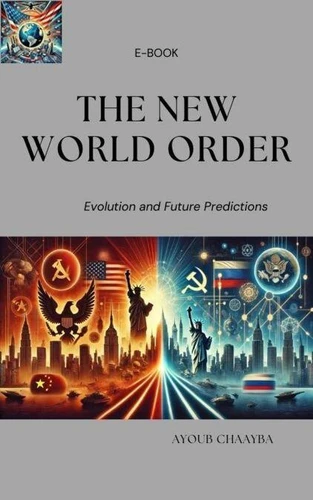
This book offers an in-depth exploration of the concept of the New World Order, tracing its historical roots and examining its development through political, economic, and social lenses. It delves into the origins of the idea, from the imperial dominance of the past to the restructuring of the world order after the two world wars and the Cold War, and into the modern era of globalization and technological progress.
The book also explores the future of the new world order, making predictions about emerging trends such as the rise of new global powers, the impact of artificial intelligence, and climate crises. It highlights the challenges and opportunities facing the international community, and examines how power dynamics will shift in the coming decades. In addition, the article critically analyzes the philosophical perspectives surrounding the new world order, and explores its implications for national sovereignty, social justice, and global stability.
This book offers an in-depth exploration of the concept of the New World Order, tracing its historical roots and examining its development through political, economic, and social lenses. It delves into the origins of the idea, from the imperial dominance of the past to the restructuring of the world order after the two world wars and the Cold War, and into the modern era of globalization and technological progress.
The book also explores the future of the new world order, making predictions about emerging trends such as the rise of new global powers, the impact of artificial intelligence, and climate crises. It highlights the challenges and opportunities facing the international community, and examines how power dynamics will shift in the coming decades. In addition, the article critically analyzes the philosophical perspectives surrounding the new world order, and explores its implications for national sovereignty, social justice, and global stability.