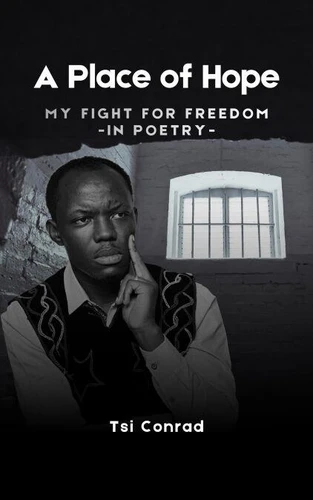
Behind the rusted gates of Kondengui, a shattered camera lens cannot blind the truth. On November 21, 2016, the script of a people changed forever. What began as a journalist and filmmaker's attempt to document the "Coffin Revolution" at Bamenda's Liberty Square quickly descended into a nightmare of bullets, teargas, and a brutal arrest on "Black Thursday". A Place of Hope is an unflinching poetic memoir penned from the dark, suffocating cells of the notorious Kondengui Central Prison, Yaoundé Cameroon.
Divided into three visceral acts-The Fire, The Cage, and The Roots-this collection transcends standard poetry. It serves as a cinematic documentation of the Southern Cameroons struggle, capturing the raw humanity of the "Bloody Eighteen" and the agonizing reality of the "Geography of Hell, " where one hundred and twenty souls are packed into a five-by-six-meter cell. Through searing verses like The Cellmates of Conscience, the author wrestles with the physical torture of his chains and the surreal irony of sharing a cell with the very embezzlers and corrupt officials who orchestrated the nation's decay.
Yet, amidst the stench, the hunger, and the violence, these pages bloom with an unexpected defiance: the choice to forgive, the refusal to break, and the realization that freedom is an internal state. Raw, evocative, and deeply historical, A Place of Hope is the archive of a survivor's scars. It stands as a profound prove to the fact that while a military boot can smash a camera, it can never format the mind of a man who knows what he saw.
Behind the rusted gates of Kondengui, a shattered camera lens cannot blind the truth. On November 21, 2016, the script of a people changed forever. What began as a journalist and filmmaker's attempt to document the "Coffin Revolution" at Bamenda's Liberty Square quickly descended into a nightmare of bullets, teargas, and a brutal arrest on "Black Thursday". A Place of Hope is an unflinching poetic memoir penned from the dark, suffocating cells of the notorious Kondengui Central Prison, Yaoundé Cameroon.
Divided into three visceral acts-The Fire, The Cage, and The Roots-this collection transcends standard poetry. It serves as a cinematic documentation of the Southern Cameroons struggle, capturing the raw humanity of the "Bloody Eighteen" and the agonizing reality of the "Geography of Hell, " where one hundred and twenty souls are packed into a five-by-six-meter cell. Through searing verses like The Cellmates of Conscience, the author wrestles with the physical torture of his chains and the surreal irony of sharing a cell with the very embezzlers and corrupt officials who orchestrated the nation's decay.
Yet, amidst the stench, the hunger, and the violence, these pages bloom with an unexpected defiance: the choice to forgive, the refusal to break, and the realization that freedom is an internal state. Raw, evocative, and deeply historical, A Place of Hope is the archive of a survivor's scars. It stands as a profound prove to the fact that while a military boot can smash a camera, it can never format the mind of a man who knows what he saw.