- Accueil /
- Frédéric Keck
Frédéric Keck

Dernière sortie
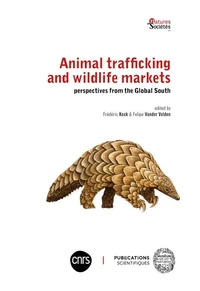
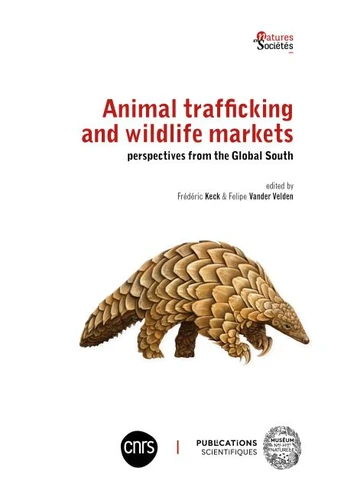
Animal trafficking and wildlife markets
This book examines cases of animal markets and wildlife trafficking in Asia, Africa and South America, often described as the "global South", leaving aside Europe and North America, defined by contrast at the "global North". One of the goals of this book is to ask why, beyond global norms of biodiversity protection, the circulation of animals and their body parts has appeared as scandalous, while similar movements in the global North are presented as conforming to these norms.
The notion of trafficking, which originally meant the ordinary movement of goods such as artworks or vehicles, has come to mean illegal trade because of the modern attempt to regulate trade within a framework guided by a modern conception that "purifies" objects and subjects, nature and culture. But relationships between humans and animals are much richer and more ambivalent than a simple division between the legal and the illegal supposes, and the ethnographic investigation by the authors gathered here of the countless movements of animals through human hands demonstrates these various meanings of "animal trafficking".
This book gathers surveys based on ethnographic fieldwork and historical archives to examine recent transformations of wildlife markets across the globe, such as the use of the Internet and social media to circulate images of animals, their body parts and the markets where they are sold. This book is a contribution to the anthropology of wildlife trafficking through the ethnographic investigation of animal markets.
By this term, we mean sites where humans confront animals as living beings and commodities at the same time, therefore generating tensions by capturing and sometimes killing animals to transform them into objects of value.
The notion of trafficking, which originally meant the ordinary movement of goods such as artworks or vehicles, has come to mean illegal trade because of the modern attempt to regulate trade within a framework guided by a modern conception that "purifies" objects and subjects, nature and culture. But relationships between humans and animals are much richer and more ambivalent than a simple division between the legal and the illegal supposes, and the ethnographic investigation by the authors gathered here of the countless movements of animals through human hands demonstrates these various meanings of "animal trafficking".
This book gathers surveys based on ethnographic fieldwork and historical archives to examine recent transformations of wildlife markets across the globe, such as the use of the Internet and social media to circulate images of animals, their body parts and the markets where they are sold. This book is a contribution to the anthropology of wildlife trafficking through the ethnographic investigation of animal markets.
By this term, we mean sites where humans confront animals as living beings and commodities at the same time, therefore generating tensions by capturing and sometimes killing animals to transform them into objects of value.
This book examines cases of animal markets and wildlife trafficking in Asia, Africa and South America, often described as the "global South", leaving aside Europe and North America, defined by contrast at the "global North". One of the goals of this book is to ask why, beyond global norms of biodiversity protection, the circulation of animals and their body parts has appeared as scandalous, while similar movements in the global North are presented as conforming to these norms.
The notion of trafficking, which originally meant the ordinary movement of goods such as artworks or vehicles, has come to mean illegal trade because of the modern attempt to regulate trade within a framework guided by a modern conception that "purifies" objects and subjects, nature and culture. But relationships between humans and animals are much richer and more ambivalent than a simple division between the legal and the illegal supposes, and the ethnographic investigation by the authors gathered here of the countless movements of animals through human hands demonstrates these various meanings of "animal trafficking".
This book gathers surveys based on ethnographic fieldwork and historical archives to examine recent transformations of wildlife markets across the globe, such as the use of the Internet and social media to circulate images of animals, their body parts and the markets where they are sold. This book is a contribution to the anthropology of wildlife trafficking through the ethnographic investigation of animal markets.
By this term, we mean sites where humans confront animals as living beings and commodities at the same time, therefore generating tensions by capturing and sometimes killing animals to transform them into objects of value.
The notion of trafficking, which originally meant the ordinary movement of goods such as artworks or vehicles, has come to mean illegal trade because of the modern attempt to regulate trade within a framework guided by a modern conception that "purifies" objects and subjects, nature and culture. But relationships between humans and animals are much richer and more ambivalent than a simple division between the legal and the illegal supposes, and the ethnographic investigation by the authors gathered here of the countless movements of animals through human hands demonstrates these various meanings of "animal trafficking".
This book gathers surveys based on ethnographic fieldwork and historical archives to examine recent transformations of wildlife markets across the globe, such as the use of the Internet and social media to circulate images of animals, their body parts and the markets where they are sold. This book is a contribution to the anthropology of wildlife trafficking through the ethnographic investigation of animal markets.
By this term, we mean sites where humans confront animals as living beings and commodities at the same time, therefore generating tensions by capturing and sometimes killing animals to transform them into objects of value.
Les livres de Frédéric Keck

15,99 €

9,99 €

15,00 €

13,99 €

8,49 €

17,00 €

15,00 €

5/5
80,00 €
Prix Léon de Rosen

15,99 €

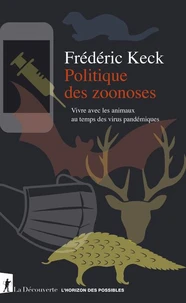
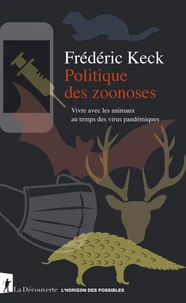
Politique des zoonoses. Vivre avec les animaux au temps des virus pandémiques
Frédéric Keck
Grand Format
23,00 €

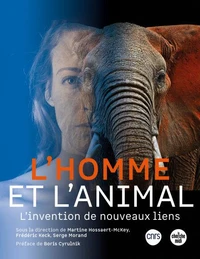
L'Homme et l'Animal. L'invention de nouveaux liens
Martine Hossaert-McKey, Frédéric Keck, Serge Morand
Grand Format
24,90 €

16,00 €

L'Homme et l'Animal. L'invention de nouveaux liens
Martine Hossaert-McKey, Frédéric Keck, Serge Morand
E-book
17,99 €

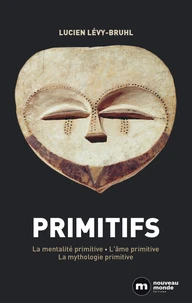
Primitifs. La mentalité primitive ; L'âme primitive ; La mythologie primitive
Lucien Lévy-Bruhl
Grand Format
31,90 €

22,00 €

Esprit N° 327, Août-Septembre 2006
Terrorisme et contre-terrorisme : la guerre perpétuelle ? - Occasion
Olivier Mongin, Thierry Baffoy, Régis Burnet, Frédéric Keck
Grand Format
11,00 €
Nouveauté

Animal trafficking and wildlife markets. perspectives from the Global South 2026
Frédéric Keck, Velden felipe Vander
E-book
16,99 €

15,99 €