OFFRE LISEUSES
Une liseuse achetée = une housse offerte* jusqu'au 21 juin
- Accueil /
- Hakryang Seo
Hakryang Seo

Dernière sortie
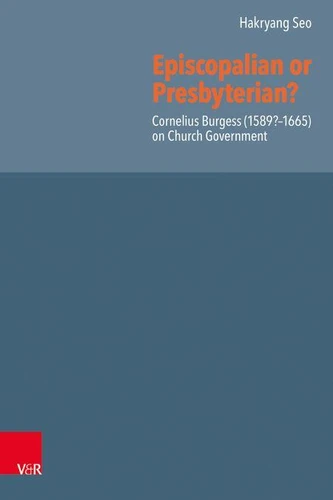
Episcopalian or Presbyterian?
While many studies have labeled Cornelius Burgess either an Episcopalian or a Presbyterian depending on the period of his life, Hakryang Seo challenges that binary. By using his early sermon note manuscripts never before analyzed by scholars, the author reveals a more consistent and principled view of church government. Burgess believed that no single form - whether Episcopacy or Presbyterianism - was divinely required.
Instead, he held that bishops and presbyters shared the same ministerial order, especially in preaching and spiritual authority. This view allowed him to move between systems without abandoning his core convictions. Drawing from archival sources, this work repositions Burgess as a key voice in seventeenth-century debates on how the church should be governed.
While many studies have labeled Cornelius Burgess either an Episcopalian or a Presbyterian depending on the period of his life, Hakryang Seo challenges that binary. By using his early sermon note manuscripts never before analyzed by scholars, the author reveals a more consistent and principled view of church government. Burgess believed that no single form - whether Episcopacy or Presbyterianism - was divinely required.
Instead, he held that bishops and presbyters shared the same ministerial order, especially in preaching and spiritual authority. This view allowed him to move between systems without abandoning his core convictions. Drawing from archival sources, this work repositions Burgess as a key voice in seventeenth-century debates on how the church should be governed.
