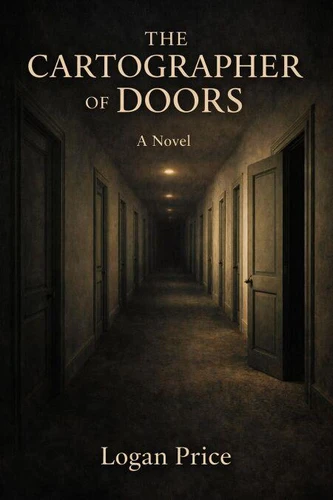
The city has always had doors that didn't behave. Not supernatural - nothing as simple as that. Architectural anomalies. Spaces where the inside was larger than the outside, where hallways connected buildings that had never been adjacent, where doors opened onto rooms that appeared on no surveyor's map. Vesper Linde maps them. It's a profession that didn't exist until she invented it: documenting threshold spaces that the official city survey couldn't explain, building a private archive of rooms that existed but weren't supposed to.
When she finds a door that opens onto a room that knows her name - literally, the room has her name carved into its threshold - she knows she's found something the archive wasn't built to contain.*The Cartographer of Doors* is contemporary fantasy about architectural memory, threshold spaces, and the question of what buildings remember about the people who once lived in them. It follows Vesper through a winter of mapping impossible rooms, tracking the threshold that bears her name, and discovering that the city's architectural anomalies are not random - they're a system.
Someone built them. Someone is still building them. And the room with her name on its threshold is the key to understanding why.
The city has always had doors that didn't behave. Not supernatural - nothing as simple as that. Architectural anomalies. Spaces where the inside was larger than the outside, where hallways connected buildings that had never been adjacent, where doors opened onto rooms that appeared on no surveyor's map. Vesper Linde maps them. It's a profession that didn't exist until she invented it: documenting threshold spaces that the official city survey couldn't explain, building a private archive of rooms that existed but weren't supposed to.
When she finds a door that opens onto a room that knows her name - literally, the room has her name carved into its threshold - she knows she's found something the archive wasn't built to contain.*The Cartographer of Doors* is contemporary fantasy about architectural memory, threshold spaces, and the question of what buildings remember about the people who once lived in them. It follows Vesper through a winter of mapping impossible rooms, tracking the threshold that bears her name, and discovering that the city's architectural anomalies are not random - they're a system.
Someone built them. Someone is still building them. And the room with her name on its threshold is the key to understanding why.