OFFRE LISEUSES
Une liseuse achetée = une housse offerte* jusqu'au 21 juin
- Accueil /
- Edward Bouverie Pusey
Edward Bouverie Pusey

Dernière sortie
The Confessions of St. Augustine (Summarized Edition)
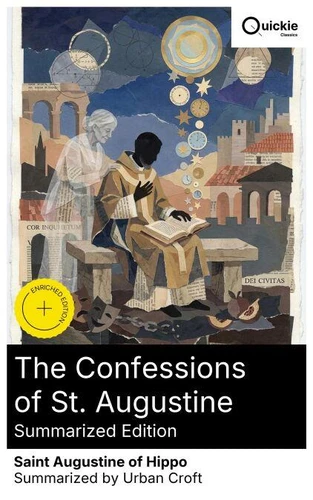
The Confessions of St. Augustine is a spiritual autobiography cast as an extended prayer, interweaving narrative, theology, and scriptural exegesis across thirteen books. Augustine recounts his youth, flirtation with Manichaeism, career in rhetoric, and conversion in Milan, while probing memory, desire, time, and creation with unusual rigor. Its Latin prose marries Ciceronian cadence to biblical allusion and Neoplatonic terms, creating a self-scrutinizing voice that helped inaugurate Western interiority and the confessional mode.
Born in 354 in Thagaste, Augustine trained as a rhetor in Carthage, Rome, and Milan; he passed through Manichaean dualism, Academic skepticism, and Neoplatonism before baptism under Ambrose in 387. Composed around 397-400 as he served as bishop of Hippo, the Confessions praises providence, clarifies his motives, memorializes Monica, and instructs catechumens in desire rightly ordered to God. This classic rewards readers across theology, philosophy, and literature: its phenomenology of memory and time, its honest moral psychology, and its doxological ardor remain bracing.
Whether approached as spiritual memoir or meditation on the soul's restlessness, The Confessions offers enduring insight and prose artistry that repay slow, attentive reading. Quickie Classics summarizes timeless works with precision, preserving the author's voice and keeping the prose clear, fast, and readable-distilled, never diluted. Enriched Edition extras: Introduction · Synopsis · Historical Context · Author Biography · Brief Analysis · 4 Reflection Q&As · Editorial Footnotes.
Born in 354 in Thagaste, Augustine trained as a rhetor in Carthage, Rome, and Milan; he passed through Manichaean dualism, Academic skepticism, and Neoplatonism before baptism under Ambrose in 387. Composed around 397-400 as he served as bishop of Hippo, the Confessions praises providence, clarifies his motives, memorializes Monica, and instructs catechumens in desire rightly ordered to God. This classic rewards readers across theology, philosophy, and literature: its phenomenology of memory and time, its honest moral psychology, and its doxological ardor remain bracing.
Whether approached as spiritual memoir or meditation on the soul's restlessness, The Confessions offers enduring insight and prose artistry that repay slow, attentive reading. Quickie Classics summarizes timeless works with precision, preserving the author's voice and keeping the prose clear, fast, and readable-distilled, never diluted. Enriched Edition extras: Introduction · Synopsis · Historical Context · Author Biography · Brief Analysis · 4 Reflection Q&As · Editorial Footnotes.
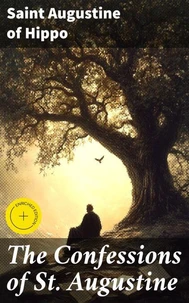
The Confessions of St. Augustine is a spiritual autobiography cast as an extended prayer, interweaving narrative, theology, and scriptural exegesis across thirteen books. Augustine recounts his youth, flirtation with Manichaeism, career in rhetoric, and conversion in Milan, while probing memory, desire, time, and creation with unusual rigor. Its Latin prose marries Ciceronian cadence to biblical allusion and Neoplatonic terms, creating a self-scrutinizing voice that helped inaugurate Western interiority and the confessional mode.
Born in 354 in Thagaste, Augustine trained as a rhetor in Carthage, Rome, and Milan; he passed through Manichaean dualism, Academic skepticism, and Neoplatonism before baptism under Ambrose in 387. Composed around 397-400 as he served as bishop of Hippo, the Confessions praises providence, clarifies his motives, memorializes Monica, and instructs catechumens in desire rightly ordered to God. This classic rewards readers across theology, philosophy, and literature: its phenomenology of memory and time, its honest moral psychology, and its doxological ardor remain bracing.
Whether approached as spiritual memoir or meditation on the soul's restlessness, The Confessions offers enduring insight and prose artistry that repay slow, attentive reading. Quickie Classics summarizes timeless works with precision, preserving the author's voice and keeping the prose clear, fast, and readable-distilled, never diluted. Enriched Edition extras: Introduction · Synopsis · Historical Context · Author Biography · Brief Analysis · 4 Reflection Q&As · Editorial Footnotes.
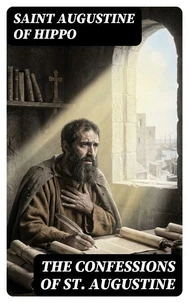
Born in 354 in Thagaste, Augustine trained as a rhetor in Carthage, Rome, and Milan; he passed through Manichaean dualism, Academic skepticism, and Neoplatonism before baptism under Ambrose in 387. Composed around 397-400 as he served as bishop of Hippo, the Confessions praises providence, clarifies his motives, memorializes Monica, and instructs catechumens in desire rightly ordered to God. This classic rewards readers across theology, philosophy, and literature: its phenomenology of memory and time, its honest moral psychology, and its doxological ardor remain bracing.
Whether approached as spiritual memoir or meditation on the soul's restlessness, The Confessions offers enduring insight and prose artistry that repay slow, attentive reading. Quickie Classics summarizes timeless works with precision, preserving the author's voice and keeping the prose clear, fast, and readable-distilled, never diluted. Enriched Edition extras: Introduction · Synopsis · Historical Context · Author Biography · Brief Analysis · 4 Reflection Q&As · Editorial Footnotes.
Les livres de Edward Bouverie Pusey

The Confessions of St. Augustine. Enriched edition. Autobiography of a Christian Saint and Early Church Father
Saint Augustine of Hippo, Edward Bouverie Pusey, Ethan West
E-book
0,99 €

The Confessions of St. Augustine. Enriched edition. Autobiography of a Christian Saint and Early Church Father
Saint Augustine of Hippo, Edward Bouverie Pusey, Lance Thomas
E-book
1,99 €

0,49 €
