OFFRE LISEUSES
Une liseuse achetée = une housse offerte* jusqu'au 21 juin
- Accueil /
- Ute Lotz-Heumann
Ute Lotz-Heumann

Dernière sortie
After Merit
In this study Charles Raith II fills a gap in Reformation-era scholarship by analyzing Calvin's teaching on works and reward in light of medieval theological developments surrounding the doctrine of merit. While significant analysis has been given to Calvin's doctrine of justification, its relation to sanctification, the notion of union with Christ, and the role of participation, there is as yet no sustained analysis of how these teachings are shaped by the most hostile and pervasive of his polemics, namely, his confrontation with a merit-based framework for understanding Christian salvation.
This volume, however, interprets Calvin's own theological constructions as contextually determined by the reigning polemics of his day. In addition, previous scholarship on these topics has largely failed to properly contextualize Calvin's own thought against the background of scholastic theological developments-developments that Calvin both accepts and rejects in the formulation of his own theology.
After Merit addresses these gaps by (1) analyzing Calvin's tracts, scriptural commentaries and Institutes to demonstrate Calvin's unique distain for the doctrine of merit among the early Reformers and the pervasiveness of this polemic within his theological program; (2) reviewing the scholastic developments surrounding the doctrine of merit from the High to Late Middle Ages as background to Calvin's thought; (3) highlighting Calvin's principle problems with the doctrine of merit: the competitive-causal schema between divine and human causality, merit as a basis for justification, and good works as "deserving" of reward; and (4) unpacking Calvin's theology of justification, sanctification, the worth of works, and the role of works in salvation as an alternative to the "opponents" doctrine of merit.
The volume concludes by reflecting on the reception of Calvin's theology of works and reward in later Reformed thought.

This volume, however, interprets Calvin's own theological constructions as contextually determined by the reigning polemics of his day. In addition, previous scholarship on these topics has largely failed to properly contextualize Calvin's own thought against the background of scholastic theological developments-developments that Calvin both accepts and rejects in the formulation of his own theology.
After Merit addresses these gaps by (1) analyzing Calvin's tracts, scriptural commentaries and Institutes to demonstrate Calvin's unique distain for the doctrine of merit among the early Reformers and the pervasiveness of this polemic within his theological program; (2) reviewing the scholastic developments surrounding the doctrine of merit from the High to Late Middle Ages as background to Calvin's thought; (3) highlighting Calvin's principle problems with the doctrine of merit: the competitive-causal schema between divine and human causality, merit as a basis for justification, and good works as "deserving" of reward; and (4) unpacking Calvin's theology of justification, sanctification, the worth of works, and the role of works in salvation as an alternative to the "opponents" doctrine of merit.
The volume concludes by reflecting on the reception of Calvin's theology of works and reward in later Reformed thought.

In this study Charles Raith II fills a gap in Reformation-era scholarship by analyzing Calvin's teaching on works and reward in light of medieval theological developments surrounding the doctrine of merit. While significant analysis has been given to Calvin's doctrine of justification, its relation to sanctification, the notion of union with Christ, and the role of participation, there is as yet no sustained analysis of how these teachings are shaped by the most hostile and pervasive of his polemics, namely, his confrontation with a merit-based framework for understanding Christian salvation.
This volume, however, interprets Calvin's own theological constructions as contextually determined by the reigning polemics of his day. In addition, previous scholarship on these topics has largely failed to properly contextualize Calvin's own thought against the background of scholastic theological developments-developments that Calvin both accepts and rejects in the formulation of his own theology.
After Merit addresses these gaps by (1) analyzing Calvin's tracts, scriptural commentaries and Institutes to demonstrate Calvin's unique distain for the doctrine of merit among the early Reformers and the pervasiveness of this polemic within his theological program; (2) reviewing the scholastic developments surrounding the doctrine of merit from the High to Late Middle Ages as background to Calvin's thought; (3) highlighting Calvin's principle problems with the doctrine of merit: the competitive-causal schema between divine and human causality, merit as a basis for justification, and good works as "deserving" of reward; and (4) unpacking Calvin's theology of justification, sanctification, the worth of works, and the role of works in salvation as an alternative to the "opponents" doctrine of merit.
The volume concludes by reflecting on the reception of Calvin's theology of works and reward in later Reformed thought.

This volume, however, interprets Calvin's own theological constructions as contextually determined by the reigning polemics of his day. In addition, previous scholarship on these topics has largely failed to properly contextualize Calvin's own thought against the background of scholastic theological developments-developments that Calvin both accepts and rejects in the formulation of his own theology.
After Merit addresses these gaps by (1) analyzing Calvin's tracts, scriptural commentaries and Institutes to demonstrate Calvin's unique distain for the doctrine of merit among the early Reformers and the pervasiveness of this polemic within his theological program; (2) reviewing the scholastic developments surrounding the doctrine of merit from the High to Late Middle Ages as background to Calvin's thought; (3) highlighting Calvin's principle problems with the doctrine of merit: the competitive-causal schema between divine and human causality, merit as a basis for justification, and good works as "deserving" of reward; and (4) unpacking Calvin's theology of justification, sanctification, the worth of works, and the role of works in salvation as an alternative to the "opponents" doctrine of merit.
The volume concludes by reflecting on the reception of Calvin's theology of works and reward in later Reformed thought.

Les livres de Ute Lotz-Heumann

A Christoscopic Reading of Scripture: Johannes Oecolampadius on Hebrews
Jeff Fisher, Günter Frank, Ute Lotz-Heumann, Barbara Mahlmann-Bauer, Johannes Schilling
E-book
110,00 €

Melanchthon and Calvin on Confession and Communion. Early Modern Protestant Penitential and Eucharistic Piety
Herman Speelman, Zsombor Tóth, Günter Frank, Ute Lotz-Heumann, Barbara Mahlmann-Bauer
E-book
130,00 €

Armed Memory. Agency and Peasant Revolts in Central and Southern Europe (1450–1700)
Gabriella Erdélyi, Günter Frank, Ute Lotz-Heumann, Barbara Mahlmann-Bauer, Johannes Schilling
E-book
130,00 €

Die Präsenz Christi im Amt. Am Beispiel ausgewählter Predigten Martin Luthers, 1535–1546
Jonathan Mumme, Günter Frank, Ute Lotz-Heumann, Barbara Mahlmann-Bauer, Johannes Schilling
E-book
130,00 €

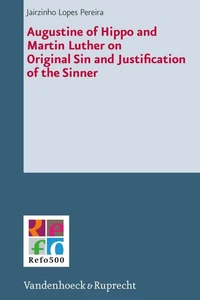
Augustine of Hippo and Martin Luther on Original Sin and Justification of the Sinner
Jairzinho Lopes Pereira, Günter Frank, Ute Lotz-Heumann, Barbara Mahlmann-Bauer, Johannes Schilling
E-book
95,00 €

Der Erlebnisraum Lutherstadt Wittenberg. Genese, Entwicklung und Bestand eines protestantischen Erinnerungsortes
Silvio Reichelt, Günter Frank, Ute Lotz-Heumann, Barbara Mahlmann-Bauer, Johannes Schilling
E-book
140,00 €