SOLDES
Jusqu'à -70% sur une sélection d'articles*
- Accueil /
- Adrienn Caronte-Veisz
Adrienn Caronte-Veisz

Dernière sortie
Healthy Aging in Metropolitan Landscapes
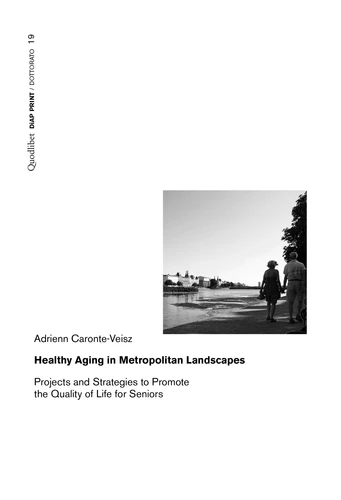
Aging demographics and urbanization are two of the most important social
tendencies facing the world's developed countries. Today cities must adjust
if older people are to maintain quality of life. The age-friendly city is a city
suitable for everyone. The rewriting of the urban landscape with the elderly
in mind might be the key to urban regeneration.
This research strives to build bridges between cognitive psychology and
landscape architecture in order to promote senior citizens' well-being in the
metropolis.
It proposes a critical reflection on how urban landscapes, designed with evidence-based methodology can promote the psycho-physical welfare of the inhabitants, with particular focus on one of the most vulnerable groups. High quality neighbourhood green space is associated with mental health benefits, prevention of cognitive decline and dementia, reduced cardiovascular morbidity and mortality, etc.
However, the evidence base, related to healthy urban greenery, is poorly integrated in the planning, management and design of urban green spaces. Through a global current design practice analysis and the comparison of two European case studies (Copenhagen and Rome), analysed with quantitative and qualitative approaches, an Age-friendly Urban Nature Index was developed that aims to provide a tool for landscape architects and local decision makers to support future urban planning and design.
It proposes a critical reflection on how urban landscapes, designed with evidence-based methodology can promote the psycho-physical welfare of the inhabitants, with particular focus on one of the most vulnerable groups. High quality neighbourhood green space is associated with mental health benefits, prevention of cognitive decline and dementia, reduced cardiovascular morbidity and mortality, etc.
However, the evidence base, related to healthy urban greenery, is poorly integrated in the planning, management and design of urban green spaces. Through a global current design practice analysis and the comparison of two European case studies (Copenhagen and Rome), analysed with quantitative and qualitative approaches, an Age-friendly Urban Nature Index was developed that aims to provide a tool for landscape architects and local decision makers to support future urban planning and design.
Aging demographics and urbanization are two of the most important social
tendencies facing the world's developed countries. Today cities must adjust
if older people are to maintain quality of life. The age-friendly city is a city
suitable for everyone. The rewriting of the urban landscape with the elderly
in mind might be the key to urban regeneration.
This research strives to build bridges between cognitive psychology and
landscape architecture in order to promote senior citizens' well-being in the
metropolis.
It proposes a critical reflection on how urban landscapes, designed with evidence-based methodology can promote the psycho-physical welfare of the inhabitants, with particular focus on one of the most vulnerable groups. High quality neighbourhood green space is associated with mental health benefits, prevention of cognitive decline and dementia, reduced cardiovascular morbidity and mortality, etc.
However, the evidence base, related to healthy urban greenery, is poorly integrated in the planning, management and design of urban green spaces. Through a global current design practice analysis and the comparison of two European case studies (Copenhagen and Rome), analysed with quantitative and qualitative approaches, an Age-friendly Urban Nature Index was developed that aims to provide a tool for landscape architects and local decision makers to support future urban planning and design.
It proposes a critical reflection on how urban landscapes, designed with evidence-based methodology can promote the psycho-physical welfare of the inhabitants, with particular focus on one of the most vulnerable groups. High quality neighbourhood green space is associated with mental health benefits, prevention of cognitive decline and dementia, reduced cardiovascular morbidity and mortality, etc.
However, the evidence base, related to healthy urban greenery, is poorly integrated in the planning, management and design of urban green spaces. Through a global current design practice analysis and the comparison of two European case studies (Copenhagen and Rome), analysed with quantitative and qualitative approaches, an Age-friendly Urban Nature Index was developed that aims to provide a tool for landscape architects and local decision makers to support future urban planning and design.
Les livres de Adrienn Caronte-Veisz

Healthy Aging in Metropolitan Landscapes. Projects and Strategies to Promote the Quality of Life for Seniors
Adrienn Caronte-Veisz
E-book
10,80 €