OFFRE LISEUSES
Une liseuse achetée = une housse offerte* jusqu'au 21 juin
- Accueil /
- Lionel Strachey
Lionel Strachey

Dernière sortie
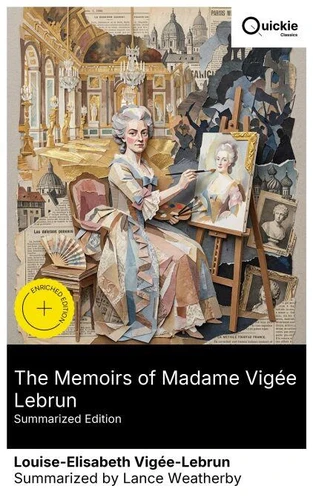
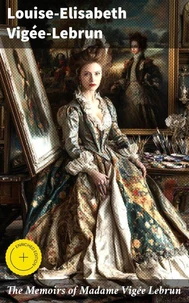
The Memoirs of Madame Vigée Lebrun (Summarized Edition)
From the glitter of Versailles to the hazards of exile, The Memoirs of Madame Vigée Lebrun traces an artist's life through the fall of the Ancien Régime and a remade Europe. In polished, conversational prose, she interleaves notes on color, light, and likeness with incisive portraits of sitters and salons from Paris to Naples, Vienna, and St Petersburg. Part travelogue, part apologia, it joins the artist's memoir tradition while offering a rare female voice from court and academy.
Trained by her father, the pastel painter Louis Vigée, and married to the dealer Jean-Baptiste-Pierre Lebrun, she learned both studio discipline and the art market's risks. With Marie-Antoinette's patronage she entered the Académie Royale in 1783; the Revolution forced a decade of émigré labor across Italy, Austria, and Russia. Writing late in life (published in the 1830s), she shaped these experiences to defend her reputation and define a professional ethos for women painters.
Scholars and general readers alike will relish this lucid, firsthand archive of art, politics, and self-fashioning. It is an indispensable primary source and a compelling meditation on craft, patronage, celebrity, and survival. Quickie Classics summarizes timeless works with precision, preserving the author's voice and keeping the prose clear, fast, and readable-distilled, never diluted. Enriched Edition extras: Introduction · Synopsis · Historical Context · Author Biography · Brief Analysis · 4 Reflection Q&As · Editorial Footnotes.
Trained by her father, the pastel painter Louis Vigée, and married to the dealer Jean-Baptiste-Pierre Lebrun, she learned both studio discipline and the art market's risks. With Marie-Antoinette's patronage she entered the Académie Royale in 1783; the Revolution forced a decade of émigré labor across Italy, Austria, and Russia. Writing late in life (published in the 1830s), she shaped these experiences to defend her reputation and define a professional ethos for women painters.
Scholars and general readers alike will relish this lucid, firsthand archive of art, politics, and self-fashioning. It is an indispensable primary source and a compelling meditation on craft, patronage, celebrity, and survival. Quickie Classics summarizes timeless works with precision, preserving the author's voice and keeping the prose clear, fast, and readable-distilled, never diluted. Enriched Edition extras: Introduction · Synopsis · Historical Context · Author Biography · Brief Analysis · 4 Reflection Q&As · Editorial Footnotes.
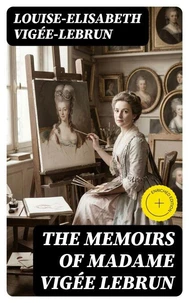
From the glitter of Versailles to the hazards of exile, The Memoirs of Madame Vigée Lebrun traces an artist's life through the fall of the Ancien Régime and a remade Europe. In polished, conversational prose, she interleaves notes on color, light, and likeness with incisive portraits of sitters and salons from Paris to Naples, Vienna, and St Petersburg. Part travelogue, part apologia, it joins the artist's memoir tradition while offering a rare female voice from court and academy.
Trained by her father, the pastel painter Louis Vigée, and married to the dealer Jean-Baptiste-Pierre Lebrun, she learned both studio discipline and the art market's risks. With Marie-Antoinette's patronage she entered the Académie Royale in 1783; the Revolution forced a decade of émigré labor across Italy, Austria, and Russia. Writing late in life (published in the 1830s), she shaped these experiences to defend her reputation and define a professional ethos for women painters.
Scholars and general readers alike will relish this lucid, firsthand archive of art, politics, and self-fashioning. It is an indispensable primary source and a compelling meditation on craft, patronage, celebrity, and survival. Quickie Classics summarizes timeless works with precision, preserving the author's voice and keeping the prose clear, fast, and readable-distilled, never diluted. Enriched Edition extras: Introduction · Synopsis · Historical Context · Author Biography · Brief Analysis · 4 Reflection Q&As · Editorial Footnotes.
Trained by her father, the pastel painter Louis Vigée, and married to the dealer Jean-Baptiste-Pierre Lebrun, she learned both studio discipline and the art market's risks. With Marie-Antoinette's patronage she entered the Académie Royale in 1783; the Revolution forced a decade of émigré labor across Italy, Austria, and Russia. Writing late in life (published in the 1830s), she shaped these experiences to defend her reputation and define a professional ethos for women painters.
Scholars and general readers alike will relish this lucid, firsthand archive of art, politics, and self-fashioning. It is an indispensable primary source and a compelling meditation on craft, patronage, celebrity, and survival. Quickie Classics summarizes timeless works with precision, preserving the author's voice and keeping the prose clear, fast, and readable-distilled, never diluted. Enriched Edition extras: Introduction · Synopsis · Historical Context · Author Biography · Brief Analysis · 4 Reflection Q&As · Editorial Footnotes.
Les livres de Lionel Strachey

The Memoirs of Madame Vigée Lebrun. Enriched edition.
Louise-Elisabeth Vigée-Lebrun, Lionel Strachey, Colton Marsh
E-book
0,99 €

The Gray Nun. A Tale of Faith, Love, and Identity in 19th-Century France
Nataly von Eschstruth, Lionel Strachey
E-book
0,99 €

The Memoirs of Madame Vigée Lebrun. Enriched edition. An Artist's Journey Through Revolutionary France
Louise-Elisabeth Vigée-Lebrun, Lionel Strachey, Lance Weatherby
E-book
2,99 €
