- Accueil /
- DuBose Heyward
DuBose Heyward

Dernière sortie
Mamba's daughters
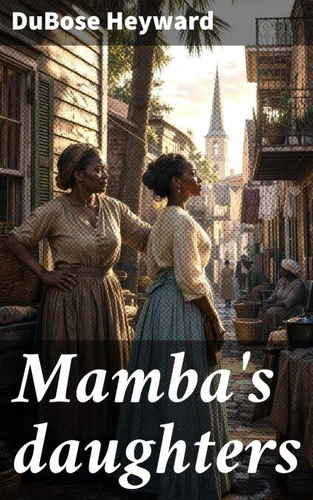
DuBose Heyward's Mamba's Daughters is a sweeping novel of Charleston's Black working-class life, tracing the fortunes of Hagar and her daughter Lissa within a world shaped by poverty, desire, religion, and the fragile promise of social ascent. Written in a richly atmospheric prose that blends regional realism with lyric intensity, the novel belongs to the tradition of Southern literature that sought to render local speech, custom, and place with documentary vividness.
Yet its power lies less in picturesque local color than in its serious engagement with race, gender, and generational struggle in the early twentieth-century American South. Heyward, a Charleston native, drew deeply on the city's social textures, dialects, and class divisions. Best known for Porgy, he was one of the major white Southern writers to center Black lives in fiction, however imperfectly within the constraints of his period.
His familiarity with Charleston's streets, markets, tenements, and cultural memory clearly informs this novel's depth of setting and its concern with survival, dignity, and maternal ambition. This is a book for readers interested in Southern fiction, African American representation in early modern literature, and the intersections of vernacular art and social critique. Mamba's Daughters rewards close attention as both a compelling narrative and a revealing cultural document.
Yet its power lies less in picturesque local color than in its serious engagement with race, gender, and generational struggle in the early twentieth-century American South. Heyward, a Charleston native, drew deeply on the city's social textures, dialects, and class divisions. Best known for Porgy, he was one of the major white Southern writers to center Black lives in fiction, however imperfectly within the constraints of his period.
His familiarity with Charleston's streets, markets, tenements, and cultural memory clearly informs this novel's depth of setting and its concern with survival, dignity, and maternal ambition. This is a book for readers interested in Southern fiction, African American representation in early modern literature, and the intersections of vernacular art and social critique. Mamba's Daughters rewards close attention as both a compelling narrative and a revealing cultural document.
DuBose Heyward's Mamba's Daughters is a sweeping novel of Charleston's Black working-class life, tracing the fortunes of Hagar and her daughter Lissa within a world shaped by poverty, desire, religion, and the fragile promise of social ascent. Written in a richly atmospheric prose that blends regional realism with lyric intensity, the novel belongs to the tradition of Southern literature that sought to render local speech, custom, and place with documentary vividness.
Yet its power lies less in picturesque local color than in its serious engagement with race, gender, and generational struggle in the early twentieth-century American South. Heyward, a Charleston native, drew deeply on the city's social textures, dialects, and class divisions. Best known for Porgy, he was one of the major white Southern writers to center Black lives in fiction, however imperfectly within the constraints of his period.
His familiarity with Charleston's streets, markets, tenements, and cultural memory clearly informs this novel's depth of setting and its concern with survival, dignity, and maternal ambition. This is a book for readers interested in Southern fiction, African American representation in early modern literature, and the intersections of vernacular art and social critique. Mamba's Daughters rewards close attention as both a compelling narrative and a revealing cultural document.
Yet its power lies less in picturesque local color than in its serious engagement with race, gender, and generational struggle in the early twentieth-century American South. Heyward, a Charleston native, drew deeply on the city's social textures, dialects, and class divisions. Best known for Porgy, he was one of the major white Southern writers to center Black lives in fiction, however imperfectly within the constraints of his period.
His familiarity with Charleston's streets, markets, tenements, and cultural memory clearly informs this novel's depth of setting and its concern with survival, dignity, and maternal ambition. This is a book for readers interested in Southern fiction, African American representation in early modern literature, and the intersections of vernacular art and social critique. Mamba's Daughters rewards close attention as both a compelling narrative and a revealing cultural document.
