SOLDES
Jusqu'à -70% sur une sélection d'articles*
- Accueil /
- Elena Dorato
Elena Dorato

Dernière sortie
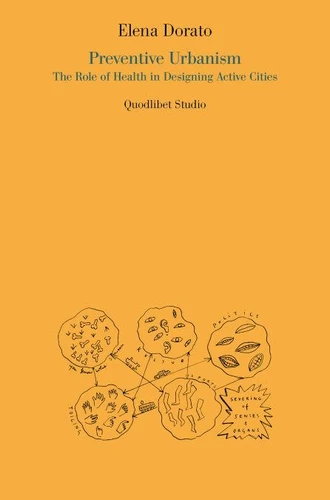
Preventive Urbanism
"We must integrate our concepts of 'public
health issues' with 'urban planning issues'.
Urban planners, engineers, and architects
must begin to see that they have a critical
role in public health. Similarly, public health
professionals need to appreciate that the
built environment influences public health as
much as vaccines or water quality."
Richard J. Jackson, Chris Kochtitzky
"Our bodies are designed to move.
Our cities should be too." ©Nike Inc. This essay explores the broad and fast-developing field of the socalled Healthy, Active City and shifts the theoretical point of view from a medical, almost curative, issue to an urban one. Urbanism is therefore affirmed as a fundamental and preventive discipline, capable of enhancing the health and quality of life of urban populations. Especially in times of a global pandemic such as the one that began in early 2020, the relationships between urbanism, urban health, and the built environment are of fundamental importance. The author tackles, from an urban design and planning perspective, the complex connections and cause-effect processes that link the characteristics of our cities to the well-being of populations, focusing on the dichotomy between urban and human bodies, with specific emphasis on physical activity because of its role as a principal contributor to health conditions.
For a long time, such relationships were predominantly approached from an epidemiological and so- cial point of view, which saw the features and structure of the city as the determinants of the levels of health and physical activity; yet these were rarely investigated in depth. Since the industrial revolution of the mid-nineteenth century, when urbanism as a modern discipline was born, the sanitation issues of the contemporary city have greatly changed, as have the socio-demographic structures and people's needs. Nowadays, health and the practice of physical activity must be seen as relevant goals to be achieved also through comprehensive and integrated interventions in the physical environment, where communities live and develop, addressing through urban policies and programs, and from a design perspective, the problem of urban living in terms of sustainability, safety, accessibility, and attractiveness.
Our cities should be too." ©Nike Inc. This essay explores the broad and fast-developing field of the socalled Healthy, Active City and shifts the theoretical point of view from a medical, almost curative, issue to an urban one. Urbanism is therefore affirmed as a fundamental and preventive discipline, capable of enhancing the health and quality of life of urban populations. Especially in times of a global pandemic such as the one that began in early 2020, the relationships between urbanism, urban health, and the built environment are of fundamental importance. The author tackles, from an urban design and planning perspective, the complex connections and cause-effect processes that link the characteristics of our cities to the well-being of populations, focusing on the dichotomy between urban and human bodies, with specific emphasis on physical activity because of its role as a principal contributor to health conditions.
For a long time, such relationships were predominantly approached from an epidemiological and so- cial point of view, which saw the features and structure of the city as the determinants of the levels of health and physical activity; yet these were rarely investigated in depth. Since the industrial revolution of the mid-nineteenth century, when urbanism as a modern discipline was born, the sanitation issues of the contemporary city have greatly changed, as have the socio-demographic structures and people's needs. Nowadays, health and the practice of physical activity must be seen as relevant goals to be achieved also through comprehensive and integrated interventions in the physical environment, where communities live and develop, addressing through urban policies and programs, and from a design perspective, the problem of urban living in terms of sustainability, safety, accessibility, and attractiveness.
"We must integrate our concepts of 'public
health issues' with 'urban planning issues'.
Urban planners, engineers, and architects
must begin to see that they have a critical
role in public health. Similarly, public health
professionals need to appreciate that the
built environment influences public health as
much as vaccines or water quality."
Richard J. Jackson, Chris Kochtitzky
"Our bodies are designed to move.
Our cities should be too." ©Nike Inc. This essay explores the broad and fast-developing field of the socalled Healthy, Active City and shifts the theoretical point of view from a medical, almost curative, issue to an urban one. Urbanism is therefore affirmed as a fundamental and preventive discipline, capable of enhancing the health and quality of life of urban populations. Especially in times of a global pandemic such as the one that began in early 2020, the relationships between urbanism, urban health, and the built environment are of fundamental importance. The author tackles, from an urban design and planning perspective, the complex connections and cause-effect processes that link the characteristics of our cities to the well-being of populations, focusing on the dichotomy between urban and human bodies, with specific emphasis on physical activity because of its role as a principal contributor to health conditions.
For a long time, such relationships were predominantly approached from an epidemiological and so- cial point of view, which saw the features and structure of the city as the determinants of the levels of health and physical activity; yet these were rarely investigated in depth. Since the industrial revolution of the mid-nineteenth century, when urbanism as a modern discipline was born, the sanitation issues of the contemporary city have greatly changed, as have the socio-demographic structures and people's needs. Nowadays, health and the practice of physical activity must be seen as relevant goals to be achieved also through comprehensive and integrated interventions in the physical environment, where communities live and develop, addressing through urban policies and programs, and from a design perspective, the problem of urban living in terms of sustainability, safety, accessibility, and attractiveness.
Our cities should be too." ©Nike Inc. This essay explores the broad and fast-developing field of the socalled Healthy, Active City and shifts the theoretical point of view from a medical, almost curative, issue to an urban one. Urbanism is therefore affirmed as a fundamental and preventive discipline, capable of enhancing the health and quality of life of urban populations. Especially in times of a global pandemic such as the one that began in early 2020, the relationships between urbanism, urban health, and the built environment are of fundamental importance. The author tackles, from an urban design and planning perspective, the complex connections and cause-effect processes that link the characteristics of our cities to the well-being of populations, focusing on the dichotomy between urban and human bodies, with specific emphasis on physical activity because of its role as a principal contributor to health conditions.
For a long time, such relationships were predominantly approached from an epidemiological and so- cial point of view, which saw the features and structure of the city as the determinants of the levels of health and physical activity; yet these were rarely investigated in depth. Since the industrial revolution of the mid-nineteenth century, when urbanism as a modern discipline was born, the sanitation issues of the contemporary city have greatly changed, as have the socio-demographic structures and people's needs. Nowadays, health and the practice of physical activity must be seen as relevant goals to be achieved also through comprehensive and integrated interventions in the physical environment, where communities live and develop, addressing through urban policies and programs, and from a design perspective, the problem of urban living in terms of sustainability, safety, accessibility, and attractiveness.
Les livres de Elena Dorato

13,20 €