OFFRE LISEUSES
Une liseuse achetée = une housse offerte* jusqu'au 21 juin
- Accueil /
- George W. M. Reynolds
George W. M. Reynolds

Dernière sortie
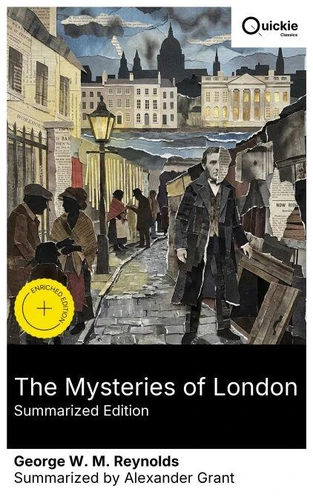
The Mysteries of London (Summarized Edition)
Across four serial volumes (1844-48), The Mysteries of London offers a panoramic itinerary through rookeries, prisons, pleasure gardens, and drawing rooms, linking crime, charity, and capital. In dialogue with Eugène Sue's Les Mystères de Paris, Reynolds blends melodrama, Gothic shock, and reportage: cliffhangers, set-piece revelations, and sudden descents into the underworld-memorably via the Resurrection Man-propel a fiercely anti-elitist social critique.
The episodic, penny-blood form enables vivid catalogues of urban types, cant, and spaces while indicting workhouses, policing, and aristocratic impunity. George W. M. Reynolds-radical journalist, editor of Reynolds's Miscellany and later Reynolds's Newspaper-wrote from Chartist commitments and a Parisian apprenticeship in popular fiction. Self-educated and republican, he adapted continental "mysteries" to British conditions, aiming at a mass audience excluded from polite letters.
His distrust of elite institutions and immersion in the cheap press shaped the novel's sympathy for the dispossessed and its combative tone. For readers of Dickens, Sue, and Mayhew, this saga is indispensable for studying Victorian urban culture, class politics, and the mechanics of serial narrative. Read it for its propulsive plots and for the documentary curiosity with which it maps London's inequalities.
As a democratically pitched counterpoint to respectable realism, The Mysteries of London remains startlingly modern. Quickie Classics summarizes timeless works with precision, preserving the author's voice and keeping the prose clear, fast, and readable-distilled, never diluted. Enriched Edition extras: Introduction · Synopsis · Historical Context · Brief Analysis · 4 Reflection Q&As · Editorial Footnotes.
The episodic, penny-blood form enables vivid catalogues of urban types, cant, and spaces while indicting workhouses, policing, and aristocratic impunity. George W. M. Reynolds-radical journalist, editor of Reynolds's Miscellany and later Reynolds's Newspaper-wrote from Chartist commitments and a Parisian apprenticeship in popular fiction. Self-educated and republican, he adapted continental "mysteries" to British conditions, aiming at a mass audience excluded from polite letters.
His distrust of elite institutions and immersion in the cheap press shaped the novel's sympathy for the dispossessed and its combative tone. For readers of Dickens, Sue, and Mayhew, this saga is indispensable for studying Victorian urban culture, class politics, and the mechanics of serial narrative. Read it for its propulsive plots and for the documentary curiosity with which it maps London's inequalities.
As a democratically pitched counterpoint to respectable realism, The Mysteries of London remains startlingly modern. Quickie Classics summarizes timeless works with precision, preserving the author's voice and keeping the prose clear, fast, and readable-distilled, never diluted. Enriched Edition extras: Introduction · Synopsis · Historical Context · Brief Analysis · 4 Reflection Q&As · Editorial Footnotes.
Across four serial volumes (1844-48), The Mysteries of London offers a panoramic itinerary through rookeries, prisons, pleasure gardens, and drawing rooms, linking crime, charity, and capital. In dialogue with Eugène Sue's Les Mystères de Paris, Reynolds blends melodrama, Gothic shock, and reportage: cliffhangers, set-piece revelations, and sudden descents into the underworld-memorably via the Resurrection Man-propel a fiercely anti-elitist social critique.
The episodic, penny-blood form enables vivid catalogues of urban types, cant, and spaces while indicting workhouses, policing, and aristocratic impunity. George W. M. Reynolds-radical journalist, editor of Reynolds's Miscellany and later Reynolds's Newspaper-wrote from Chartist commitments and a Parisian apprenticeship in popular fiction. Self-educated and republican, he adapted continental "mysteries" to British conditions, aiming at a mass audience excluded from polite letters.
His distrust of elite institutions and immersion in the cheap press shaped the novel's sympathy for the dispossessed and its combative tone. For readers of Dickens, Sue, and Mayhew, this saga is indispensable for studying Victorian urban culture, class politics, and the mechanics of serial narrative. Read it for its propulsive plots and for the documentary curiosity with which it maps London's inequalities.
As a democratically pitched counterpoint to respectable realism, The Mysteries of London remains startlingly modern. Quickie Classics summarizes timeless works with precision, preserving the author's voice and keeping the prose clear, fast, and readable-distilled, never diluted. Enriched Edition extras: Introduction · Synopsis · Historical Context · Brief Analysis · 4 Reflection Q&As · Editorial Footnotes.
The episodic, penny-blood form enables vivid catalogues of urban types, cant, and spaces while indicting workhouses, policing, and aristocratic impunity. George W. M. Reynolds-radical journalist, editor of Reynolds's Miscellany and later Reynolds's Newspaper-wrote from Chartist commitments and a Parisian apprenticeship in popular fiction. Self-educated and republican, he adapted continental "mysteries" to British conditions, aiming at a mass audience excluded from polite letters.
His distrust of elite institutions and immersion in the cheap press shaped the novel's sympathy for the dispossessed and its combative tone. For readers of Dickens, Sue, and Mayhew, this saga is indispensable for studying Victorian urban culture, class politics, and the mechanics of serial narrative. Read it for its propulsive plots and for the documentary curiosity with which it maps London's inequalities.
As a democratically pitched counterpoint to respectable realism, The Mysteries of London remains startlingly modern. Quickie Classics summarizes timeless works with precision, preserving the author's voice and keeping the prose clear, fast, and readable-distilled, never diluted. Enriched Edition extras: Introduction · Synopsis · Historical Context · Brief Analysis · 4 Reflection Q&As · Editorial Footnotes.
Les livres de George W. M. Reynolds

1,99 €

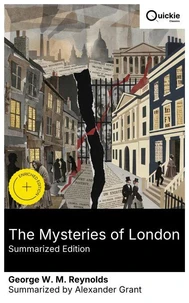
The Mysteries of London (Summarized Edition). Enriched edition. From rookeries to corridors of power: a penny-serial of Newgate crime, workhouse cruelty, and Chartist social fury
George W. M. Reynolds, Alexander Grant
E-book
1,99 €

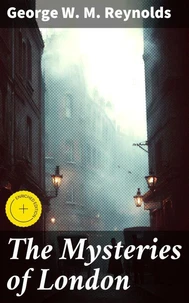
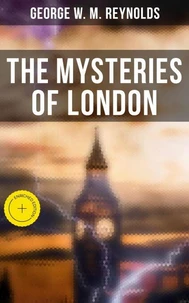
The Mysteries of London. Enriched edition. Unveiling the Dark Underbelly of Victorian London: Crime, Poverty, and Social Injustice in a Sensational Serialized Novel
George W. M. Reynolds, Vanessa Cross
E-book
0,99 €

0,99 €

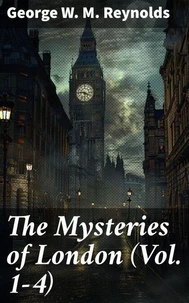
The Mysteries of London (Vol. 1-4). Enriched edition. Complete Edition
George W. M. Reynolds, Colton Marsh
E-book
0,49 €


0,99 €

1,49 €

Wagner, the Wehr-Wolf. Enriched edition. A Gothic Tale of Dark Romance and Werewolf Transformation in Historical Germany
George W. M. Reynolds, Vanessa Cross
E-book
0,99 €

1,99 €