Dernière sortie
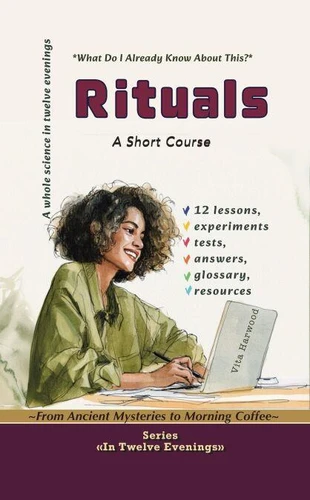
Rituals:From Ancient Mysteries to Morning Coffee
Rituals:From Ancient Mysteries to Morning CoffeeSeries "In Twelve Evenings"BOOK 5Vita HarwoodWhat Do I Already Know About This?Why do a handshake, a wedding ceremony, a minute of silence, a graduation, an oath of office, birthday candles, and an athlete's pre-game routine all belong to the same broad family of human behavior? And why can an action matter far more than its immediate practical result?Rituals: From Ancient Mysteries to Morning Coffee is a short, accessible course about the ways humans turn important moments into patterned, meaningful actions.
Over twelve evenings, the book moves from the archaeological traces of early burials through Egypt, Mesopotamia, Vedic India, ancient China, and the Eleusinian Mysteries, then into rites of passage, collective ceremonies, political ritual, sport, family traditions, and everyday routines. Along the way, readers learn the working grammar of ritual: space, time, objects, words, gestures, sound, silence, repetition, and sequence.
The course introduces rites of passage and liminality, explores why synchronized action can strengthen a sense of "we, " shows how ceremonies make status and authority visible, and draws careful distinctions among personal ritual, superstition, magical thinking, compulsion, and OCD. The book does not teach magical practices or fill gaps in the evidence with attractive guesses. When archaeology or history supports more than one interpretation, the uncertainty stays visible.
When psychological research has limits, those limits are part of the story. Each lesson includes key terms, a ten-question test, and a field assignment. The end matter brings together 120 explained answers, a general glossary, source notes, and suggestions for further reading and viewing. Written for readers aged 15 and up, this is a book for anyone who wants to understand not only ancient mysteries but ordinary life: why we mark beginnings, repeat familiar actions, make promises, mourn, celebrate, and keep turning certain moments into something special.
Over twelve evenings, the book moves from the archaeological traces of early burials through Egypt, Mesopotamia, Vedic India, ancient China, and the Eleusinian Mysteries, then into rites of passage, collective ceremonies, political ritual, sport, family traditions, and everyday routines. Along the way, readers learn the working grammar of ritual: space, time, objects, words, gestures, sound, silence, repetition, and sequence.
The course introduces rites of passage and liminality, explores why synchronized action can strengthen a sense of "we, " shows how ceremonies make status and authority visible, and draws careful distinctions among personal ritual, superstition, magical thinking, compulsion, and OCD. The book does not teach magical practices or fill gaps in the evidence with attractive guesses. When archaeology or history supports more than one interpretation, the uncertainty stays visible.
When psychological research has limits, those limits are part of the story. Each lesson includes key terms, a ten-question test, and a field assignment. The end matter brings together 120 explained answers, a general glossary, source notes, and suggestions for further reading and viewing. Written for readers aged 15 and up, this is a book for anyone who wants to understand not only ancient mysteries but ordinary life: why we mark beginnings, repeat familiar actions, make promises, mourn, celebrate, and keep turning certain moments into something special.
Les livres de Vita Harwood
Segue. Kaleidoscope, #1
E-book
3,99 €