SOLDES
Jusqu'à -70% sur une sélection d'articles*
- Accueil /
- Lee JG
Lee JG

Dernière sortie
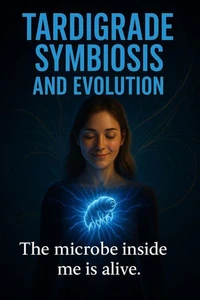
Tardigrade Symbiosis and Evolution: The Tardigrade Lives Within Me
Tardigrade Symbiosis & Human EvolutionThis work explores an unconventional scientific hypothesis: that tardigrades - microscopic, extremophile animals capable of surviving radiation, vacuum, freezing, and intense heat - may occasionally enter the human body through natural environmental exposure, and that their unique survival proteins (such as Dsup and MAHS) could theoretically interact with and protect our mitochondria.
Mitochondria are the energy engines of our cells, essential for life but vulnerable to oxidative stress, DNA damage, and environmental shocks. The book proposes that tardigrades once served as an "external shield" for early mitochondria in ancient symbiotic systems, and that re-establishing such a relationship, even indirectly, could enhance human resilience, slow aging, and improve recovery. It examines: The biology and discovery of tardigrades.
How humans inevitably ingest them in trace amounts from nature. Hypothetical mechanisms for tardigrade survival inside the body. Laboratory evidence of tardigrade proteins protecting human cells. A "co-evolution" framework where mitochondria and tardigrades together form a more complete survival system. The concept of "Cheetah-type Humans" - high-output, fast-recovery physiology potentially explained by such symbiosis.
Practical routines and the "Tardigrade 3 Essentials" (trehalose, Fernblock®, EGCG) to mimic or stimulate protective responses. Ultimately, it's both a scientific exploration and a philosophical reflection on unseen lifeforms, proposing that our health, performance, and longevity could be shaped by microscopic allies hidden in the natural world.
Mitochondria are the energy engines of our cells, essential for life but vulnerable to oxidative stress, DNA damage, and environmental shocks. The book proposes that tardigrades once served as an "external shield" for early mitochondria in ancient symbiotic systems, and that re-establishing such a relationship, even indirectly, could enhance human resilience, slow aging, and improve recovery. It examines: The biology and discovery of tardigrades.
How humans inevitably ingest them in trace amounts from nature. Hypothetical mechanisms for tardigrade survival inside the body. Laboratory evidence of tardigrade proteins protecting human cells. A "co-evolution" framework where mitochondria and tardigrades together form a more complete survival system. The concept of "Cheetah-type Humans" - high-output, fast-recovery physiology potentially explained by such symbiosis.
Practical routines and the "Tardigrade 3 Essentials" (trehalose, Fernblock®, EGCG) to mimic or stimulate protective responses. Ultimately, it's both a scientific exploration and a philosophical reflection on unseen lifeforms, proposing that our health, performance, and longevity could be shaped by microscopic allies hidden in the natural world.
Tardigrade Symbiosis & Human EvolutionThis work explores an unconventional scientific hypothesis: that tardigrades - microscopic, extremophile animals capable of surviving radiation, vacuum, freezing, and intense heat - may occasionally enter the human body through natural environmental exposure, and that their unique survival proteins (such as Dsup and MAHS) could theoretically interact with and protect our mitochondria.
Mitochondria are the energy engines of our cells, essential for life but vulnerable to oxidative stress, DNA damage, and environmental shocks. The book proposes that tardigrades once served as an "external shield" for early mitochondria in ancient symbiotic systems, and that re-establishing such a relationship, even indirectly, could enhance human resilience, slow aging, and improve recovery. It examines: The biology and discovery of tardigrades.
How humans inevitably ingest them in trace amounts from nature. Hypothetical mechanisms for tardigrade survival inside the body. Laboratory evidence of tardigrade proteins protecting human cells. A "co-evolution" framework where mitochondria and tardigrades together form a more complete survival system. The concept of "Cheetah-type Humans" - high-output, fast-recovery physiology potentially explained by such symbiosis.
Practical routines and the "Tardigrade 3 Essentials" (trehalose, Fernblock®, EGCG) to mimic or stimulate protective responses. Ultimately, it's both a scientific exploration and a philosophical reflection on unseen lifeforms, proposing that our health, performance, and longevity could be shaped by microscopic allies hidden in the natural world.
Mitochondria are the energy engines of our cells, essential for life but vulnerable to oxidative stress, DNA damage, and environmental shocks. The book proposes that tardigrades once served as an "external shield" for early mitochondria in ancient symbiotic systems, and that re-establishing such a relationship, even indirectly, could enhance human resilience, slow aging, and improve recovery. It examines: The biology and discovery of tardigrades.
How humans inevitably ingest them in trace amounts from nature. Hypothetical mechanisms for tardigrade survival inside the body. Laboratory evidence of tardigrade proteins protecting human cells. A "co-evolution" framework where mitochondria and tardigrades together form a more complete survival system. The concept of "Cheetah-type Humans" - high-output, fast-recovery physiology potentially explained by such symbiosis.
Practical routines and the "Tardigrade 3 Essentials" (trehalose, Fernblock®, EGCG) to mimic or stimulate protective responses. Ultimately, it's both a scientific exploration and a philosophical reflection on unseen lifeforms, proposing that our health, performance, and longevity could be shaped by microscopic allies hidden in the natural world.
Les livres de Lee JG

17,49 €

17,49 €

17,49 €