Dernière sortie
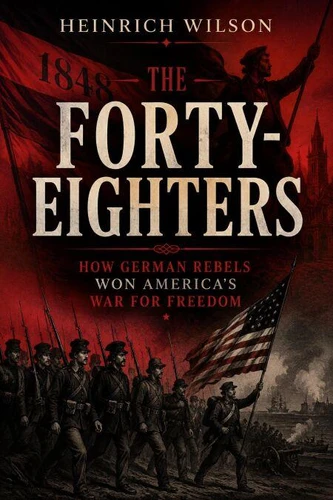
The Forty-Eighters: How German Rebels Won America's War for Freedom
They came to America with nothing but their convictions. In the spring of 1848, a generation of German lawyers, students, journalists, and soldiers took to the barricades across the German states, demanding constitutions, press freedom, and the right to live without the suffocating weight of Metternich's repression. For a brief and extraordinary moment, it seemed possible. Then the Prussian and Austrian armies moved, the Frankfurt Parliament collapsed, and the dream of a free and unified Germany died on the streets of Baden.
The survivors fled. Most came to America, settling in the German communities of Missouri, Ohio, Wisconsin, and Illinois, carrying with them the unfinished business of a revolution they had not been allowed to complete. They were called the Forty-Eighters, and they were about to change the course of American history. In their new country they found a political crisis that looked, to men who had already spent their lives fighting tyranny, like a familiar problem in an unfamiliar language.
Slavery was not a complicated question to people who had lived under Metternich's censorship and Frederick William's arbitrary power. It was tyranny, wearing different clothes in a different country, and the Forty-Eighters responded to it with the same directness and the same moral clarity they had brought to the barricades of 1848. Through the 1850s they organized, agitated, and mobilized. They built the German-American Republican coalition that helped put Abraham Lincoln in the White House in 1860.
They saved Missouri for the Union in the first weeks of the war, before most of America had processed the reality that the fighting had begun. They filled the Union Army with two hundred thousand German-born soldiers who fought in every theater of the conflict, commanded by Forty-Eighter officers whose European military training and revolutionary convictions made them some of the most formidable commanders on either side.
They were scapegoated at Chancellorsville and climbed Missionary Ridge anyway. They earned Medals of Honor on battlefields from Virginia to Mississippi. They marched with Sherman to the sea and were present at the end of the war they had helped make possible. And then history forgot them. The Forty-Eighters: How German Rebels Won America's War for Freedom tells the full story of this extraordinary generation, from the suffocating political atmosphere of Metternich's Germany to the barricades of 1848, across the Atlantic to the Turner halls and newspaper offices of the immigrant Midwest, through the election of 1860 and four years of the bloodiest conflict in American history, and finally to the bitter irony of the First World War, when the grandchildren of men who had bled for the Union were forced to prove their loyalty to a country their families had already paid for in full.
This is the story of men who fought twice for freedom. The first time they lost. The second time they won. It is past time their names were spoken clearly.
The survivors fled. Most came to America, settling in the German communities of Missouri, Ohio, Wisconsin, and Illinois, carrying with them the unfinished business of a revolution they had not been allowed to complete. They were called the Forty-Eighters, and they were about to change the course of American history. In their new country they found a political crisis that looked, to men who had already spent their lives fighting tyranny, like a familiar problem in an unfamiliar language.
Slavery was not a complicated question to people who had lived under Metternich's censorship and Frederick William's arbitrary power. It was tyranny, wearing different clothes in a different country, and the Forty-Eighters responded to it with the same directness and the same moral clarity they had brought to the barricades of 1848. Through the 1850s they organized, agitated, and mobilized. They built the German-American Republican coalition that helped put Abraham Lincoln in the White House in 1860.
They saved Missouri for the Union in the first weeks of the war, before most of America had processed the reality that the fighting had begun. They filled the Union Army with two hundred thousand German-born soldiers who fought in every theater of the conflict, commanded by Forty-Eighter officers whose European military training and revolutionary convictions made them some of the most formidable commanders on either side.
They were scapegoated at Chancellorsville and climbed Missionary Ridge anyway. They earned Medals of Honor on battlefields from Virginia to Mississippi. They marched with Sherman to the sea and were present at the end of the war they had helped make possible. And then history forgot them. The Forty-Eighters: How German Rebels Won America's War for Freedom tells the full story of this extraordinary generation, from the suffocating political atmosphere of Metternich's Germany to the barricades of 1848, across the Atlantic to the Turner halls and newspaper offices of the immigrant Midwest, through the election of 1860 and four years of the bloodiest conflict in American history, and finally to the bitter irony of the First World War, when the grandchildren of men who had bled for the Union were forced to prove their loyalty to a country their families had already paid for in full.
This is the story of men who fought twice for freedom. The first time they lost. The second time they won. It is past time their names were spoken clearly.
Les livres de Heinrich Wilson


3,49 €