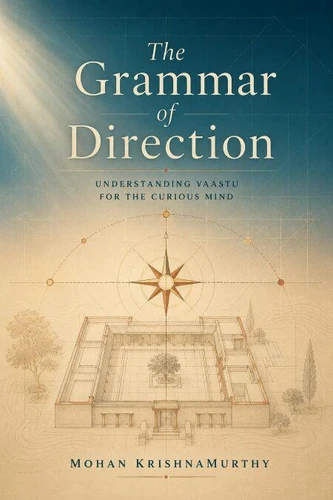
What is Vaastu - a superstition, a science, or something else entirely?This book offers neither blind faith nor dismissive mockery. Instead, it invites you to understand Vaastu as a pre-modern design tradition - a grammar of space that helped people build comfortable, healthy homes for centuries. You will explore: Why the square and rectangle were preferred (ease of construction, not mysticism) Why the center of the house was left open (light, air, and a "lung" for the building) Why the kitchen belongs in the southeast (morning sun advantage) Why the toilet was never placed in the northeast (well contamination risk) Why sleeping with your head east or south made sense (cool head, warm feet) The book separates classical Vaastu (based on sunlight, wind, drainage, and human psychology) from modern commercial remedies (pyramids, mirrors, crystals) that appear in no original text.
It examines glass apartments, open plans, and high-rises - showing where ignoring Vaastu works and where it still creates problems like glare, damp, and poor ventilation. Whether you are a homeowner, an architect, or simply curious, this book gives you a lens to see any house differently. No fear. No dogma. Just clarity.
What is Vaastu - a superstition, a science, or something else entirely?This book offers neither blind faith nor dismissive mockery. Instead, it invites you to understand Vaastu as a pre-modern design tradition - a grammar of space that helped people build comfortable, healthy homes for centuries. You will explore: Why the square and rectangle were preferred (ease of construction, not mysticism) Why the center of the house was left open (light, air, and a "lung" for the building) Why the kitchen belongs in the southeast (morning sun advantage) Why the toilet was never placed in the northeast (well contamination risk) Why sleeping with your head east or south made sense (cool head, warm feet) The book separates classical Vaastu (based on sunlight, wind, drainage, and human psychology) from modern commercial remedies (pyramids, mirrors, crystals) that appear in no original text.
It examines glass apartments, open plans, and high-rises - showing where ignoring Vaastu works and where it still creates problems like glare, damp, and poor ventilation. Whether you are a homeowner, an architect, or simply curious, this book gives you a lens to see any house differently. No fear. No dogma. Just clarity.