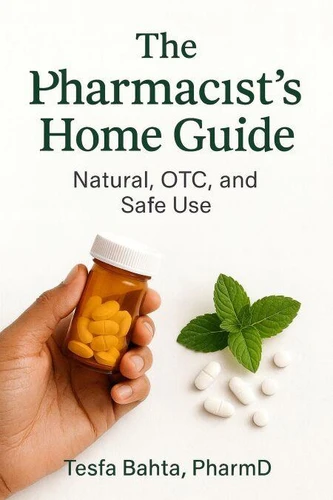
Pharmacist's Home Guide: Natural, Over-the-Counter and Safe Use is a practical and easy-to-understand resource designed to help individuals and families make informed decisions about non-prescription medications, herbal products, and natural remedies. In today's world, store shelves are filled with thousands of over-the-counter products claiming relief for pain, cough, allergies, digestion, sleep, heartburn, and more.
Many people assume that if a medication is sold without a prescription, it must be completely safe. However, even non-prescription products can cause side effects, drug interactions, and complications when used incorrectly. Written by a practicing pharmacist, this guide explains:. How to safely choose over-the-counter medications. The difference between natural, herbal, and conventional remedies. Common medication myths and misunderstandings.
How to read and interpret drug labels. Safe dosing for adults and older adults. When to seek medical attention. How to avoid dangerous drug interactions. Special considerations for seniors and caregiversThe book provides clear explanations without medical jargon, making complex information accessible to everyday readers. It empowers patients, caregivers, and families to take an active role in medication safety while understanding the limits of self-treatment.
This guide is especially helpful for:- Families managing medications at home- Caregivers assisting older adults- Individuals interested in natural health approaches- Anyone who wants to better understand what they are putting into their bodyMedication safety begins at home. With the right knowledge, individuals can reduce risk, prevent complications, and make smarter healthcare decisions.
Pharmacist's Home Guide: Natural, Over-the-Counter and Safe Use is a practical and easy-to-understand resource designed to help individuals and families make informed decisions about non-prescription medications, herbal products, and natural remedies. In today's world, store shelves are filled with thousands of over-the-counter products claiming relief for pain, cough, allergies, digestion, sleep, heartburn, and more.
Many people assume that if a medication is sold without a prescription, it must be completely safe. However, even non-prescription products can cause side effects, drug interactions, and complications when used incorrectly. Written by a practicing pharmacist, this guide explains:. How to safely choose over-the-counter medications. The difference between natural, herbal, and conventional remedies. Common medication myths and misunderstandings.
How to read and interpret drug labels. Safe dosing for adults and older adults. When to seek medical attention. How to avoid dangerous drug interactions. Special considerations for seniors and caregiversThe book provides clear explanations without medical jargon, making complex information accessible to everyday readers. It empowers patients, caregivers, and families to take an active role in medication safety while understanding the limits of self-treatment.
This guide is especially helpful for:- Families managing medications at home- Caregivers assisting older adults- Individuals interested in natural health approaches- Anyone who wants to better understand what they are putting into their bodyMedication safety begins at home. With the right knowledge, individuals can reduce risk, prevent complications, and make smarter healthcare decisions.