Dernière sortie
The Spaces Of Human Life
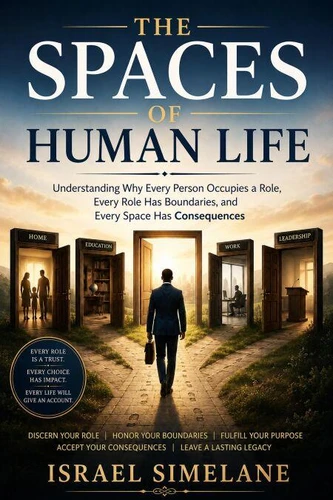
The Spaces of Human Life: Understanding Why Every Person Occupies a Role, Every Role Has Boundaries, and Every Space Has ConsequencesEvery person occupies many spaces throughout life. We are children and parents, students and teachers, employees and employers, followers and leaders, neighbours and citizens. Sometimes we move through several of these roles in a single day. But do we truly understand the responsibilities that come with each one?The Spaces of Human Life explores a simple but powerful principle: every human being occupies a space, every space carries responsibility, every responsibility has boundaries, and every decision produces consequences.
Life is constantly changing. A child grows into an adult. A student enters the workplace. An employee may become a manager. A follower may become a leader. Parents grow older, children become parents, and one generation eventually hands its responsibilities to another. Yet while our roles change, our humanity remains the same. This book examines how wisdom helps us recognise the space we presently occupy and understand what that space requires from us.
It challenges the common mistake of wanting the privileges of a position without accepting its responsibilities, boundaries, accountability, and sacrifices. At the heart of the book is the principle of stewardship. A steward understands that responsibility is a trust. Whether we are entrusted with a family, career, business, classroom, leadership position, knowledge, resources, influence, or an opportunity to serve, the important question is not simply what we possess, but what we do with what has been placed in our hands.
Drawing from everyday human experience and biblical principles, The Spaces of Human Life explores responsibility in families, workplaces, schools, communities, businesses, leadership, public service, relationships, and the life of faith. It examines how boundaries protect purpose, how authority should be exercised responsibly, how character influences leadership, and how today's decisions eventually become tomorrow's consequences.
The book also reminds us that no position lasts forever. Responsibilities are entrusted to us for a season. Eventually, we complete them, surrender them, or pass them to someone else. What remains is the influence of how faithfully we occupied our space. Readers are encouraged to ask important questions:What responsibility has been entrusted to me?What are its proper boundaries?Who is affected by the way I fulfil it?Am I preparing for the responsibilities ahead?What will remain after my season in this space has ended?Rather than merely describing what is wrong with society, this book begins with personal responsibility.
It invites readers to examine themselves before examining others and to understand that stronger families, healthier organisations, wiser communities, and better nations are built when individuals faithfully fulfil the responsibilities entrusted to them. Suitable for individuals, families, students, professionals, leaders, churches, workplaces, schools, universities, community organisations, and discussion groups, The Spaces of Human Life offers a framework for thinking more deeply about responsibility, purpose, boundaries, wisdom, leadership, service, accountability, and legacy.
Ultimately, the measure of a life is not simply the number of positions a person has occupied, but the faithfulness with which each responsibility was fulfilled. Every space has a purpose. Every responsibility is a trust. Every decision has consequences. And every faithful steward should seek to leave each space better than they found it.
Life is constantly changing. A child grows into an adult. A student enters the workplace. An employee may become a manager. A follower may become a leader. Parents grow older, children become parents, and one generation eventually hands its responsibilities to another. Yet while our roles change, our humanity remains the same. This book examines how wisdom helps us recognise the space we presently occupy and understand what that space requires from us.
It challenges the common mistake of wanting the privileges of a position without accepting its responsibilities, boundaries, accountability, and sacrifices. At the heart of the book is the principle of stewardship. A steward understands that responsibility is a trust. Whether we are entrusted with a family, career, business, classroom, leadership position, knowledge, resources, influence, or an opportunity to serve, the important question is not simply what we possess, but what we do with what has been placed in our hands.
Drawing from everyday human experience and biblical principles, The Spaces of Human Life explores responsibility in families, workplaces, schools, communities, businesses, leadership, public service, relationships, and the life of faith. It examines how boundaries protect purpose, how authority should be exercised responsibly, how character influences leadership, and how today's decisions eventually become tomorrow's consequences.
The book also reminds us that no position lasts forever. Responsibilities are entrusted to us for a season. Eventually, we complete them, surrender them, or pass them to someone else. What remains is the influence of how faithfully we occupied our space. Readers are encouraged to ask important questions:What responsibility has been entrusted to me?What are its proper boundaries?Who is affected by the way I fulfil it?Am I preparing for the responsibilities ahead?What will remain after my season in this space has ended?Rather than merely describing what is wrong with society, this book begins with personal responsibility.
It invites readers to examine themselves before examining others and to understand that stronger families, healthier organisations, wiser communities, and better nations are built when individuals faithfully fulfil the responsibilities entrusted to them. Suitable for individuals, families, students, professionals, leaders, churches, workplaces, schools, universities, community organisations, and discussion groups, The Spaces of Human Life offers a framework for thinking more deeply about responsibility, purpose, boundaries, wisdom, leadership, service, accountability, and legacy.
Ultimately, the measure of a life is not simply the number of positions a person has occupied, but the faithfulness with which each responsibility was fulfilled. Every space has a purpose. Every responsibility is a trust. Every decision has consequences. And every faithful steward should seek to leave each space better than they found it.
Les livres de SpiritOfaSoundMind

3,49 €