SOLDES
Jusqu'à -70% sur une sélection d'articles*
Dernière sortie
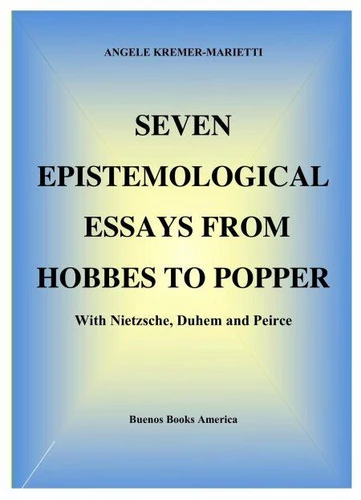
Seven Epistemological Essays From Hobbes To Popper With Nietzsche, Duhem And Peirce
We are fortunate in these pages to have seven essays by AngèleKremer Marietti, best known in the English-speaking world as adistinguished interpreter of Comte and Nietzsche. The essays sampleher vast work - forty books authored in forty years - over the entirehistory of modern philosophy. To English readers probably the moststriking feature of Marietti's work is her refusal to recognise a breakbetween so-called 'analytic' and 'continental' traditions inphilosophy.
Her ability to see a continuous philosophicalconversation across the traditions and centuries stems from her focuson science, and especially what could be called the 'positivistproblematique'. By this I mean the attempt to establish a formallanguage of thought and inquiry that enjoys the authority ofmetaphysics without incurring unjustifiable ontological commitmentstraditionally associated with that philosophical discipline.
The focusthus turns to the construction and maintenance of rules of scientificconduct, otherwise known as methodology.
Her ability to see a continuous philosophicalconversation across the traditions and centuries stems from her focuson science, and especially what could be called the 'positivistproblematique'. By this I mean the attempt to establish a formallanguage of thought and inquiry that enjoys the authority ofmetaphysics without incurring unjustifiable ontological commitmentstraditionally associated with that philosophical discipline.
The focusthus turns to the construction and maintenance of rules of scientificconduct, otherwise known as methodology.