OFFRE LISEUSES
Une liseuse achetée = une housse offerte* jusqu'au 21 juin
- Accueil /
- Benito Perez Galdos
Benito Perez Galdos

Dernière sortie
Doña Perfecta
Doña Perfecta is a powerful and thought-provoking novel by Benito Pérez Galdós that explores the clash between tradition and progress in nineteenth-century Spain. First published in 1876, this compelling work stands as one of Galdós's most incisive critiques of intolerance, fanaticism, and the social divisions that defined his era.
The story follows Pepe Rey, a young engineer educated in modern scientific thought, who travels from Madrid to a provincial town with the intention of marrying his cousin, Rosario.
What begins as a hopeful union soon turns into a tense confrontation between opposing worldviews. In the heart of this seemingly tranquil town reigns Doña Perfecta, Rosario's mother-a woman of strong will, deep religious conviction, and unwavering commitment to established customs. Beneath her composed exterior lies a rigid determination to defend tradition at any cost. As Pepe's progressive ideas encounter the town's conservative values, suspicion and hostility begin to grow.
Galdós masterfully portrays how misunderstandings, pride, and manipulation escalate into open conflict. Through the interactions between Pepe, Doña Perfecta, and the influential local clergy, the novel examines the dangers of dogmatism and the destructive power of ideological rigidity. Set against a vividly rendered provincial landscape, Doña Perfecta offers more than a personal drama; it is a sharp social and political commentary.
Galdós critiques the resistance to modernization that characterized much of Spain during this period, highlighting the tension between scientific advancement and entrenched belief systems. His portrayal of the town's social dynamics reveals how fear of change can foster prejudice and fuel division. One of the novel's greatest strengths lies in its complex characterization. Doña Perfecta is not a simple villain but a deeply human figure shaped by her environment and convictions.
Galdós presents her with psychological depth, allowing readers to see both her maternal devotion and her uncompromising zeal. Similarly, Pepe's rationalism and idealism are tested as he confronts a society unwilling to accept his perspective. Written with clarity and realism, the novel combines dramatic tension with intellectual depth. Galdós's keen observation of social behavior and moral conflict gives the narrative enduring relevance.
The themes of tolerance, faith, progress, and coexistence continue to resonate in contemporary discussions about cultural and ideological divides. A cornerstone of Spanish realist fiction, Doña Perfecta remains a compelling exploration of belief, power, and the human cost of intolerance. Through its unforgettable characters and gripping narrative, the novel challenges readers to reflect on the delicate balance between tradition and change-and the consequences when that balance is lost.
What begins as a hopeful union soon turns into a tense confrontation between opposing worldviews. In the heart of this seemingly tranquil town reigns Doña Perfecta, Rosario's mother-a woman of strong will, deep religious conviction, and unwavering commitment to established customs. Beneath her composed exterior lies a rigid determination to defend tradition at any cost. As Pepe's progressive ideas encounter the town's conservative values, suspicion and hostility begin to grow.
Galdós masterfully portrays how misunderstandings, pride, and manipulation escalate into open conflict. Through the interactions between Pepe, Doña Perfecta, and the influential local clergy, the novel examines the dangers of dogmatism and the destructive power of ideological rigidity. Set against a vividly rendered provincial landscape, Doña Perfecta offers more than a personal drama; it is a sharp social and political commentary.
Galdós critiques the resistance to modernization that characterized much of Spain during this period, highlighting the tension between scientific advancement and entrenched belief systems. His portrayal of the town's social dynamics reveals how fear of change can foster prejudice and fuel division. One of the novel's greatest strengths lies in its complex characterization. Doña Perfecta is not a simple villain but a deeply human figure shaped by her environment and convictions.
Galdós presents her with psychological depth, allowing readers to see both her maternal devotion and her uncompromising zeal. Similarly, Pepe's rationalism and idealism are tested as he confronts a society unwilling to accept his perspective. Written with clarity and realism, the novel combines dramatic tension with intellectual depth. Galdós's keen observation of social behavior and moral conflict gives the narrative enduring relevance.
The themes of tolerance, faith, progress, and coexistence continue to resonate in contemporary discussions about cultural and ideological divides. A cornerstone of Spanish realist fiction, Doña Perfecta remains a compelling exploration of belief, power, and the human cost of intolerance. Through its unforgettable characters and gripping narrative, the novel challenges readers to reflect on the delicate balance between tradition and change-and the consequences when that balance is lost.
Doña Perfecta is a powerful and thought-provoking novel by Benito Pérez Galdós that explores the clash between tradition and progress in nineteenth-century Spain. First published in 1876, this compelling work stands as one of Galdós's most incisive critiques of intolerance, fanaticism, and the social divisions that defined his era.
The story follows Pepe Rey, a young engineer educated in modern scientific thought, who travels from Madrid to a provincial town with the intention of marrying his cousin, Rosario.
What begins as a hopeful union soon turns into a tense confrontation between opposing worldviews. In the heart of this seemingly tranquil town reigns Doña Perfecta, Rosario's mother-a woman of strong will, deep religious conviction, and unwavering commitment to established customs. Beneath her composed exterior lies a rigid determination to defend tradition at any cost. As Pepe's progressive ideas encounter the town's conservative values, suspicion and hostility begin to grow.
Galdós masterfully portrays how misunderstandings, pride, and manipulation escalate into open conflict. Through the interactions between Pepe, Doña Perfecta, and the influential local clergy, the novel examines the dangers of dogmatism and the destructive power of ideological rigidity. Set against a vividly rendered provincial landscape, Doña Perfecta offers more than a personal drama; it is a sharp social and political commentary.
Galdós critiques the resistance to modernization that characterized much of Spain during this period, highlighting the tension between scientific advancement and entrenched belief systems. His portrayal of the town's social dynamics reveals how fear of change can foster prejudice and fuel division. One of the novel's greatest strengths lies in its complex characterization. Doña Perfecta is not a simple villain but a deeply human figure shaped by her environment and convictions.
Galdós presents her with psychological depth, allowing readers to see both her maternal devotion and her uncompromising zeal. Similarly, Pepe's rationalism and idealism are tested as he confronts a society unwilling to accept his perspective. Written with clarity and realism, the novel combines dramatic tension with intellectual depth. Galdós's keen observation of social behavior and moral conflict gives the narrative enduring relevance.
The themes of tolerance, faith, progress, and coexistence continue to resonate in contemporary discussions about cultural and ideological divides. A cornerstone of Spanish realist fiction, Doña Perfecta remains a compelling exploration of belief, power, and the human cost of intolerance. Through its unforgettable characters and gripping narrative, the novel challenges readers to reflect on the delicate balance between tradition and change-and the consequences when that balance is lost.
What begins as a hopeful union soon turns into a tense confrontation between opposing worldviews. In the heart of this seemingly tranquil town reigns Doña Perfecta, Rosario's mother-a woman of strong will, deep religious conviction, and unwavering commitment to established customs. Beneath her composed exterior lies a rigid determination to defend tradition at any cost. As Pepe's progressive ideas encounter the town's conservative values, suspicion and hostility begin to grow.
Galdós masterfully portrays how misunderstandings, pride, and manipulation escalate into open conflict. Through the interactions between Pepe, Doña Perfecta, and the influential local clergy, the novel examines the dangers of dogmatism and the destructive power of ideological rigidity. Set against a vividly rendered provincial landscape, Doña Perfecta offers more than a personal drama; it is a sharp social and political commentary.
Galdós critiques the resistance to modernization that characterized much of Spain during this period, highlighting the tension between scientific advancement and entrenched belief systems. His portrayal of the town's social dynamics reveals how fear of change can foster prejudice and fuel division. One of the novel's greatest strengths lies in its complex characterization. Doña Perfecta is not a simple villain but a deeply human figure shaped by her environment and convictions.
Galdós presents her with psychological depth, allowing readers to see both her maternal devotion and her uncompromising zeal. Similarly, Pepe's rationalism and idealism are tested as he confronts a society unwilling to accept his perspective. Written with clarity and realism, the novel combines dramatic tension with intellectual depth. Galdós's keen observation of social behavior and moral conflict gives the narrative enduring relevance.
The themes of tolerance, faith, progress, and coexistence continue to resonate in contemporary discussions about cultural and ideological divides. A cornerstone of Spanish realist fiction, Doña Perfecta remains a compelling exploration of belief, power, and the human cost of intolerance. Through its unforgettable characters and gripping narrative, the novel challenges readers to reflect on the delicate balance between tradition and change-and the consequences when that balance is lost.
Les livres de Benito Perez Galdos

Realidad: Novela en cinco Jornadas. Edición enriquecida. Cruda realidad: Vidas entrelazadas en el Madrid del siglo XIX
Benito Perez Galdos, Damián Rojas
E-book
0,49 €

El amigo Manso. Edición enriquecida. Amor, celos y amistad en la España del siglo XIX: Un retrato realista de relaciones humanas por Benito Pérez Galdós
Benito Perez Galdos, Damián Rojas
E-book
1,99 €

Bailén. Edición enriquecida. Epopeya militar en la Guerra de la Independencia española
Benito Perez Galdos, Damián Rojas
E-book
1,99 €

La de Bringas. Edición enriquecida. Intriga y drama en la sociedad madrileña del siglo XIX
Benito Perez Galdos, Damián Rojas
E-book
1,99 €

Torquemada en la cruz. Edición enriquecida. Intriga y conflictos en la España del siglo XIX
Benito Perez Galdos, Damián Rojas
E-book
0,99 €

Miau. Edición enriquecida. Una mirada crítica a la sociedad madrileña del siglo XIX a través de Miau
Benito Perez Galdos, Damián Rojas
E-book
1,99 €

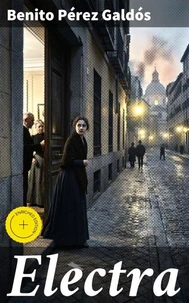
Electra. Edición enriquecida. La venganza y la lucha de clases en una obra maestra del realismo español
Benito Perez Galdos, Damián Rojas
E-book
0,99 €

4,99 €

1,49 €

1,49 €

Doña Perfecta (Unabridged). Enriched edition.
Benito Perez Galdos, Mary J. Serrano, Desmond Cole
E-book
0,49 €

0,49 €

0,49 €

Episodios Nacionales - Clásico esencial de la literatura española. Edición enriquecida. Clásicos de la literatura
Benito Perez Galdos, Lucas Paredes
E-book
0,49 €

6,49 €

Fortunata y Jacinta: dos historias de casadas. Biblioteca de Grandes Escritores
Benito Perez Galdos
E-book
0,99 €

0,99 €

0,99 €

0,99 €