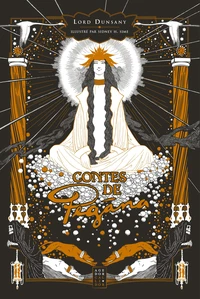
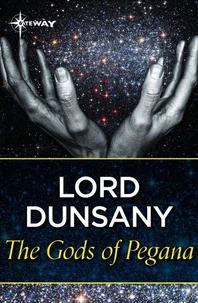
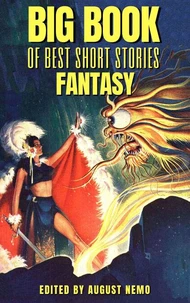
Lord Dunsany's The Gods of Pegana is a landmark work of early fantasy literature, offering a richly imagined pantheon of gods, myths, and cosmologies that shaped the modern fantasy genre. First published in 1905, the collection of interlinked stories introduces readers to the mythical world of Pegana, a distant and timeless realm where gods govern the fates of mortals and the universe itself, blending lyrical prose, philosophical reflection, and mythic wonder.
The book presents a series of short, evocative tales that reveal the lives, desires, and caprices of the gods of Pegana, from Mung the Supreme God to lesser deities who embody natural forces, human emotions, and cosmic mysteries.
Through these narratives, Dunsany creates a universe that is at once fantastical and eerily familiar, where divine beings shape destinies, and where human characters are both insignificant and profoundly affected by the whims of the divine.
Dunsany's writing is characterized by its poetic elegance, imaginative scope, and mythic tone. Each story is a meditation on power, fate, and the mysteries of existence, exploring themes of creation, devotion, mortality, and the eternal cycles of life and death.
The tales convey a sense of awe and wonder, immersing readers in a universe that feels ancient yet timeless, where language itself becomes a tool of enchantment.
The Gods of Pegana is more than a collection of fantasy stories; it is a visionary exploration of mythology and imagination. Its influence can be traced in the works of later fantasy luminaries, including H. P. Lovecraft, J. R. R. Tolkien, and Ursula K.
Le Guin. The book remains a classic for readers who appreciate philosophical reflection, mythic storytelling, and the beauty of language crafted to evoke worlds beyond our own.
For anyone drawn to fantasy, mythology, and literary elegance, The Gods of Pegana offers a timeless journey into the divine, the mysterious, and the wondrous, capturing the imagination and stirring a sense of the infinite in every reader.
Lord Dunsany's The Gods of Pegana is a landmark work of early fantasy literature, offering a richly imagined pantheon of gods, myths, and cosmologies that shaped the modern fantasy genre. First published in 1905, the collection of interlinked stories introduces readers to the mythical world of Pegana, a distant and timeless realm where gods govern the fates of mortals and the universe itself, blending lyrical prose, philosophical reflection, and mythic wonder.
The book presents a series of short, evocative tales that reveal the lives, desires, and caprices of the gods of Pegana, from Mung the Supreme God to lesser deities who embody natural forces, human emotions, and cosmic mysteries.
Through these narratives, Dunsany creates a universe that is at once fantastical and eerily familiar, where divine beings shape destinies, and where human characters are both insignificant and profoundly affected by the whims of the divine.
Dunsany's writing is characterized by its poetic elegance, imaginative scope, and mythic tone. Each story is a meditation on power, fate, and the mysteries of existence, exploring themes of creation, devotion, mortality, and the eternal cycles of life and death.
The tales convey a sense of awe and wonder, immersing readers in a universe that feels ancient yet timeless, where language itself becomes a tool of enchantment.
The Gods of Pegana is more than a collection of fantasy stories; it is a visionary exploration of mythology and imagination. Its influence can be traced in the works of later fantasy luminaries, including H. P. Lovecraft, J. R. R. Tolkien, and Ursula K.
Le Guin. The book remains a classic for readers who appreciate philosophical reflection, mythic storytelling, and the beauty of language crafted to evoke worlds beyond our own.
For anyone drawn to fantasy, mythology, and literary elegance, The Gods of Pegana offers a timeless journey into the divine, the mysterious, and the wondrous, capturing the imagination and stirring a sense of the infinite in every reader.