- Accueil /
- Charles Ngando Black
Charles Ngando Black
Charles Ngando Black est un expert en gestion des données. Il a plus de 20 ans d'expérience dans l'accompagnement des leaders de la finance, de l'énergie et des sciences de la vie, tant dans la mise en place de solutions que dans la conception et le pilotage de stratégies et de programmes de gestion des données. Conscient des changements qui affectent l'organisation et les systèmes d'information de l'entreprise, il s'efforce de fournir un cadre pour les appréhender et faciliter leur déploiement. Charles est diplômé d'un DEA en Modélisation Microéconomique (Option finance de marché) et possède des certifications en gestion des données. Il est fondateur et dirigeant du cabinet de conseil The DataInstitute.

Dernière sortie
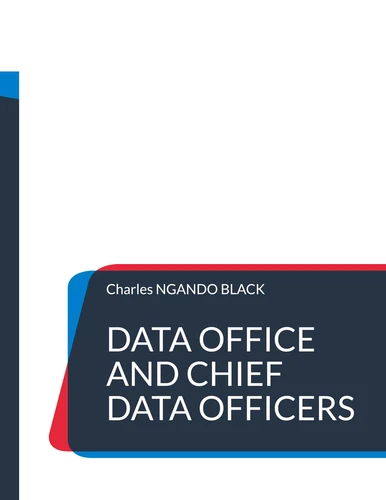
Data Office and Chief Data Officers
The Chief Data Officer (CDO) role emerged in 2001 and has since become increasingly important in organizations of all kinds. This role continues to raise questions about its relevance, responsibilities, positioning, and authority. Despite recent publications, debates remain lively.
"Data Office and Chief Data Officers" addresses key questions such as: Is there a need for one or multiple Chief Data Officers? What is the framework for this role? How should it be defined, implemented, and evolved? What are the expected benefits of this role?
The book offers a rigorous and didactic analysis, starting with an exposition of the motivations and benefits behind creating a Data Office.
Then it shows that this aspect of enterprise architecture is rarely synonymous with a distinct physical organizational entity. In reality, it encompasses a wide variety of organizational structures that create and maintain shared enterprise data management capabilities. Finally, the book effectively illustrates a variety of organizational models, details scenarios for implementing the CDO role, and explains the diverse functions fulfilled by CDOs.
The Chief Data Officer (CDO) role emerged in 2001 and has since become increasingly important in organizations of all kinds. This role continues to raise questions about its relevance, responsibilities, positioning, and authority. Despite recent publications, debates remain lively.
"Data Office and Chief Data Officers" addresses key questions such as: Is there a need for one or multiple Chief Data Officers? What is the framework for this role? How should it be defined, implemented, and evolved? What are the expected benefits of this role?
The book offers a rigorous and didactic analysis, starting with an exposition of the motivations and benefits behind creating a Data Office.
Then it shows that this aspect of enterprise architecture is rarely synonymous with a distinct physical organizational entity. In reality, it encompasses a wide variety of organizational structures that create and maintain shared enterprise data management capabilities. Finally, the book effectively illustrates a variety of organizational models, details scenarios for implementing the CDO role, and explains the diverse functions fulfilled by CDOs.
Les livres de Charles Ngando Black
32,99 €

45,00 €
